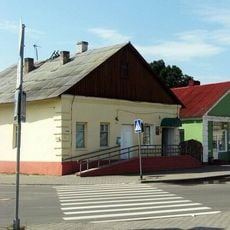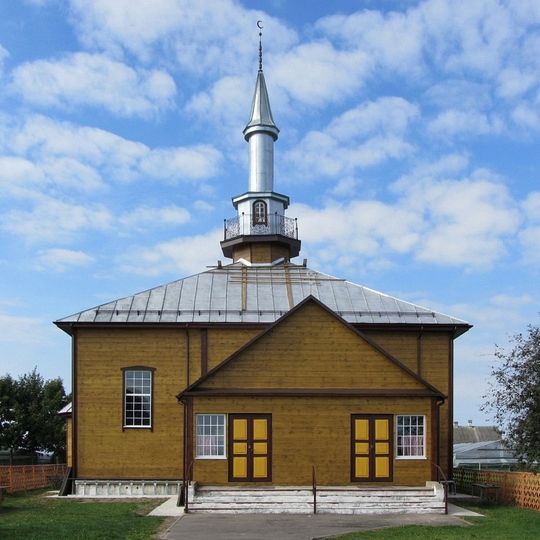
Mosque in Iŭje, Islamic worship center in Iŭje, Belarus.
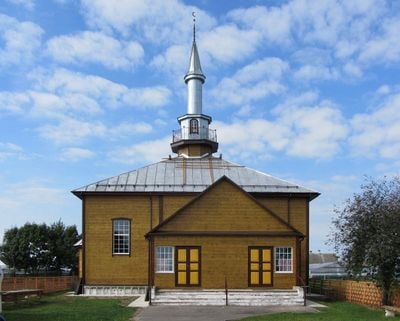
The Mosque in Iŭje is a rectangular wooden building with a five-sided mihrab annex under a hipped roof; an eight-sided minaret with a balcony and tall spire rises from its centre. The walls are horizontally boarded and the windows rectangular. The main facade originally had a four-column gallery, replaced in the 1970s by a low vestibule; inside, men's and women's halves have separate entrances.
The mosque was built in 1884 (some sources say 1882) at the expense of Countess Elvira Zamoyska, owner of the town, but the building was left unfinished. In 1922 Tatar emigrants in the United States sent 500 dollars, which paid for the minaret and gallery. A memorial plaque to Zamoyska was placed on the perimeter wall in 1934.
The mosque takes its name from the town of Iŭje, where a Tatar community settled in the 15th century in the Muravshchyna tract granted by Grand Duke Vytautas for Tatar help at the Battle of Grunwald. A memorial plaque honouring founder Elvira Zamoyska was placed on the fence wall in 1934. In 2016 the local Tatar community numbered about 600 people.
The mosque stands at Savetskaya Street 76 in Iŭje, next to one of the Tatar cemeteries, the mizars, of which one of the original three is still in use. The main facade now has a low vestibule in place of the original four-column gallery, and men and women enter through separate doors. The building is an active place of prayer, so dress modestly and arrange your visit with the local Tatar community.
During the Soviet era, this mosque remained one of the few places where Muslims in Belarus could actively practice their faith and maintain traditions during repressive times. This persistence makes it an important testament to religious resilience.
The community of curious travelers
AroundUs brings together thousands of curated places, local tips, and hidden gems, enriched daily by 94,019 contributors worldwide.