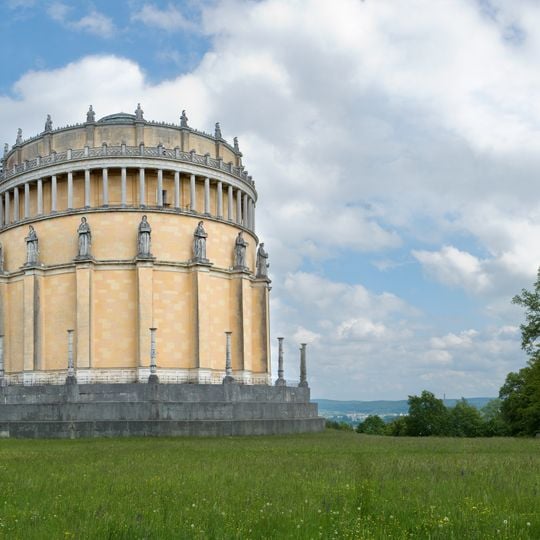
Befreiungshalle, Neoclassical monument on Michelsberg hill, Kelheim, Germany
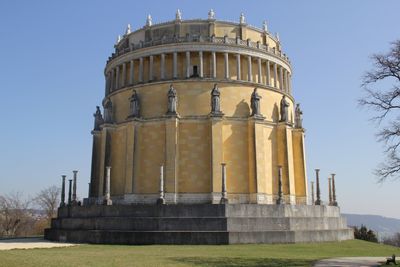
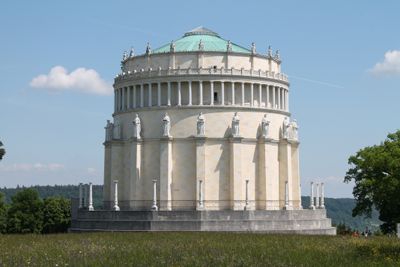
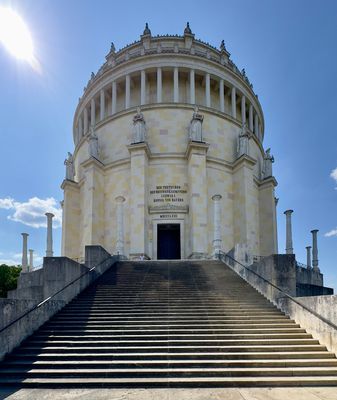
Befreiungshalle is a circular hall built from pale limestone on the Michelsberg near Kelheim, visible for miles with its dome and outer ring of columns. The interior opens beneath a coffered dome with a round opening at the center that lets daylight fall onto the polished marble floor.
King Ludwig I of Bavaria commissioned architect Leo von Klenze to design the hall in 1842, and after his death Friedrich von Gärtner completed the work until its dedication in 1863. The building was meant to honor the defeat of Napoleon and the reshaping of Europe after the Liberation Wars.
Visitors see 34 winged figures carved from white marble holding hands above the gallery, forming an unbroken circle around the interior space. Each figure stands on a bronze plinth and represents the bond between different German regions during the campaign against Napoleon.
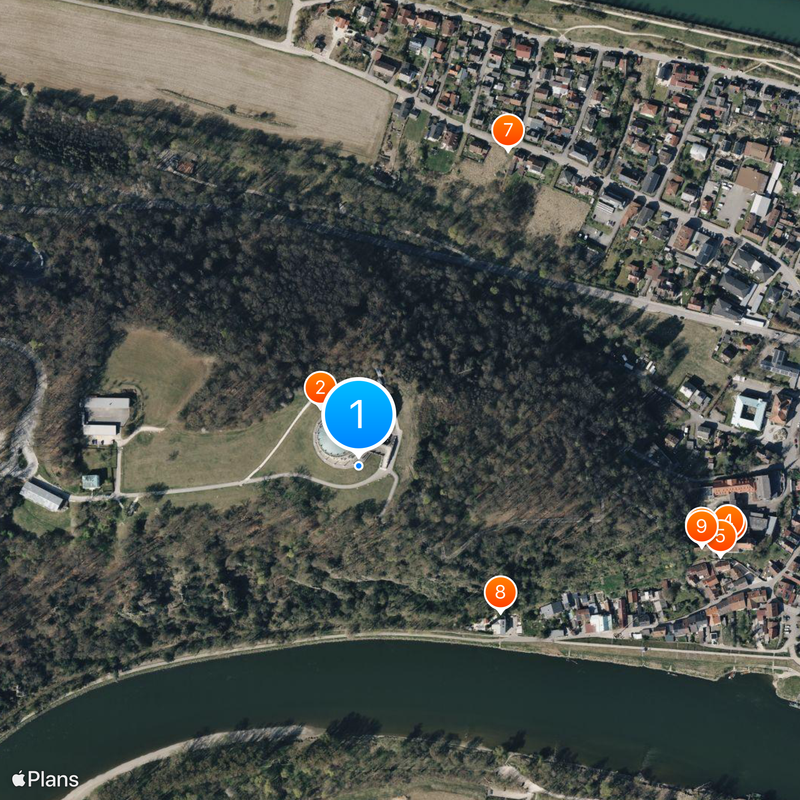
The climb to the hall follows a paved path that winds through forest and open slopes, accessible from several directions around the base of the hill. Visitors can walk around the exterior viewing platform and look out over the Danube valley and surrounding hills.
The hall has no windows in the usual sense, only the circular opening at the top of the dome admits light and changes the mood inside with the time of day and weather. On sunny days the circle of light slowly moves across the walls and floor.
The community of curious travelers
AroundUs brings together thousands of curated places, local tips, and hidden gems, enriched daily by 60,000 contributors worldwide.