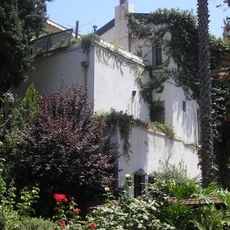
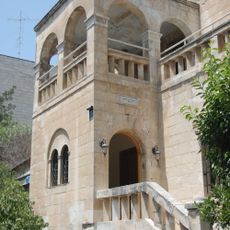
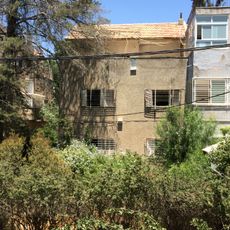
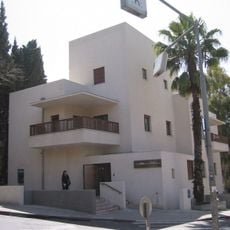
Jason's Tomb, Ancient Jewish tomb in Rehavia, Jerusalem.
Jason's Tomb is an ancient Jewish burial chamber in Jerusalem's Rehavia neighborhood built with a central courtyard, burial chamber, and Doric-style entrance column. Inside, eight niches line the walls for multiple burials, and a separate room at the front held skeletal remains when space was needed.
The tomb dates to the late second or early first century BCE, in the Hasmonean period, and is linked to the reign of Alexander Jannaeus (103–76 BCE). It was found in February 1956 during rock blasting for a building at 10 Alfasi Street; Levi Yizhaq Rahmani excavated it and published the results in 1967. Coins from the first third of the first century CE were found, and the tomb was finally blocked in 30/31 CE.
The name comes from the first inscription found in the cave, which names Jason; Hebrew sources link the name to the Greek hero who sailed with the Argonauts. A charcoal drawing of ships and a Greek line reading "Rejoice, you who are alive" survive on the walls. Jerusalem poet Dan Pagis wrote a 1973 poem about the tomb, imagining Jason as a wily sea trader.
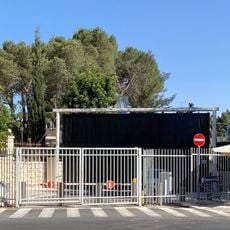
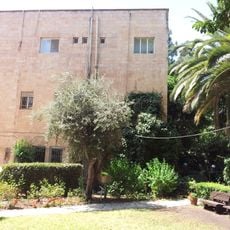
The tomb stands in a public garden on Alfasi Street in Rehavia, reached from the street through the courtyard. As of 2025 the courtyard is open, but the burial chamber itself is closed behind bars, so the carved interior cannot be entered. The pyramid roof and Doric column are best seen from the courtyard.
The bone storage chamber in front of the main burial room was an unusual setup that shows how families reused the same tomb over time to make space for new burials. This practice kept relatives together while adapting to practical burial needs.
The community of curious travelers
AroundUs brings together thousands of curated places, local tips, and hidden gems, enriched daily by 92,783 contributors worldwide.