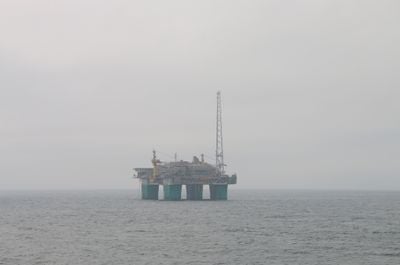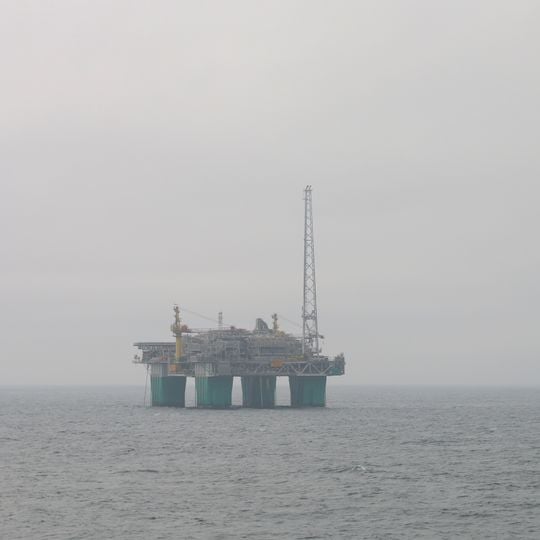
Gjøa, Offshore oil and gas field in North Sea, Norway
Gjøa is an offshore oil and gas field in the North Sea comprising a floating production platform and multiple subsea installations designed to extract and process hydrocarbons from deep water. The facility operates at approximately 360 meters depth and connects through pipelines to processing terminals on the mainland.
The field was discovered in 1989 and received development approval in 2007 before beginning operations in 2010. The significant gap between discovery and production reflected the technical challenges of developing a deep-water asset in this region.
The field represents Norway's commitment to sustainable energy production by utilizing power from the mainland Mongstad facility through a 100-kilometer subsea cable.
This field cannot be accessed directly as it is strictly an industrial facility in open water. To learn more about this infrastructure, visitors can research from the Norwegian coast or visit information centers on shore dedicated to energy and petroleum industries.
The field is notable for its subsea network connecting multiple adjacent production areas through interconnected pipelines that function as a coordinated system. This integration allows different resources from several locations to be managed and transported through a unified underwater infrastructure.
The community of curious travelers
AroundUs brings together thousands of curated places, local tips, and hidden gems, enriched daily by 92,314 contributors worldwide.