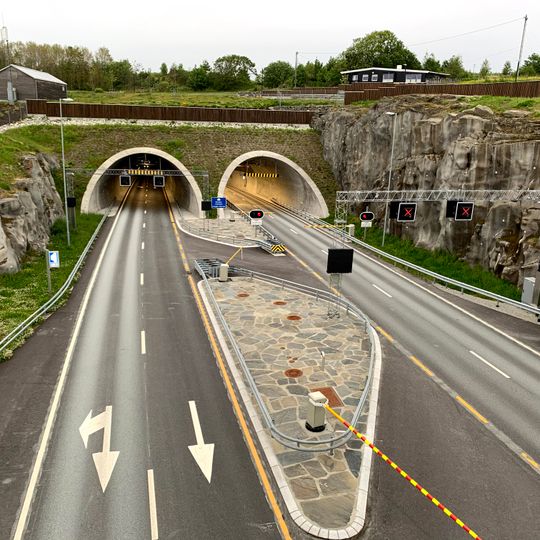
Ryfylke Tunnel, Undersea road tunnel in Stavanger Municipality, Norway
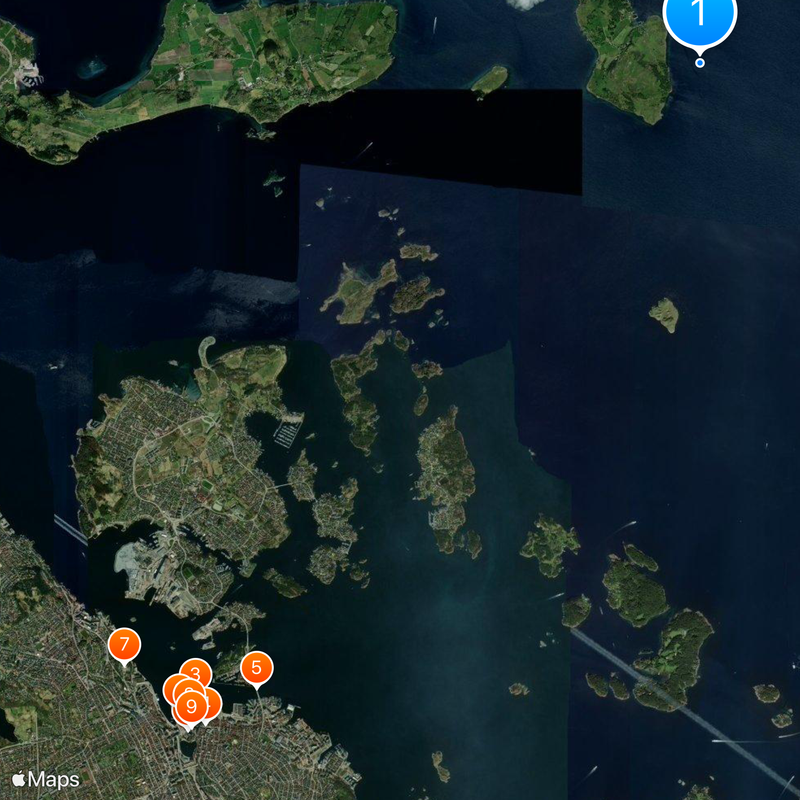
The Ryfylke Tunnel is a 14.4-kilometer (about 9 miles) undersea road passage in southwestern Norway, linking Stavanger with Strand municipality through a route that runs beneath the Horgefjord. The structure consists of two parallel tubes, each carrying two lanes of traffic in one direction, with ventilation shafts and emergency exits distributed along the route through the bedrock below the seabed.
Work beneath the Horgefjord started in 2013 and continued until the opening at the end of December 2019, replacing the ferry connection that had previously linked both sides of the fjord. The project formed part of a broader plan to improve road links across the Ryfylke region and shorten travel time between Stavanger and surrounding municipalities.
The tunnel demonstrates Norway's engineering capabilities in creating transportation solutions through natural barriers, replacing the traditional ferry service across the Boknafjord.
The passage is open to all vehicles with a toll payment, with AutoPass holders charged automatically while other drivers can pay online or at service stations after crossing. Information boards before the entrance give instructions on speed and tunnel behavior, since the route runs deep below the surface of the sea.
The deepest point of the passage sits 292 meters (about 958 feet) below sea level, making it the lowest vehicular road route anywhere on Earth, with roughly 10,000 vehicles passing through each day. This depth required special construction techniques to manage the pressure from the water above the tunnel roof while maintaining a stable structure within the bedrock layer.
The community of curious travelers
AroundUs brings together thousands of curated places, local tips, and hidden gems, enriched daily by 60,000 contributors worldwide.