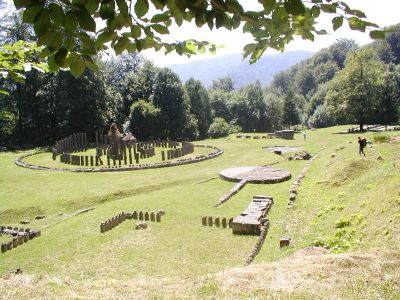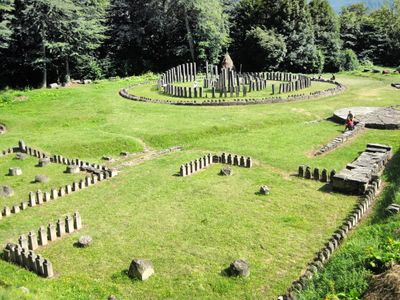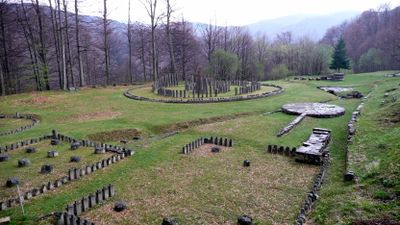
Sarmizegetusa Regia, Ancient Dacian capital and fortress in Grădiștea de Munte, Romania.
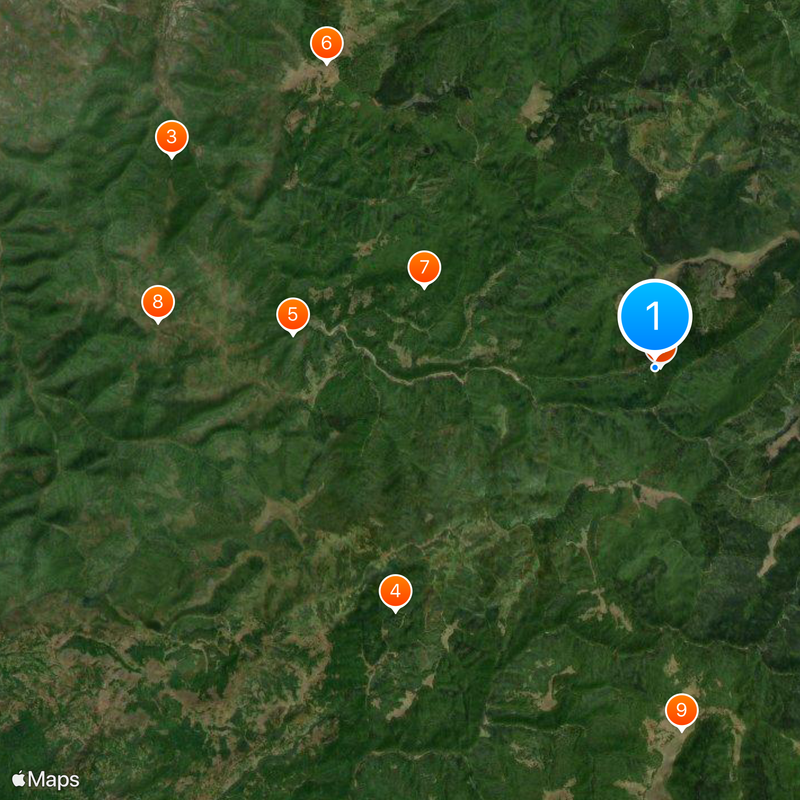
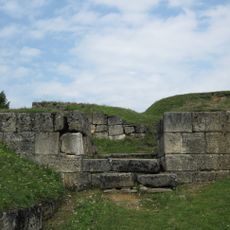
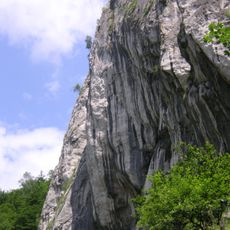
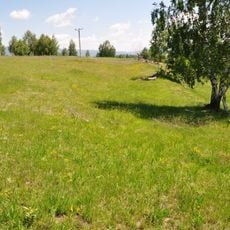
Sarmizegetusa Regia is a fortified Dacian settlement on multiple mountain terraces in the southern Carpathians, extending nearly five kilometers. The complex holds defensive limestone walls, six temples of different shapes, and a water distribution system that uses the natural elevation.
The fortress arose around 100 BC as the political and military center of the Dacian kingdom under King Burebista. Roman troops conquered the site in 106 AD during campaigns under Emperor Trajan, marking the end of Dacian independence.
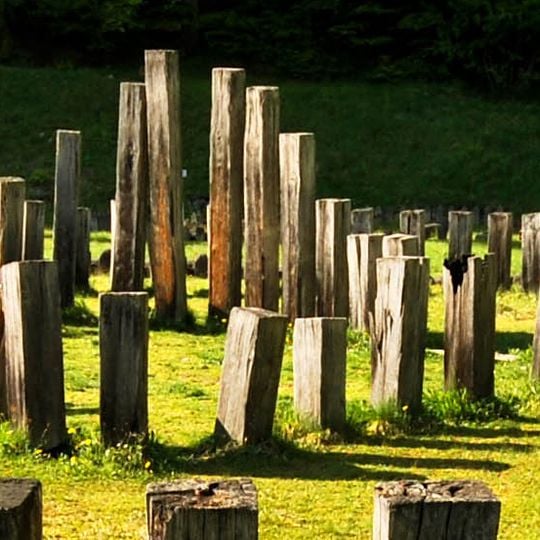
The name derives from the Dacian tribal word for "royal city", still echoing in local pronunciation today. Visitors can trace ritual practices on the stone terraces, where priests once conducted ceremonies before the circular sanctuaries.
Sturdy footwear is necessary for the visit, as the paved paths and terrace transitions cross uneven ground. The site sits at roughly 1200 meters altitude, so visitors should bring warm clothing and allow enough time for the full circuit.
Archaeologists found a solar calendar made of precisely arranged stone blocks, showing how well the Dacians observed astronomical phenomena. The circular sanctuaries likely also served as instruments for calculating solstices and equinoxes.
The community of curious travelers
AroundUs brings together thousands of curated places, local tips, and hidden gems, enriched daily by 92,015 contributors worldwide.