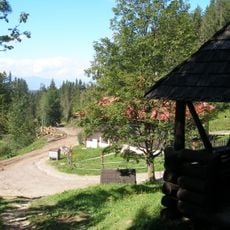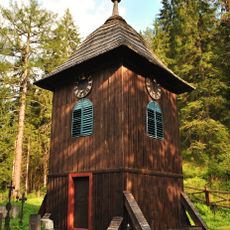
Važecká Cave, Cave entrance in District of Liptovský Mikuláš, Slovakia.
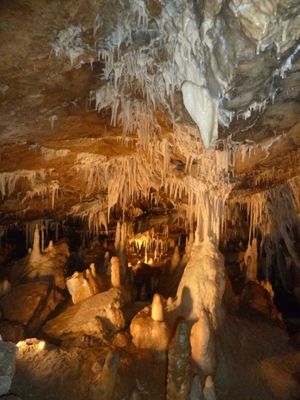
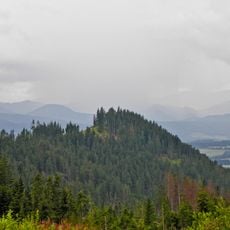
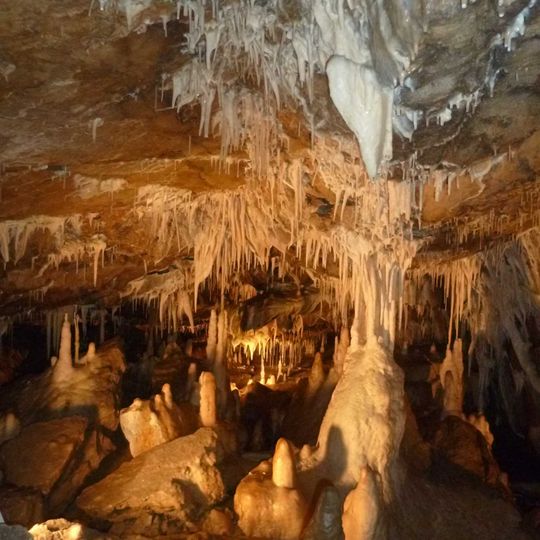
Važecká Cave is a 530 m long stalactite limestone cave at 784 m elevation on the northern edge of the Low Tatras, in the Kozie chrbty range by the village of Važec. Its low, roomy halls formed in Pleistocene times by water of the Biely Váh seeping along tectonic fissures in grey-blue Middle Triassic limestone and light dolomite. Sinter fill ranges from glassy blue to waxy yellow, with thin straws, stalactites and curtains overhead and thicker stalagmites below; a 2 m high, 80 cm wide sinter column stands in Húskova sieň.
A student, Ondrej Húska, discovered the cave in 1922, and it was provisionally opened to visitors six years later. Cavers later found further chambers underground, and in 1954 the cave was definitively opened. In 1968 it was declared a protected natural formation.
The cave's name comes from the village of Važec, whose Hungarian form Vázsec gives the cave its Hungarian name Vázseci-barlang. Visitors pass through Húska Hall, named after Ondrej Húska, the student who found the cave in 1922, and see the White Curtains there. The cave is open to the public and managed by the Slovak Caves Administration.
Wear comfortable shoes with good grip since the paths can be damp and slippery in places. Bring a light jacket or sweater because the cave stays cool year-round, even when outside temperatures are warm.
The cave fills with river sediment to a considerable height; in deposits called Kostnica, Hlinená chodba and Čarovná záhradka, bones of the cave bear (Ursus spelaeus) have been preserved. The cave is also a winter refuge for the lesser horseshoe bat (Rhinolophus hipposideros), and springtails (Collembola) live in its sinter pools.
The community of curious travelers
AroundUs brings together thousands of curated places, local tips, and hidden gems, enriched daily by 94,022 contributors worldwide.