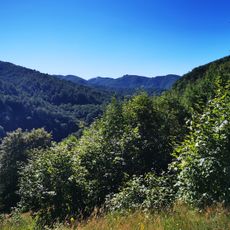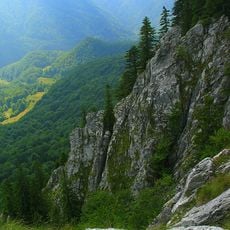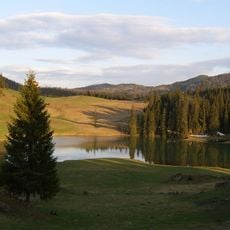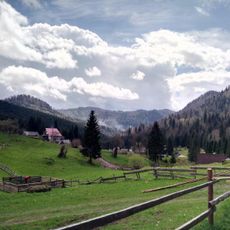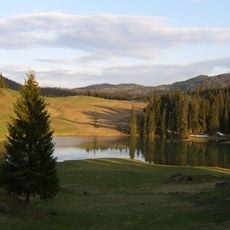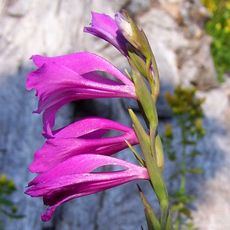
Cetățile Ponorului, Nature reserve in Apuseni Mountains, Romania
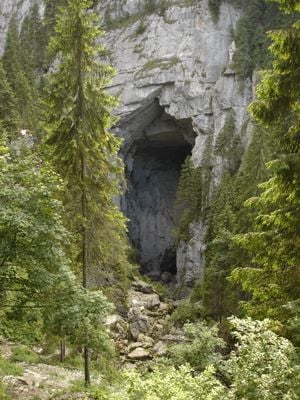
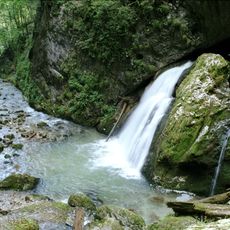
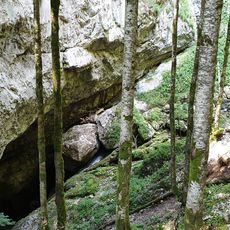
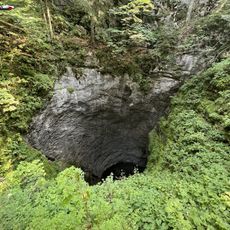
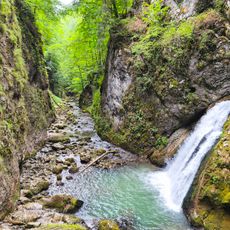
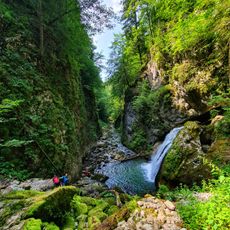
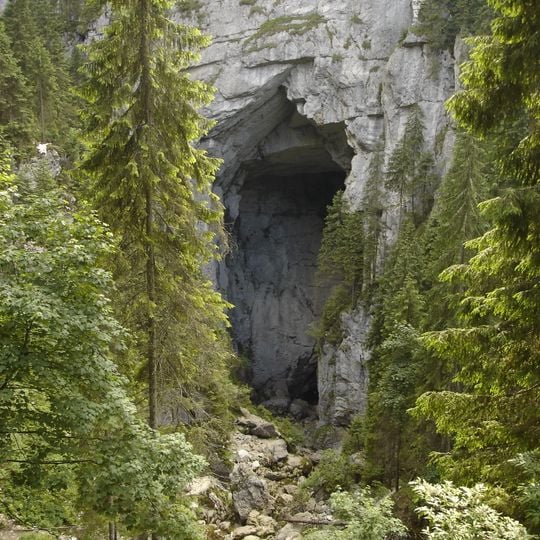
Cetățile Ponorului is a cave system on the Padiș karst plateau in the Apuseni Mountains, at the lower end of the Cetățile Valley at 950 m. Its entrance is a 70 m high and 30 m wide portal in the wall of a 300 m deep, 1000 m wide doline. The main active gallery runs 2 km, carrying a large underground river through cascades and whirlpools.
Exploration of the cave system began in the 1880s and continued through systematic research over many decades. Discovery of the deepest sections resulted from years of underground investigation.
The Hungarian name Csodavár means "Castle of Wonders", and the Romanian name refers to the ponors, the shafts where surface water vanishes underground. Czárán Gyula, called the apostle of Transylvanian tourism, laid out the paths and viewpoints around the doline system. The cave's first stretch, between the first two dolines, is open to visitors without a permit.
Access to the cave system is on foot, with the path beginning from nearby forests and becoming challenging in poor weather. Visitors should prepare for steep sections and uneven ground.
The cave system is home to rare insects and crustaceans adapted to underground life that exist nowhere else. These species are so specialized that they provide insight into how organisms survive in total darkness.
The community of curious travelers
AroundUs brings together thousands of curated places, local tips, and hidden gems, enriched daily by 94,678 contributors worldwide.