See the monuments around you in AROpen chests in the app
Around Us is built for your phone — point your camera at the streets and discover the monuments and places around you in augmented reality.Around Us is built for your phone — chests unlock when you walk, explore and capture nearby places.
Deauville and Trouville on the Norman coast attract photographers with their mix of beach landscapes, historic architecture, and town life. The long beaches of both towns, lined with colorful wooden cabins and boardwalks, offer classic coastal scenes. The marina at Deauville shows moored sailboats, while markets in both towns fill with local produce and seafood. The neighborhoods around Place de Morny and Cornuché Boulevard preserve Belle Époque atmosphere through manor houses, Norman-style hotels, and the Casino Barrière facing the sea.
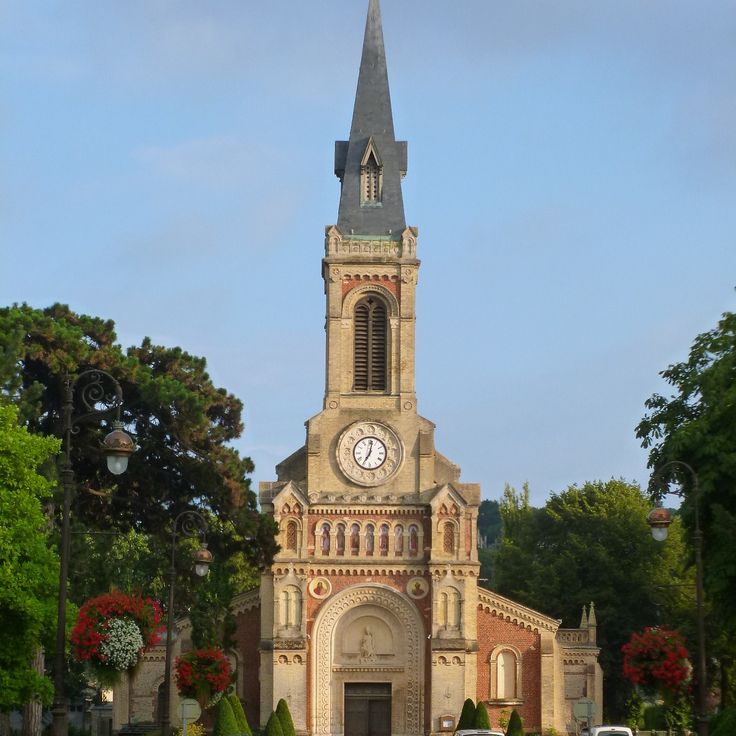
Cultural sites like the Franciscan Convent Cultural Center in Deauville and the Trouville Museum Villa Montebello provide architectural details and exhibition spaces. Religious buildings, including Saint Augustine Church and Trouville-sur-Mer Church, stand among residential streets. Historic estates such as Villa Strassburger and Manoir de Bénerville show regional building styles, while the Bains Pompéiens stand out with their unusual bathhouse architecture. From La Touques Racecourse to the Belgian Bridge, these locations offer different perspectives on two towns that have kept their coastal identity.
Deauville and Trouville on the Norman coast attract photographers with their mix of beach landscapes, historic architecture, and town life. The long beaches of both towns, lined with colorful wooden cabins and boardwalks, offer classic coastal scenes. The marina at Deauville shows moored sailboats, while markets in both towns fill with local produce and seafood. The neighborhoods around Place de Morny and Cornuché Boulevard preserve Belle Époque atmosphere through manor houses, Norman-style hotels, and the Casino Barrière facing the sea.
Cultural sites like the Franciscan Convent Cultural Center in Deauville and the Trouville Museum Villa Montebello provide architectural details and exhibition spaces. Religious buildings, including Saint Augustine Church and Trouville-sur-Mer Church, stand among residential streets. Historic estates such as Villa Strassburger and Manoir de Bénerville show regional building styles, while the Bains Pompéiens stand out with their unusual bathhouse architecture. From La Touques Racecourse to the Belgian Bridge, these locations offer different perspectives on two towns that have kept their coastal identity.
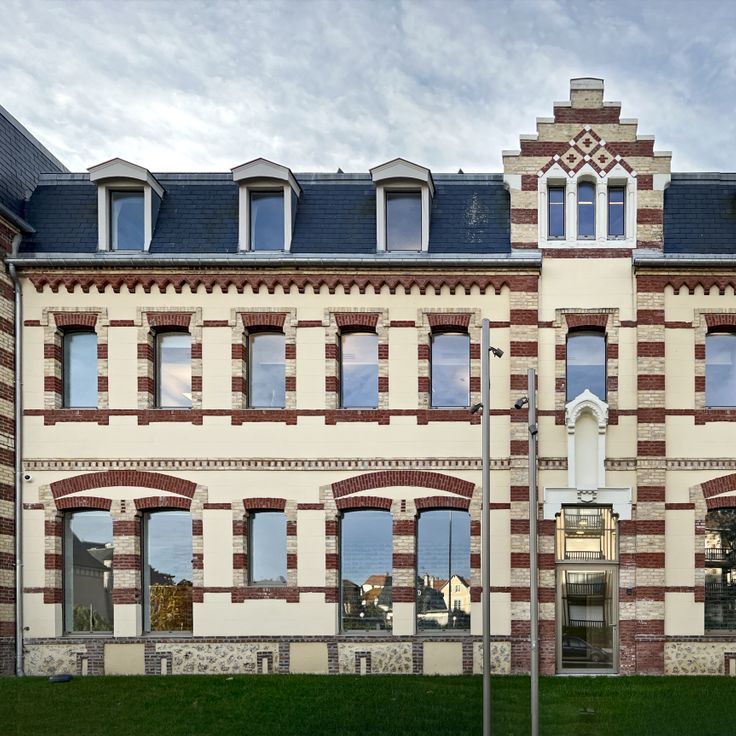
This former convent now serves as a cultural center in the heart of the city, blending its religious past with a varied program of exhibitions and activities. The Franciscaines houses a media library, several exhibition rooms, and spaces for public events throughout the year. The building retains traces of its monastic origins in its structure, while the interior has been adapted for contemporary art displays, lectures, and community gatherings. Visitors can explore rotating collections, read in quiet spaces, or attend cultural programs. The center attracts both locals and travelers looking to experience art and culture while visiting Deauville and Trouville.
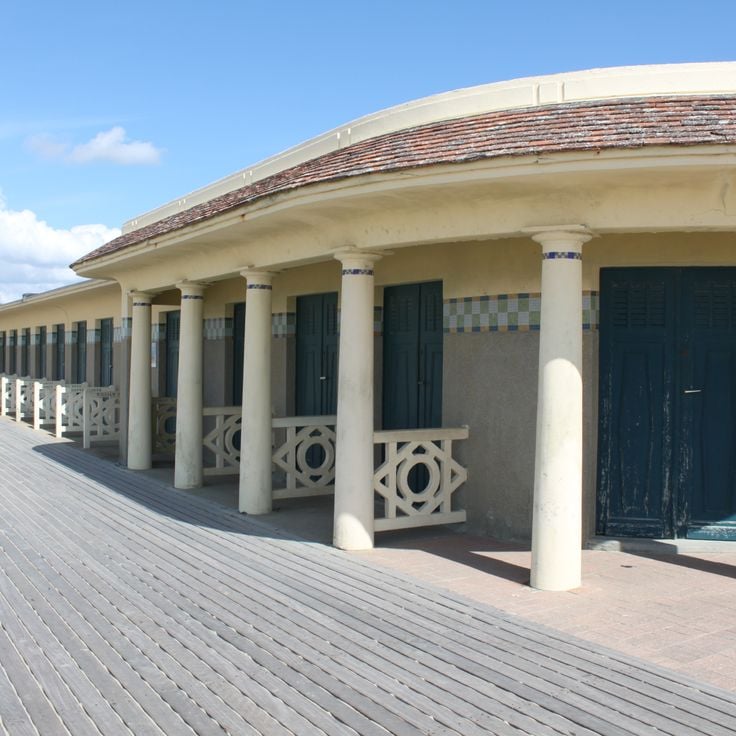
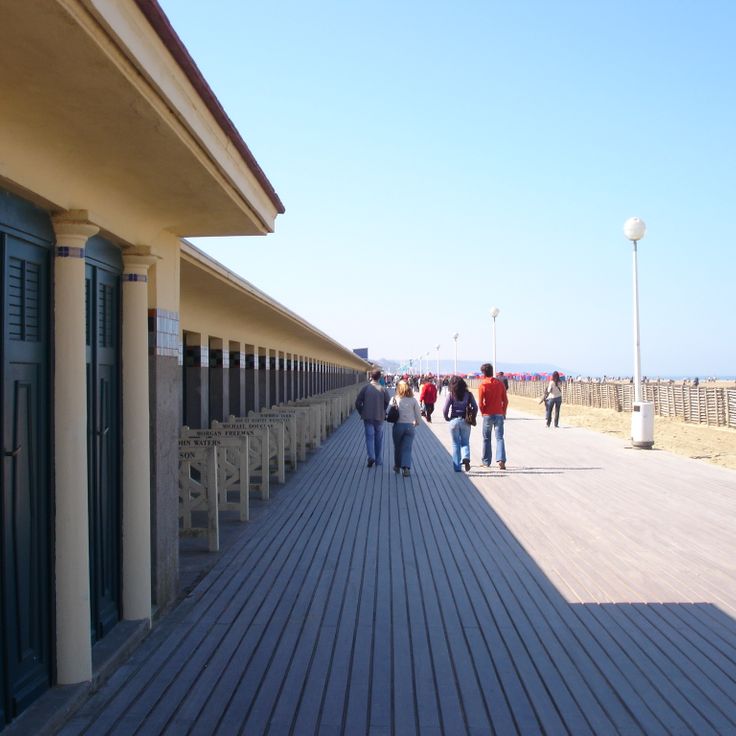
This wooden boardwalk runs right along the beach and features 450 changing cabins. Each cabin displays the name of an American actor or director. The structure has been a central part of Deauville since the 1920s and connects the grand hotels to the sandy shore. Visitors walk here in every season to enjoy the sea air or spot the names of famous film stars on the colorful cabins. The boards creak gently underfoot and give the place a distinct character.
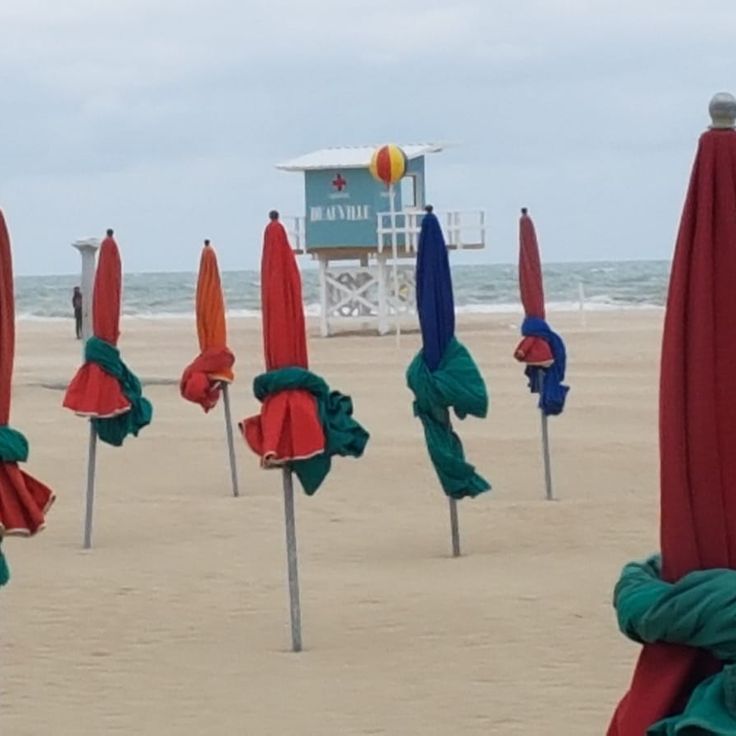
This beach is a popular meeting point in Deauville, where red and blue striped umbrellas line the shore. The fine sand stretches for about 1.2 miles (two kilometers) and offers space for walking and relaxing. During summer, the promenade fills with visitors who enjoy the sea and the fresh air. The colorful umbrellas create a lively scene along the coast, characteristic of Deauville and suitable for photography.
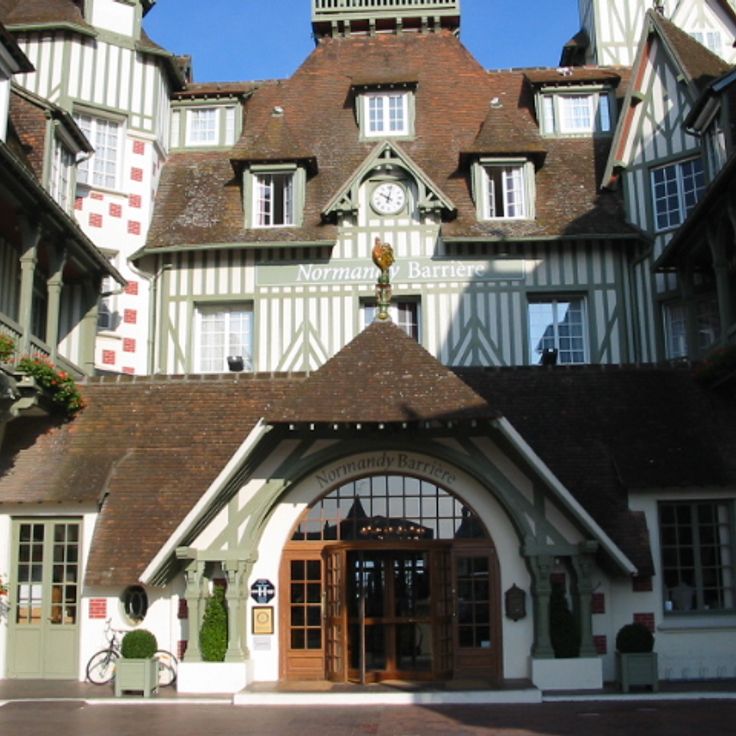
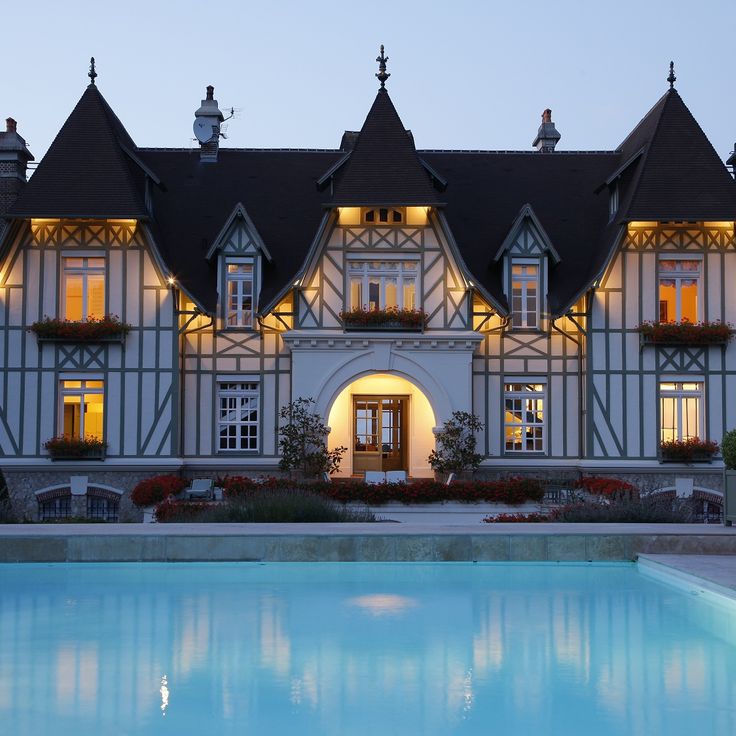
This hotel dates back to 1912 and displays Anglo-Norman construction with timber-frame facades. The building stands a short walk from the beach and is surrounded by gardens. The rooms offer views of the sea or the garden grounds. The interior combines classic elements with contemporary comfort. The entrance opens to a spacious lobby with high ceilings and understated lighting.
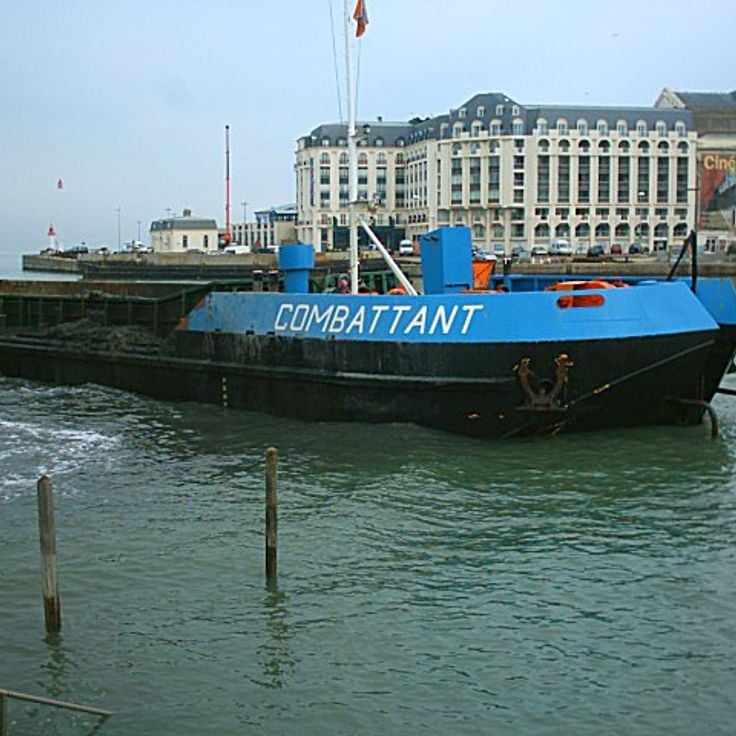
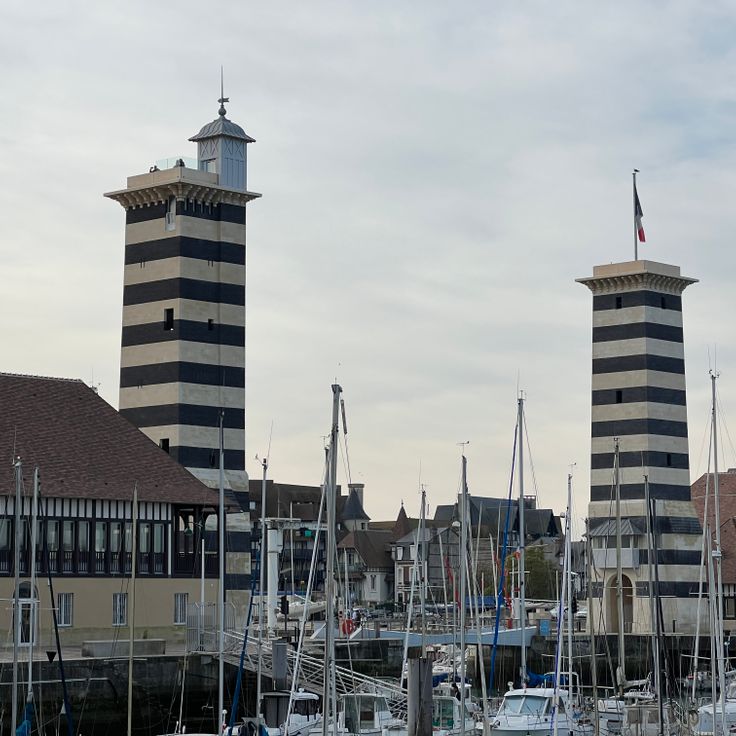
The Port of Deauville sits along the Normandy coast and welcomes boats of different sizes. Two breakwaters protect the berths from strong currents and wind. Around the harbor you find services for maintaining and supplying vessels. From the quays you look over the water and the buildings nearby. Sailors and boat owners from the region and beyond use this place, which connects the town to the sea. Roads nearby lead into the town center and to the beaches, which are a short walk away.
This racecourse has been part of the summer life on the Norman coast for over a century. Two tracks host thoroughbred races during the warm months. Spectators sometimes gather in the stands, which can hold several thousand people. The grounds sit surrounded by greenery, fields and trees, while the tracks themselves look smooth and well tended. When no races are on, the place feels open and quiet, with a stillness broken only by the wind or the occasional call of a bird.
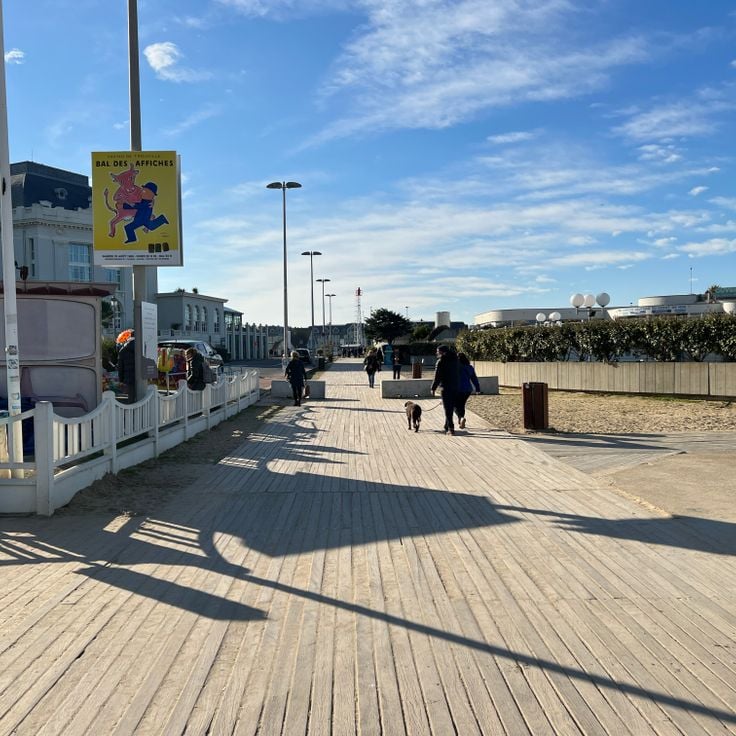
This boulevard runs along the coast of Deauville and offers a direct view of the sea and the beach. The promenade was built in the 1920s and remains a popular route for walkers today. Benches and lampposts from that era line the path and recall the early years of the seaside resort. From the boulevard you can see the beach cabins, the casino and the hotels that shape the town. In the morning joggers and dog walkers come here, during the day visitors stroll toward the harbor or down to the beach. The boulevard connects the center with quieter stretches of the coast and stays busy throughout the day.
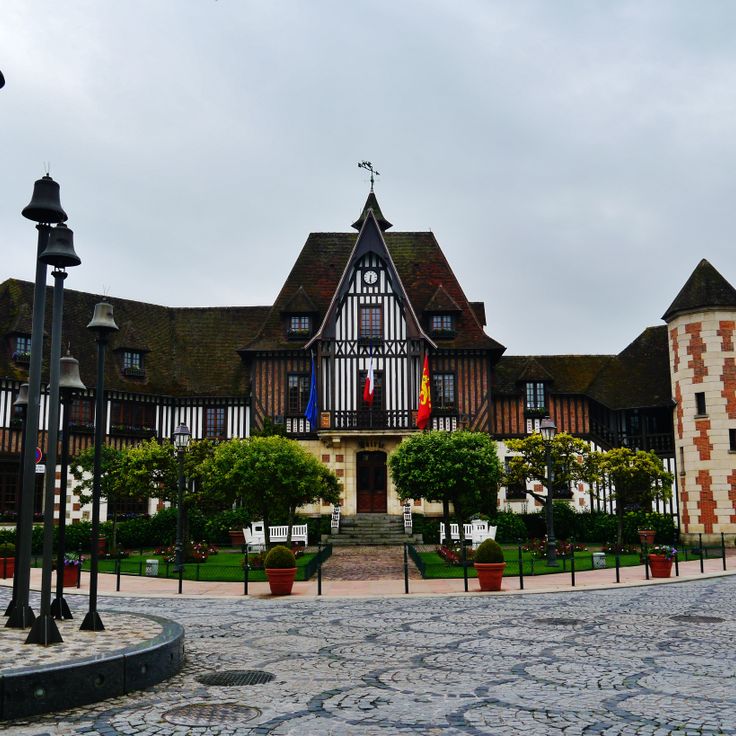
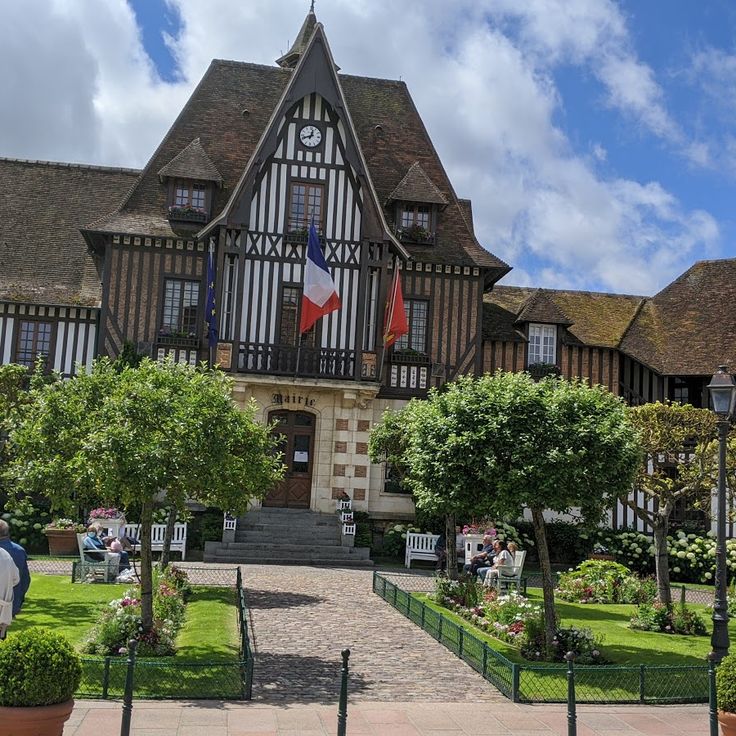
This town hall dates back to 1880 and displays Renaissance architecture elements. The facade is made of stone masonry, and a central clock tower rises above the building. The town hall sits in the heart of Deauville and serves as the administrative center of the city. The architecture reflects late 19th-century building styles, with symmetrical lines and decorative details on the front. Visitors can photograph the building from the outside and experience the historical character of the surrounding area.
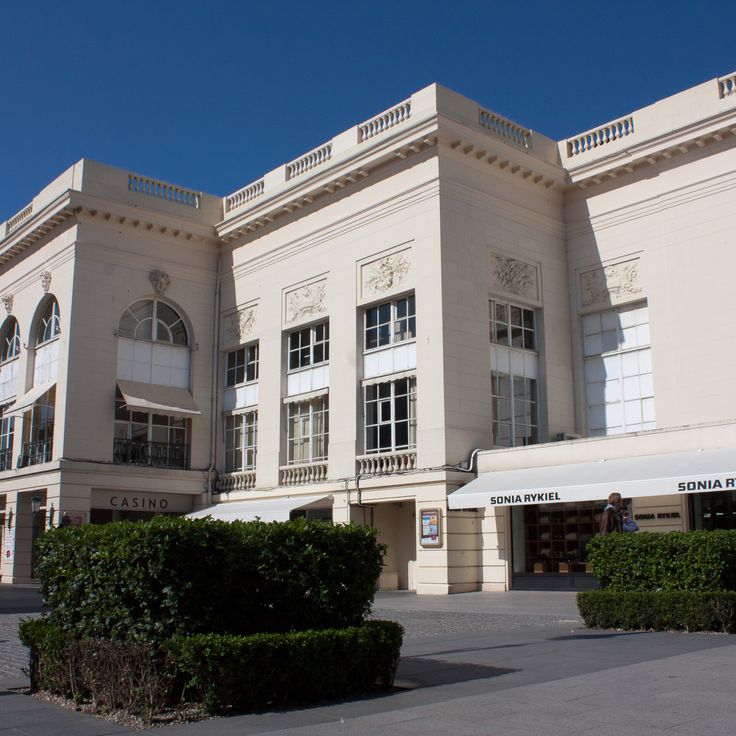
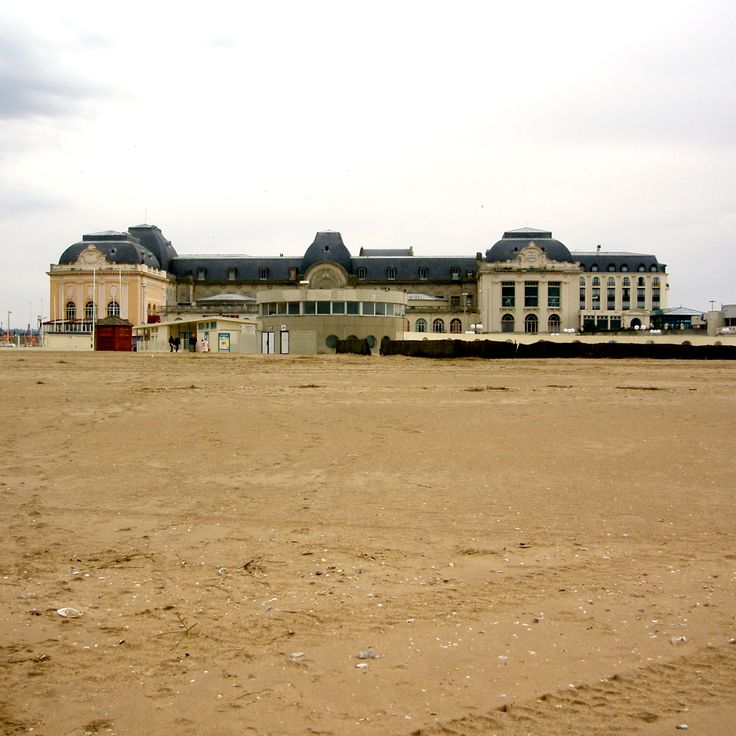
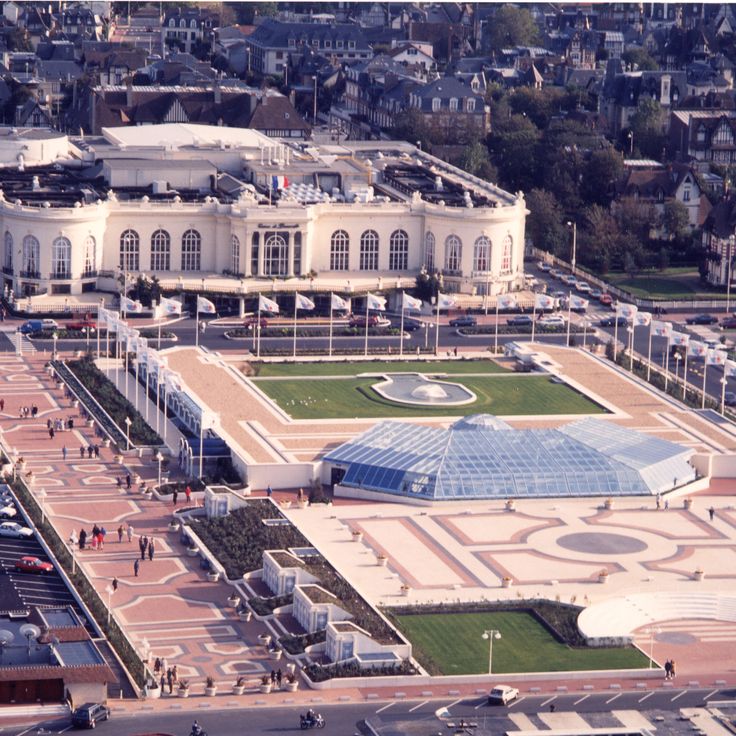
This building stands in the center of Deauville and shows the architecture of the coast with decorative elements from the 1920s. The gaming rooms are spread across several floors with glass chandeliers and wide staircases made of polished stone. Casino Barrière serves as a subject for architectural photography and documents the Belle Époque style along the Normandy coast.
This beach extends along the coast and is lined by a wooden boardwalk where small sailboats are moored in the marina. Along the waterfront stand villas from the 19th century, their facades reflecting the history of Trouville as a seaside resort. The sand invites a walk, while the scenery is shaped by the architecture of these houses and the comings and goings of the boats. The boardwalk offers a good vantage point over the sea and the activities around the harbor. The feel of this shoreline combines the character of old villas with the rhythm of maritime life.
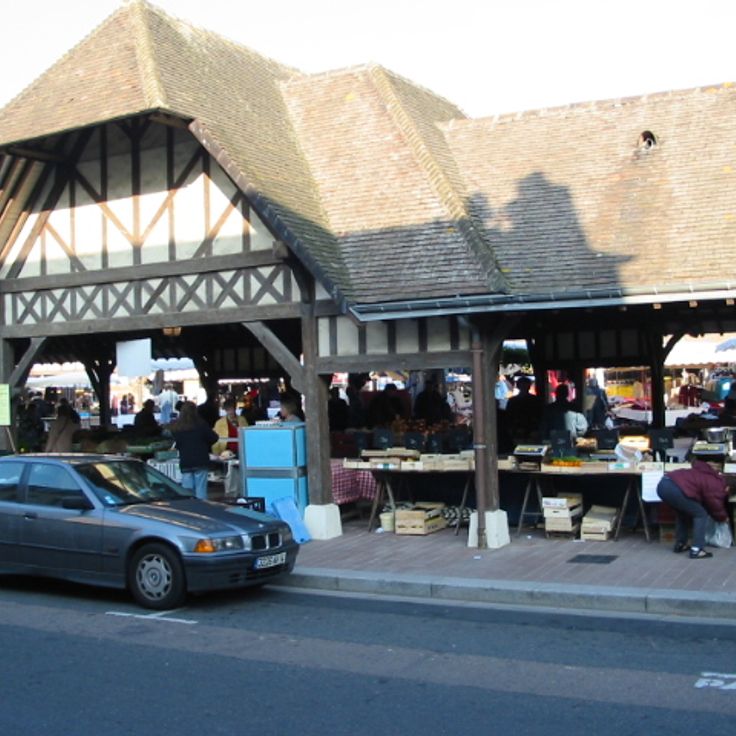
This open-air market brings the town center to life with red and white striped stalls selling fresh fruits, vegetables, Norman cheeses, seafood, and regional products. Vendors offer goods from the surrounding countryside while locals and visitors walk between the rows. The scent of fresh bread and Norman apples drifts through the stands, where you can also find cider and artisan goods.
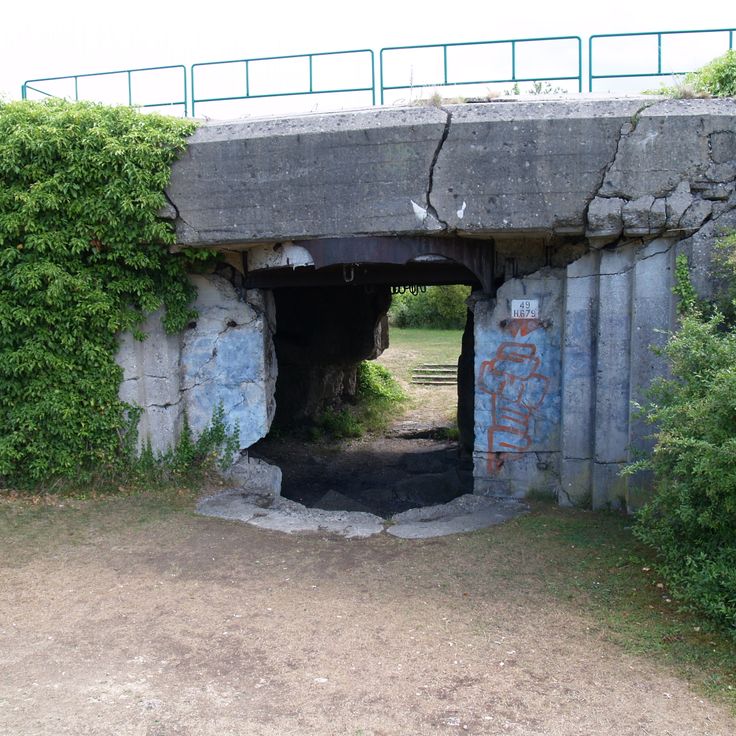
This natural area rises 110 meters above the English Channel and forms part of the coastal landscape near Deauville. Mont Canisy shows remains of fortifications from World War II scattered among trees and fields. Visitors come here to look out over the water and see the Normandy coastline. Walking paths lead through the grounds where history and nature exist side by side.
This manor from the 19th century forms a quiet photo point in Deauville, separate from the better-known beach boardwalks and casino. Stone walls and timber frames define the architecture, while the gardens show flower beds and arranged paths that change colors with each season. The place adds to the list of historical buildings in the area and offers an alternative to the busier coastal subjects.
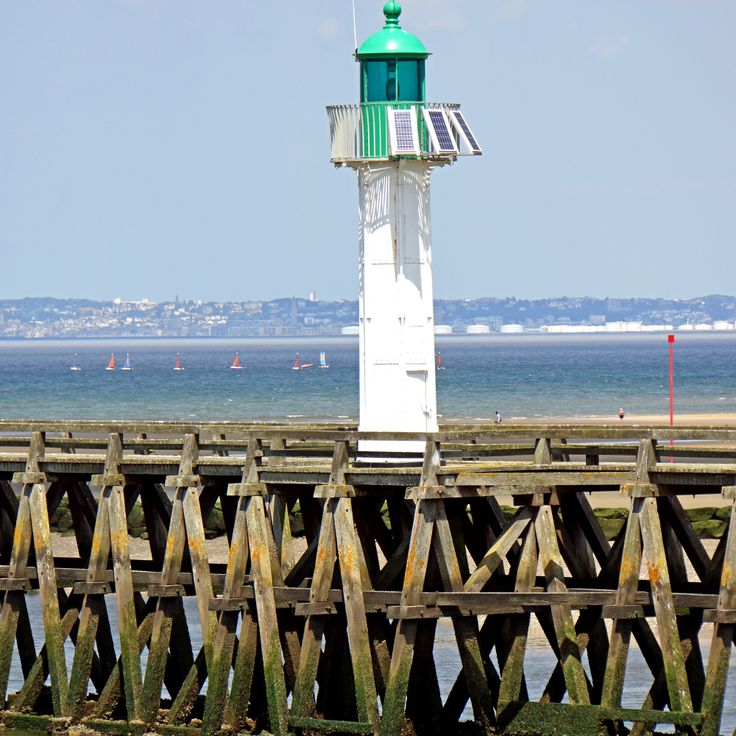
This lighthouse has guided vessels into the port of Deauville since 1874, a white structure with red trim rising several stories above the harbor entrance. The automated light system operates without a permanent crew, and the building continues to serve its navigational purpose along the Norman coast. From outside, the lighthouse appears as a clear maritime marker, defining the entrance to the harbor basin and visible by day and night.
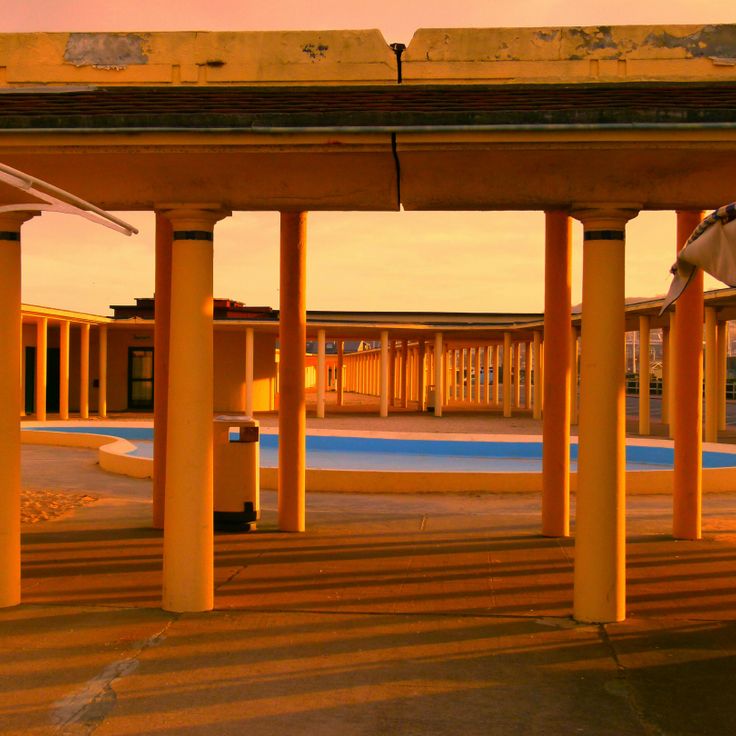
This swimming facility dates back to 1924 and displays mosaics, columns, and marble details inspired by Roman design. The large saltwater pool sits in a space that recalls ancient baths. For photography, the building offers architectural subjects with classical forms and historical character, part of the cultural landmarks found in Deauville.
This central plaza carries the name of the city founder and displays nineteenth-century architecture. Restaurants with outdoor seating line the sides, alongside fashion boutiques and a fountain in the center. Place de Morny serves as a meeting point and offers opportunities to capture the historical facades, the fountain, and the activity in the street cafés.
This wooden bridge crosses the Touques and connects Deauville with Trouville. Pedestrians use it every day to move from one town to the other, often heading to the beach or the marina. The timber construction sits low over the water and offers open views of the river and both coastal towns while you cross. On sunny days people gather here to pause and watch the activity on the water below.
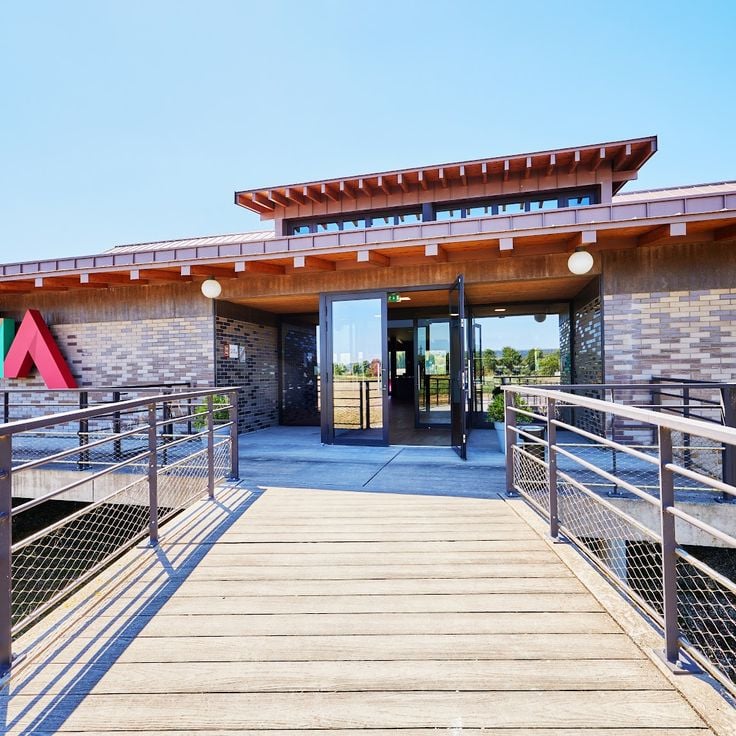
This convention center stands by the sea in Deauville, built with glass and steel, hosting exhibitions, conferences and business meetings. Large windows open views toward the water, and several halls of different sizes accommodate gatherings and presentations. The building draws business travelers and trade fair participants, with a functional and contemporary design marked by straight lines and natural light entering through broad glass fronts. From inside, you often see the sea and the beach stretching along the coast. The center serves as a venue for regional and international events throughout the year.
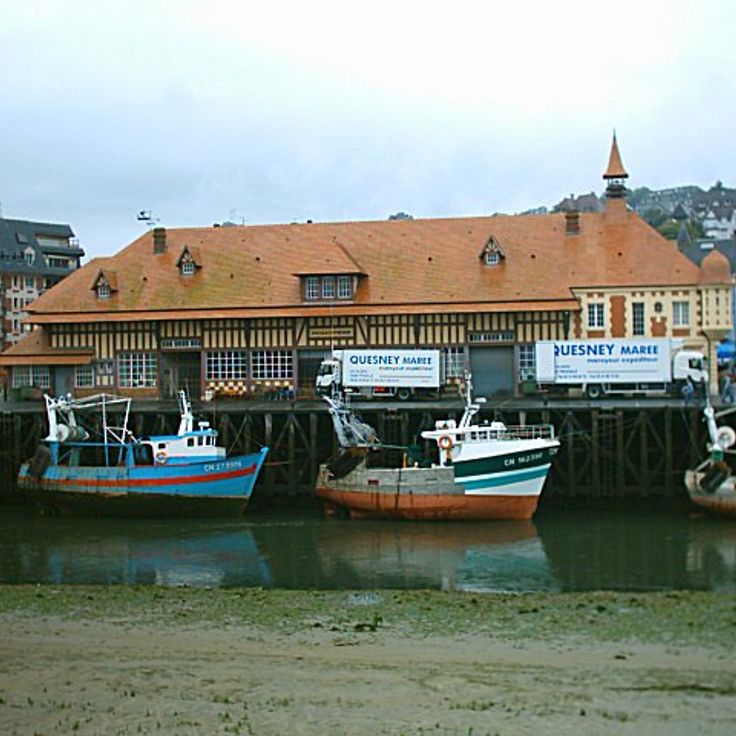
This indoor market sits near the harbor and has supplied Trouville with fresh fish for over a century. In the mornings, fishermen bring their boats in and sell cod, mackerel, sole, and shellfish caught in the English Channel waters. The stalls show the day's haul, and vendors explain where the catch comes from. Local cooks and visitors arrive early to find the best selection. The mood is busy but friendly, and the smell of salt water and fresh sea air fills the hall.
This church has stood in central Deauville since 1865 and draws photographers with its pointed arches and stone walls. Inside, stained glass windows filter daylight and cast patterns of color across the wooden pews. The architecture connects to local history and offers subjects for capturing religious buildings in the area.
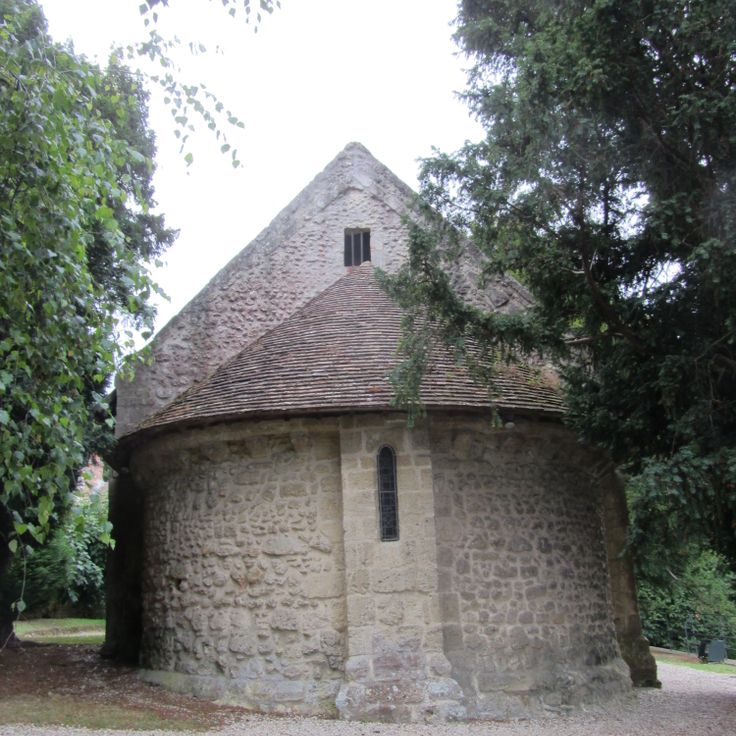
This presbytery from the 19th century stands next to Saint-Laurent Church. The stone walls show traditional Norman construction, with a pitched roof and tall windows that recall old houses of the region. In the garden, old trees cast shade over flowerbeds. The place is quiet, away from the beach boardwalk and the casinos. You will find here a religious building that belongs to the history of Deauville before the town became a seaside resort. The architecture is simple and solid, like many structures from that period in Normandy.
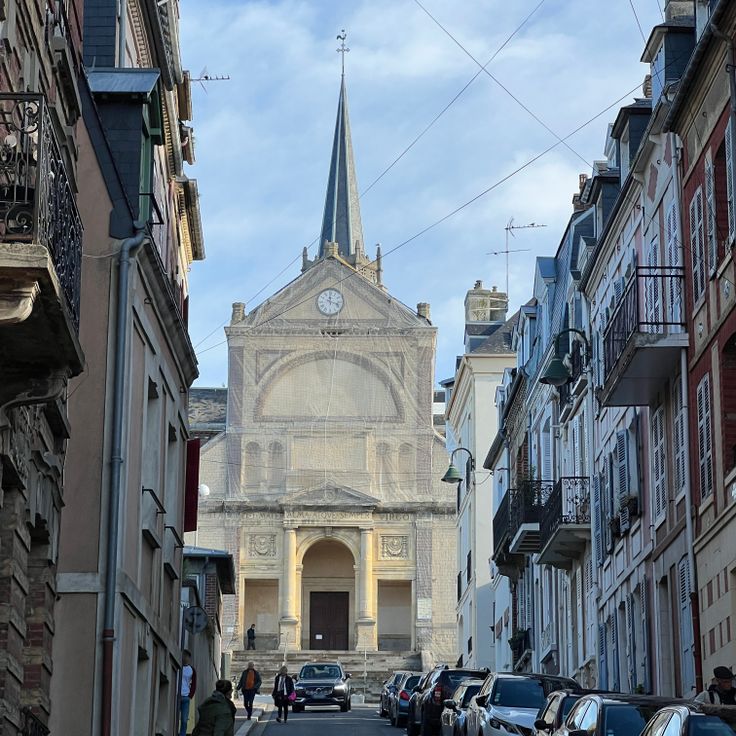
This church dates from the 19th century and stands in the center of Trouville-sur-Mer, showing Gothic forms in its construction. The glass windows inside tell religious stories and refer to the life by the sea that shapes the region. For photographers, the facade, the windows, and the interplay of light and color inside the church offer interesting subjects. The church is located near the harbor and the boardwalk.
This coastal path displays a series of advertising posters designed by Raymond Savignac in the 20th century. The posters line the seafront, and benches sit between them where people can rest and look at the water. The promenade combines the ocean with the graphic work that helped make Trouville a popular seaside resort. You can walk here and study the colors, typography, and postwar style. The Savignac Promenade suits photographers who want to capture both commercial art and beach scenery.
This observation tower stands 40 meters (131 feet) above sea level and offers views through its glass windows across the city, the beach, and the English Channel. From here you can look out over the coastline while watching the rooftops of Deauville and the harbor below. The tower serves as a landmark in the area and attracts photographers who want to capture the sea and the town from an elevated position. On clear days, the view extends far across the water.
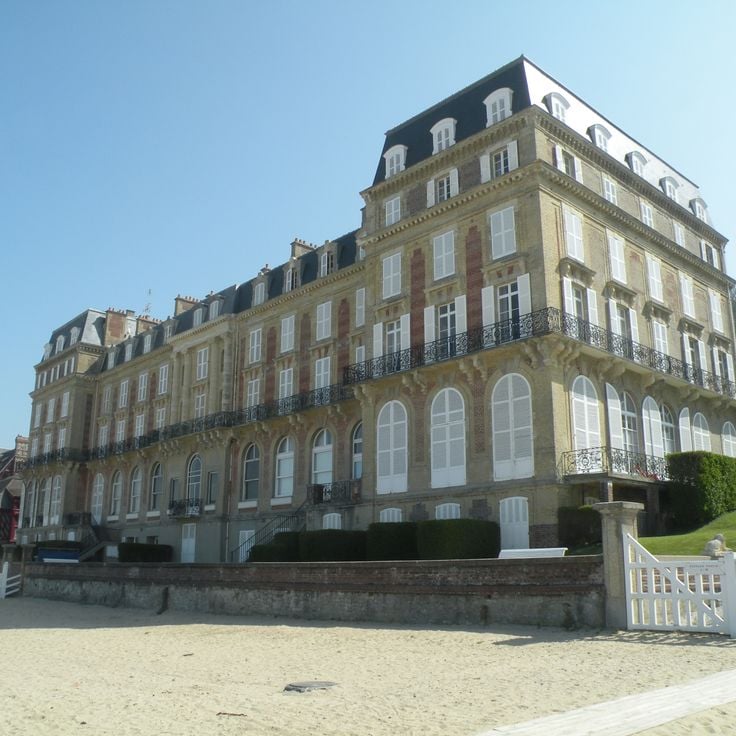
This hotel dates from 1866 and once served as a retreat for writers and artists. Marcel Proust spent time here while working on his early writings. The pale stone facade shows typical features of 19th-century seaside resorts. The mansard roof follows Norman building traditions. Windows look directly onto the English Channel and the wide beach. The seafront location makes this building a natural subject for photographers who want to capture historic architecture and coastal landscapes.
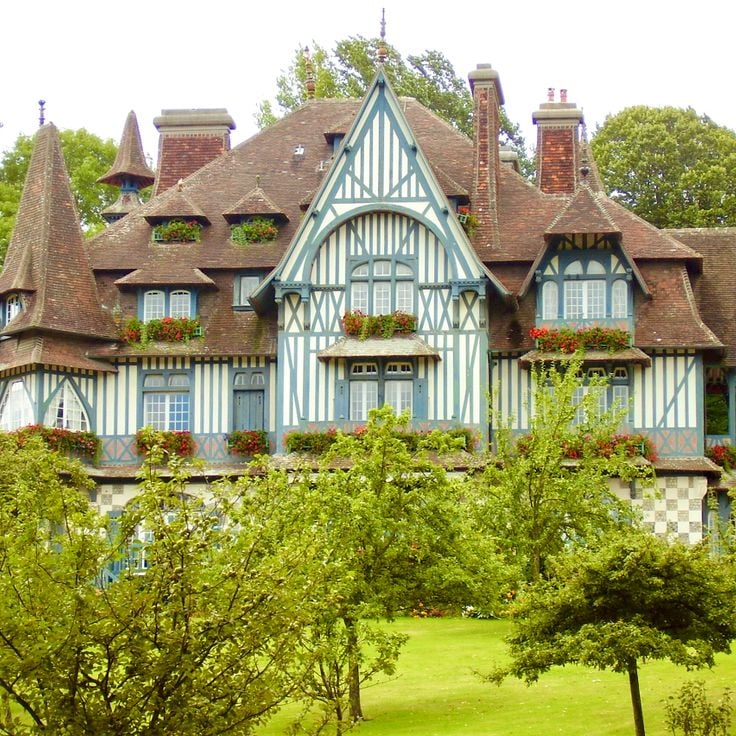
This Anglo-Norman style residence was built in 1907 and features half-timbered walls, red brick details and gardens with old trees. Villa Strassburger is one of the historical buildings in Deauville and contains furniture and objects from the time of its construction. The rooms are arranged as they appeared in the early 20th century. A tour takes you through salons and bedrooms where you can see how a wealthy family lived at that time.
This museum displays regional paintings and photographs in a brick mansion from 1865. The collections focus on local maritime history and artists connected to the Normandy coast. The villa itself is an example of 19th-century architecture and sits in Trouville.
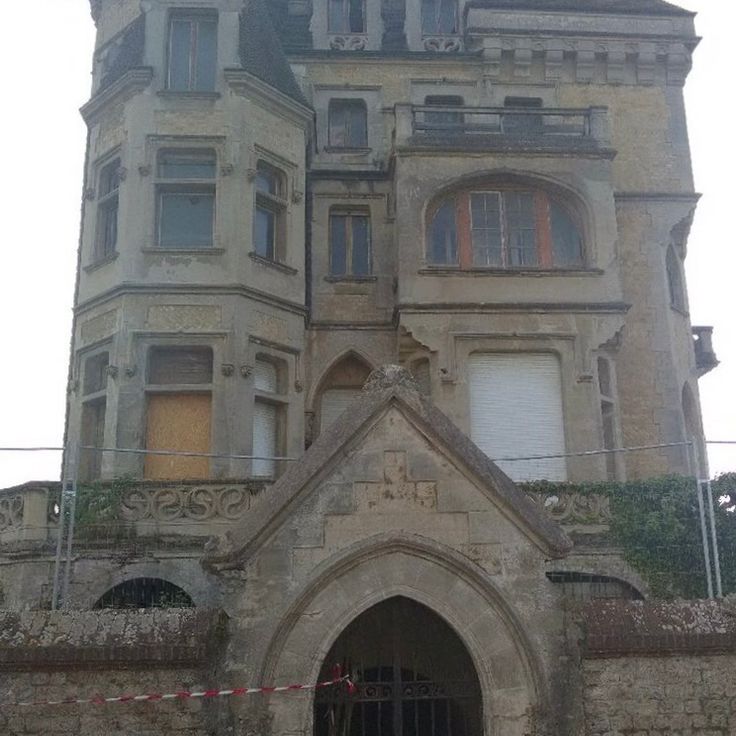
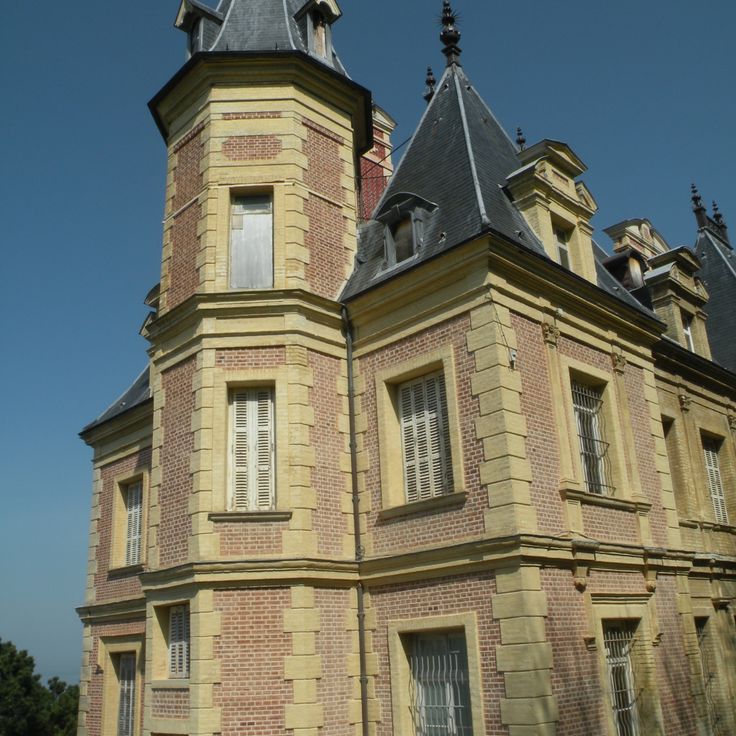
This villa was built in 1905 for automobile manufacturer Émile Mors and belongs to the private estates that shape the architectural heritage of Deauville. The building combines brick and stone with decorative metal details. The facade shows the Belle Époque style, when wealthy industrialists commissioned representative residences along the Norman coast. For photography, this villa offers an example of early twentieth-century architecture in the area.
This former convent now serves as a cultural center in the heart of the city, blending its religious past with a varied program of exhibitions and activities. The Franciscaines houses a media library, several exhibition rooms, and spaces for public events throughout the year. The building retains traces of its monastic origins in its structure, while the interior has been adapted for contemporary art displays, lectures, and community gatherings. Visitors can explore rotating collections, read in quiet spaces, or attend cultural programs. The center attracts both locals and travelers looking to experience art and culture while visiting Deauville and Trouville.
This wooden boardwalk runs right along the beach and features 450 changing cabins. Each cabin displays the name of an American actor or director. The structure has been a central part of Deauville since the 1920s and connects the grand hotels to the sandy shore. Visitors walk here in every season to enjoy the sea air or spot the names of famous film stars on the colorful cabins. The boards creak gently underfoot and give the place a distinct character.
This beach is a popular meeting point in Deauville, where red and blue striped umbrellas line the shore. The fine sand stretches for about 1.2 miles (two kilometers) and offers space for walking and relaxing. During summer, the promenade fills with visitors who enjoy the sea and the fresh air. The colorful umbrellas create a lively scene along the coast, characteristic of Deauville and suitable for photography.
This hotel dates back to 1912 and displays Anglo-Norman construction with timber-frame facades. The building stands a short walk from the beach and is surrounded by gardens. The rooms offer views of the sea or the garden grounds. The interior combines classic elements with contemporary comfort. The entrance opens to a spacious lobby with high ceilings and understated lighting.
The Port of Deauville sits along the Normandy coast and welcomes boats of different sizes. Two breakwaters protect the berths from strong currents and wind. Around the harbor you find services for maintaining and supplying vessels. From the quays you look over the water and the buildings nearby. Sailors and boat owners from the region and beyond use this place, which connects the town to the sea. Roads nearby lead into the town center and to the beaches, which are a short walk away.
This racecourse has been part of the summer life on the Norman coast for over a century. Two tracks host thoroughbred races during the warm months. Spectators sometimes gather in the stands, which can hold several thousand people. The grounds sit surrounded by greenery, fields and trees, while the tracks themselves look smooth and well tended. When no races are on, the place feels open and quiet, with a stillness broken only by the wind or the occasional call of a bird.
This boulevard runs along the coast of Deauville and offers a direct view of the sea and the beach. The promenade was built in the 1920s and remains a popular route for walkers today. Benches and lampposts from that era line the path and recall the early years of the seaside resort. From the boulevard you can see the beach cabins, the casino and the hotels that shape the town. In the morning joggers and dog walkers come here, during the day visitors stroll toward the harbor or down to the beach. The boulevard connects the center with quieter stretches of the coast and stays busy throughout the day.
This town hall dates back to 1880 and displays Renaissance architecture elements. The facade is made of stone masonry, and a central clock tower rises above the building. The town hall sits in the heart of Deauville and serves as the administrative center of the city. The architecture reflects late 19th-century building styles, with symmetrical lines and decorative details on the front. Visitors can photograph the building from the outside and experience the historical character of the surrounding area.
This building stands in the center of Deauville and shows the architecture of the coast with decorative elements from the 1920s. The gaming rooms are spread across several floors with glass chandeliers and wide staircases made of polished stone. Casino Barrière serves as a subject for architectural photography and documents the Belle Époque style along the Normandy coast.
This beach extends along the coast and is lined by a wooden boardwalk where small sailboats are moored in the marina. Along the waterfront stand villas from the 19th century, their facades reflecting the history of Trouville as a seaside resort. The sand invites a walk, while the scenery is shaped by the architecture of these houses and the comings and goings of the boats. The boardwalk offers a good vantage point over the sea and the activities around the harbor. The feel of this shoreline combines the character of old villas with the rhythm of maritime life.
This open-air market brings the town center to life with red and white striped stalls selling fresh fruits, vegetables, Norman cheeses, seafood, and regional products. Vendors offer goods from the surrounding countryside while locals and visitors walk between the rows. The scent of fresh bread and Norman apples drifts through the stands, where you can also find cider and artisan goods.
This natural area rises 110 meters above the English Channel and forms part of the coastal landscape near Deauville. Mont Canisy shows remains of fortifications from World War II scattered among trees and fields. Visitors come here to look out over the water and see the Normandy coastline. Walking paths lead through the grounds where history and nature exist side by side.
This manor from the 19th century forms a quiet photo point in Deauville, separate from the better-known beach boardwalks and casino. Stone walls and timber frames define the architecture, while the gardens show flower beds and arranged paths that change colors with each season. The place adds to the list of historical buildings in the area and offers an alternative to the busier coastal subjects.
This lighthouse has guided vessels into the port of Deauville since 1874, a white structure with red trim rising several stories above the harbor entrance. The automated light system operates without a permanent crew, and the building continues to serve its navigational purpose along the Norman coast. From outside, the lighthouse appears as a clear maritime marker, defining the entrance to the harbor basin and visible by day and night.
This swimming facility dates back to 1924 and displays mosaics, columns, and marble details inspired by Roman design. The large saltwater pool sits in a space that recalls ancient baths. For photography, the building offers architectural subjects with classical forms and historical character, part of the cultural landmarks found in Deauville.
This central plaza carries the name of the city founder and displays nineteenth-century architecture. Restaurants with outdoor seating line the sides, alongside fashion boutiques and a fountain in the center. Place de Morny serves as a meeting point and offers opportunities to capture the historical facades, the fountain, and the activity in the street cafés.
This wooden bridge crosses the Touques and connects Deauville with Trouville. Pedestrians use it every day to move from one town to the other, often heading to the beach or the marina. The timber construction sits low over the water and offers open views of the river and both coastal towns while you cross. On sunny days people gather here to pause and watch the activity on the water below.
This convention center stands by the sea in Deauville, built with glass and steel, hosting exhibitions, conferences and business meetings. Large windows open views toward the water, and several halls of different sizes accommodate gatherings and presentations. The building draws business travelers and trade fair participants, with a functional and contemporary design marked by straight lines and natural light entering through broad glass fronts. From inside, you often see the sea and the beach stretching along the coast. The center serves as a venue for regional and international events throughout the year.
This indoor market sits near the harbor and has supplied Trouville with fresh fish for over a century. In the mornings, fishermen bring their boats in and sell cod, mackerel, sole, and shellfish caught in the English Channel waters. The stalls show the day's haul, and vendors explain where the catch comes from. Local cooks and visitors arrive early to find the best selection. The mood is busy but friendly, and the smell of salt water and fresh sea air fills the hall.
This church has stood in central Deauville since 1865 and draws photographers with its pointed arches and stone walls. Inside, stained glass windows filter daylight and cast patterns of color across the wooden pews. The architecture connects to local history and offers subjects for capturing religious buildings in the area.
This presbytery from the 19th century stands next to Saint-Laurent Church. The stone walls show traditional Norman construction, with a pitched roof and tall windows that recall old houses of the region. In the garden, old trees cast shade over flowerbeds. The place is quiet, away from the beach boardwalk and the casinos. You will find here a religious building that belongs to the history of Deauville before the town became a seaside resort. The architecture is simple and solid, like many structures from that period in Normandy.
This church dates from the 19th century and stands in the center of Trouville-sur-Mer, showing Gothic forms in its construction. The glass windows inside tell religious stories and refer to the life by the sea that shapes the region. For photographers, the facade, the windows, and the interplay of light and color inside the church offer interesting subjects. The church is located near the harbor and the boardwalk.
This coastal path displays a series of advertising posters designed by Raymond Savignac in the 20th century. The posters line the seafront, and benches sit between them where people can rest and look at the water. The promenade combines the ocean with the graphic work that helped make Trouville a popular seaside resort. You can walk here and study the colors, typography, and postwar style. The Savignac Promenade suits photographers who want to capture both commercial art and beach scenery.
This observation tower stands 40 meters (131 feet) above sea level and offers views through its glass windows across the city, the beach, and the English Channel. From here you can look out over the coastline while watching the rooftops of Deauville and the harbor below. The tower serves as a landmark in the area and attracts photographers who want to capture the sea and the town from an elevated position. On clear days, the view extends far across the water.
This hotel dates from 1866 and once served as a retreat for writers and artists. Marcel Proust spent time here while working on his early writings. The pale stone facade shows typical features of 19th-century seaside resorts. The mansard roof follows Norman building traditions. Windows look directly onto the English Channel and the wide beach. The seafront location makes this building a natural subject for photographers who want to capture historic architecture and coastal landscapes.
This Anglo-Norman style residence was built in 1907 and features half-timbered walls, red brick details and gardens with old trees. Villa Strassburger is one of the historical buildings in Deauville and contains furniture and objects from the time of its construction. The rooms are arranged as they appeared in the early 20th century. A tour takes you through salons and bedrooms where you can see how a wealthy family lived at that time.
This museum displays regional paintings and photographs in a brick mansion from 1865. The collections focus on local maritime history and artists connected to the Normandy coast. The villa itself is an example of 19th-century architecture and sits in Trouville.
This villa was built in 1905 for automobile manufacturer Émile Mors and belongs to the private estates that shape the architectural heritage of Deauville. The building combines brick and stone with decorative metal details. The facade shows the Belle Époque style, when wealthy industrialists commissioned representative residences along the Norman coast. For photography, this villa offers an example of early twentieth-century architecture in the area.
This former convent now serves as a cultural center in the heart of the city, blending its religious past with a varied program of exhibitions and activities. The Franciscaines houses a media library, several exhibition rooms, and spaces for public events throughout the year. The building retains traces of its monastic origins in its structure, while the interior has been adapted for contemporary art displays, lectures, and community gatherings. Visitors can explore rotating collections, read in quiet spaces, or attend cultural programs. The center attracts both locals and travelers looking to experience art and culture while visiting Deauville and Trouville.
This wooden boardwalk runs right along the beach and features 450 changing cabins. Each cabin displays the name of an American actor or director. The structure has been a central part of Deauville since the 1920s and connects the grand hotels to the sandy shore. Visitors walk here in every season to enjoy the sea air or spot the names of famous film stars on the colorful cabins. The boards creak gently underfoot and give the place a distinct character.
This beach is a popular meeting point in Deauville, where red and blue striped umbrellas line the shore. The fine sand stretches for about 1.2 miles (two kilometers) and offers space for walking and relaxing. During summer, the promenade fills with visitors who enjoy the sea and the fresh air. The colorful umbrellas create a lively scene along the coast, characteristic of Deauville and suitable for photography.
This hotel dates back to 1912 and displays Anglo-Norman construction with timber-frame facades. The building stands a short walk from the beach and is surrounded by gardens. The rooms offer views of the sea or the garden grounds. The interior combines classic elements with contemporary comfort. The entrance opens to a spacious lobby with high ceilings and understated lighting.
The Port of Deauville sits along the Normandy coast and welcomes boats of different sizes. Two breakwaters protect the berths from strong currents and wind. Around the harbor you find services for maintaining and supplying vessels. From the quays you look over the water and the buildings nearby. Sailors and boat owners from the region and beyond use this place, which connects the town to the sea. Roads nearby lead into the town center and to the beaches, which are a short walk away.
This racecourse has been part of the summer life on the Norman coast for over a century. Two tracks host thoroughbred races during the warm months. Spectators sometimes gather in the stands, which can hold several thousand people. The grounds sit surrounded by greenery, fields and trees, while the tracks themselves look smooth and well tended. When no races are on, the place feels open and quiet, with a stillness broken only by the wind or the occasional call of a bird.
This boulevard runs along the coast of Deauville and offers a direct view of the sea and the beach. The promenade was built in the 1920s and remains a popular route for walkers today. Benches and lampposts from that era line the path and recall the early years of the seaside resort. From the boulevard you can see the beach cabins, the casino and the hotels that shape the town. In the morning joggers and dog walkers come here, during the day visitors stroll toward the harbor or down to the beach. The boulevard connects the center with quieter stretches of the coast and stays busy throughout the day.
This town hall dates back to 1880 and displays Renaissance architecture elements. The facade is made of stone masonry, and a central clock tower rises above the building. The town hall sits in the heart of Deauville and serves as the administrative center of the city. The architecture reflects late 19th-century building styles, with symmetrical lines and decorative details on the front. Visitors can photograph the building from the outside and experience the historical character of the surrounding area.
This building stands in the center of Deauville and shows the architecture of the coast with decorative elements from the 1920s. The gaming rooms are spread across several floors with glass chandeliers and wide staircases made of polished stone. Casino Barrière serves as a subject for architectural photography and documents the Belle Époque style along the Normandy coast.
This beach extends along the coast and is lined by a wooden boardwalk where small sailboats are moored in the marina. Along the waterfront stand villas from the 19th century, their facades reflecting the history of Trouville as a seaside resort. The sand invites a walk, while the scenery is shaped by the architecture of these houses and the comings and goings of the boats. The boardwalk offers a good vantage point over the sea and the activities around the harbor. The feel of this shoreline combines the character of old villas with the rhythm of maritime life.
This open-air market brings the town center to life with red and white striped stalls selling fresh fruits, vegetables, Norman cheeses, seafood, and regional products. Vendors offer goods from the surrounding countryside while locals and visitors walk between the rows. The scent of fresh bread and Norman apples drifts through the stands, where you can also find cider and artisan goods.
This natural area rises 110 meters above the English Channel and forms part of the coastal landscape near Deauville. Mont Canisy shows remains of fortifications from World War II scattered among trees and fields. Visitors come here to look out over the water and see the Normandy coastline. Walking paths lead through the grounds where history and nature exist side by side.
This manor from the 19th century forms a quiet photo point in Deauville, separate from the better-known beach boardwalks and casino. Stone walls and timber frames define the architecture, while the gardens show flower beds and arranged paths that change colors with each season. The place adds to the list of historical buildings in the area and offers an alternative to the busier coastal subjects.
This lighthouse has guided vessels into the port of Deauville since 1874, a white structure with red trim rising several stories above the harbor entrance. The automated light system operates without a permanent crew, and the building continues to serve its navigational purpose along the Norman coast. From outside, the lighthouse appears as a clear maritime marker, defining the entrance to the harbor basin and visible by day and night.
This swimming facility dates back to 1924 and displays mosaics, columns, and marble details inspired by Roman design. The large saltwater pool sits in a space that recalls ancient baths. For photography, the building offers architectural subjects with classical forms and historical character, part of the cultural landmarks found in Deauville.
This central plaza carries the name of the city founder and displays nineteenth-century architecture. Restaurants with outdoor seating line the sides, alongside fashion boutiques and a fountain in the center. Place de Morny serves as a meeting point and offers opportunities to capture the historical facades, the fountain, and the activity in the street cafés.
This wooden bridge crosses the Touques and connects Deauville with Trouville. Pedestrians use it every day to move from one town to the other, often heading to the beach or the marina. The timber construction sits low over the water and offers open views of the river and both coastal towns while you cross. On sunny days people gather here to pause and watch the activity on the water below.
This convention center stands by the sea in Deauville, built with glass and steel, hosting exhibitions, conferences and business meetings. Large windows open views toward the water, and several halls of different sizes accommodate gatherings and presentations. The building draws business travelers and trade fair participants, with a functional and contemporary design marked by straight lines and natural light entering through broad glass fronts. From inside, you often see the sea and the beach stretching along the coast. The center serves as a venue for regional and international events throughout the year.
This indoor market sits near the harbor and has supplied Trouville with fresh fish for over a century. In the mornings, fishermen bring their boats in and sell cod, mackerel, sole, and shellfish caught in the English Channel waters. The stalls show the day's haul, and vendors explain where the catch comes from. Local cooks and visitors arrive early to find the best selection. The mood is busy but friendly, and the smell of salt water and fresh sea air fills the hall.
This church has stood in central Deauville since 1865 and draws photographers with its pointed arches and stone walls. Inside, stained glass windows filter daylight and cast patterns of color across the wooden pews. The architecture connects to local history and offers subjects for capturing religious buildings in the area.
This presbytery from the 19th century stands next to Saint-Laurent Church. The stone walls show traditional Norman construction, with a pitched roof and tall windows that recall old houses of the region. In the garden, old trees cast shade over flowerbeds. The place is quiet, away from the beach boardwalk and the casinos. You will find here a religious building that belongs to the history of Deauville before the town became a seaside resort. The architecture is simple and solid, like many structures from that period in Normandy.
This church dates from the 19th century and stands in the center of Trouville-sur-Mer, showing Gothic forms in its construction. The glass windows inside tell religious stories and refer to the life by the sea that shapes the region. For photographers, the facade, the windows, and the interplay of light and color inside the church offer interesting subjects. The church is located near the harbor and the boardwalk.
This coastal path displays a series of advertising posters designed by Raymond Savignac in the 20th century. The posters line the seafront, and benches sit between them where people can rest and look at the water. The promenade combines the ocean with the graphic work that helped make Trouville a popular seaside resort. You can walk here and study the colors, typography, and postwar style. The Savignac Promenade suits photographers who want to capture both commercial art and beach scenery.
This observation tower stands 40 meters (131 feet) above sea level and offers views through its glass windows across the city, the beach, and the English Channel. From here you can look out over the coastline while watching the rooftops of Deauville and the harbor below. The tower serves as a landmark in the area and attracts photographers who want to capture the sea and the town from an elevated position. On clear days, the view extends far across the water.
This hotel dates from 1866 and once served as a retreat for writers and artists. Marcel Proust spent time here while working on his early writings. The pale stone facade shows typical features of 19th-century seaside resorts. The mansard roof follows Norman building traditions. Windows look directly onto the English Channel and the wide beach. The seafront location makes this building a natural subject for photographers who want to capture historic architecture and coastal landscapes.
This Anglo-Norman style residence was built in 1907 and features half-timbered walls, red brick details and gardens with old trees. Villa Strassburger is one of the historical buildings in Deauville and contains furniture and objects from the time of its construction. The rooms are arranged as they appeared in the early 20th century. A tour takes you through salons and bedrooms where you can see how a wealthy family lived at that time.
This museum displays regional paintings and photographs in a brick mansion from 1865. The collections focus on local maritime history and artists connected to the Normandy coast. The villa itself is an example of 19th-century architecture and sits in Trouville.
This villa was built in 1905 for automobile manufacturer Émile Mors and belongs to the private estates that shape the architectural heritage of Deauville. The building combines brick and stone with decorative metal details. The facade shows the Belle Époque style, when wealthy industrialists commissioned representative residences along the Norman coast. For photography, this villa offers an example of early twentieth-century architecture in the area.