Sparlösa Runestone, Norse runestone in Sparlösa socken, Sweden
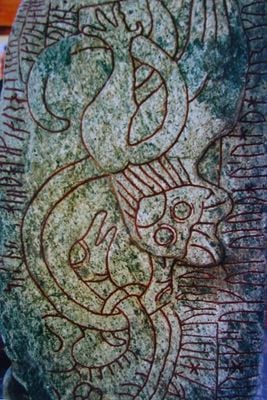
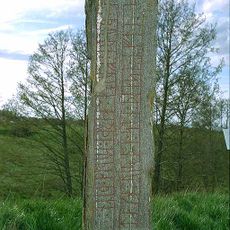
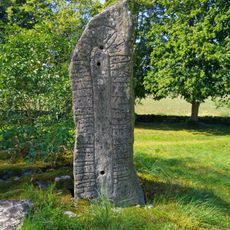
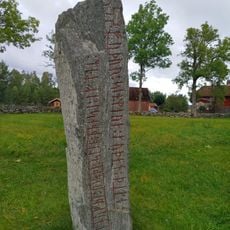
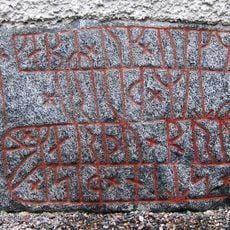
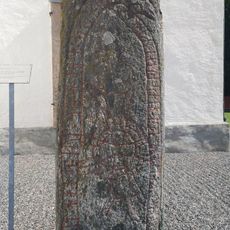
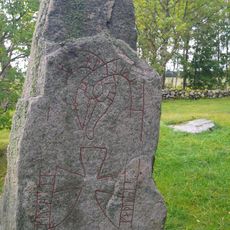
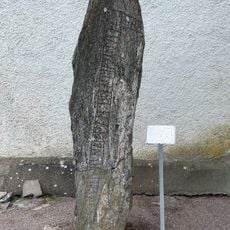
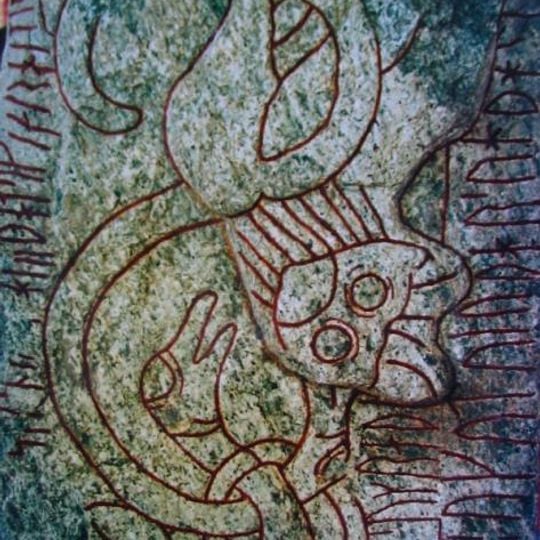
The Sparlösa Runestone, catalogued Vg 119, is a 1.77-metre granite slab carved on all four sides, with one face given entirely to images. Its carvings include a ship with a sail marked by a cross and two birds on the yardarms, a man on horseback hunting a stag with a leopard, and an owl-like bird fighting a snake. The photograph shows an interlaced animal in deep incised lines, its stylized head with two circular eyes, flanked by vertical bands of angular runic characters.
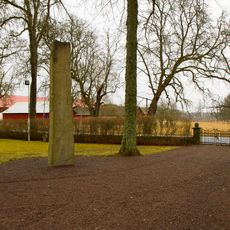
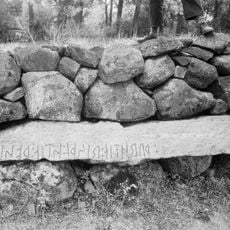
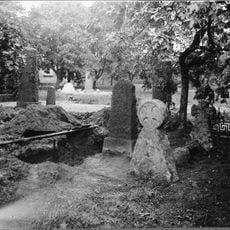
The stone was found in 1669, built into the south chancel wall of the old Sparlösa church. During a rebuilding of the chancel in 1685 it was split and the two halves were walled in separately. The church was demolished in 1848 and the halves were again built into the new church. They were removed in 1937, when carvings were found on the hidden sides, and the stone was reassembled and placed in the churchyard.
The stone displays names like Eric and Alrik connected to the Yngling dynasty, alongside carved images of ships, buildings, and various animals. These figures tell stories of the people and their world from that era.
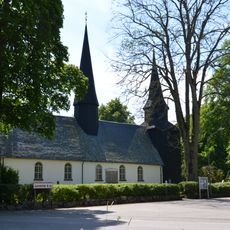
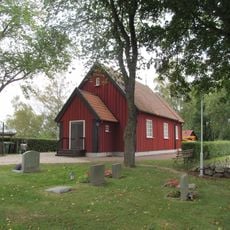
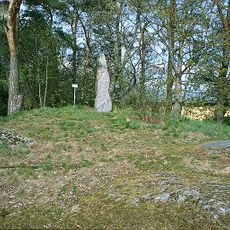
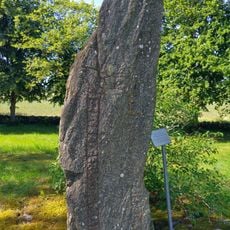
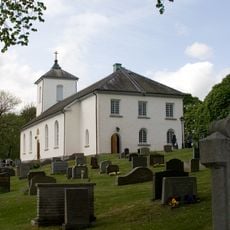
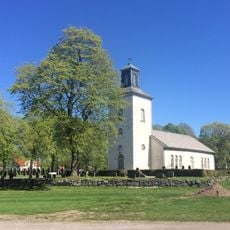
Since 1982 the stone has stood inside a protective wooden building just beside Sparlösa Church, on the churchyard in Vara Municipality. Visitors examine the four carved faces there; the halves were taken out of the church wall in 1937 and joined. The stone is 1.77 m tall, so the carvings sit at reading height.
The stone bears the phrase runaR ræginkundu, connecting to ancient Norse mythology and meaning runes of divine origin. This rare inscription links the runestone carver's craftsmanship with the spiritual beliefs of the period.
The community of curious travelers
AroundUs brings together thousands of curated places, local tips, and hidden gems, enriched daily by 94,309 contributors worldwide.