Skokloster Castle, Baroque castle in Håbo Municipality, Sweden
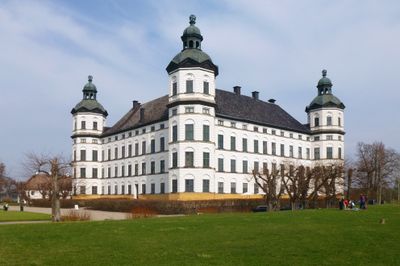
Skokloster Castle is a Baroque palace on the Sko peninsula of Lake Mälaren, built from 1654 for Carl Gustaf Wrangel. Its white-plastered facade is banded with grey stone courses and rows of rectangular windows across four storeys. Three towers rise into dark-green cupolas with lanterns and finials, and the south gable carries Wrangel's coat of arms above a gilded oak trophy crown carved in 1657 by Markus Hebel.
Carl Gustaf Wrangel, born at Skokloster in 1613, began building the castle in 1654 on the site of his father Herman's manor. The architect was probably Caspar Vogel, with Jean de la Vallée and Nicodemus Tessin the Elder also involved. Wrangel died in 1676 before completion, and the estate passed through his daughter to the Brahe family. The state bought it in 1967.
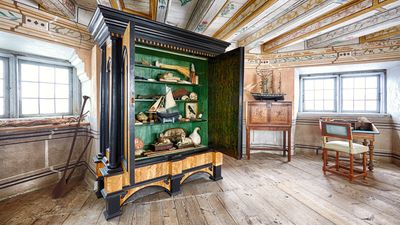
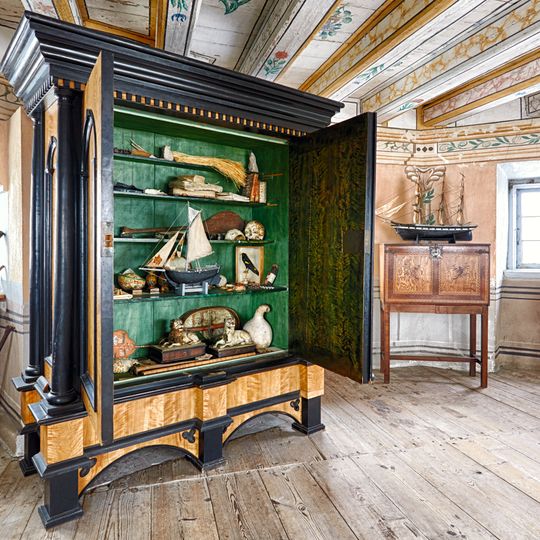
The castle's collections grew through the Wrangel, Brahe and von Essen families, who acquired paintings, textiles, silver and glass tableware between 1550 and 1850. Among the paintings is Giuseppe Arcimboldo's Vertumnus, taken as war booty from Prague in 1648. The armoury holds the world's largest collection of personal 17th-century military weapons, including muskets, pistols, swords and Japanese swords.
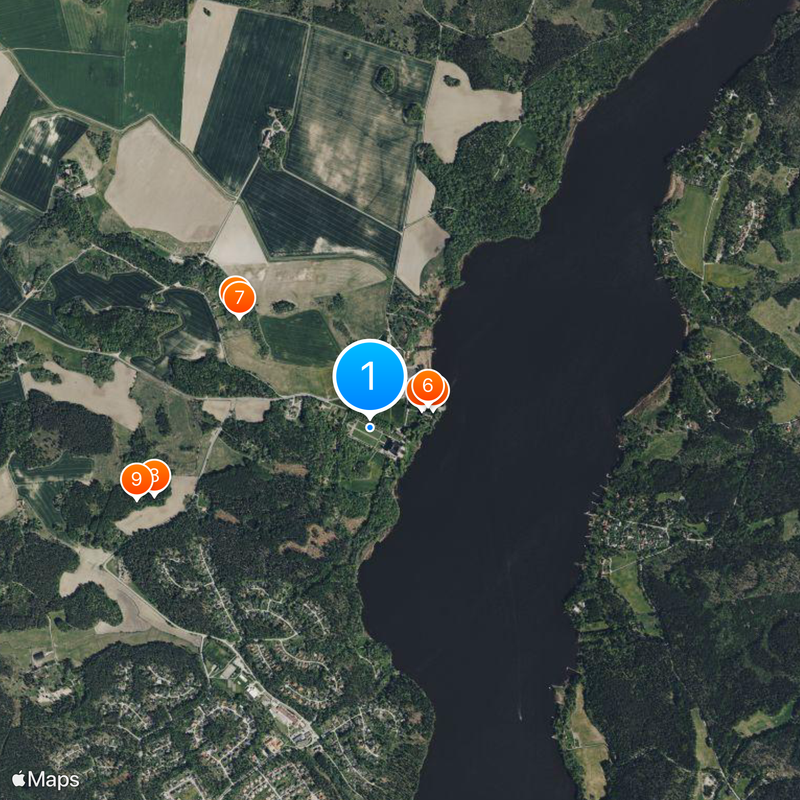
The castle stands on the Skohalvön peninsula by Lake Mälaren, reached by road between Stockholm and Uppsala; the grounds are open daily while the museum halls are shown only in the summer months. The interiors have no modern heating, so dress warmly. The 2015 roof renovation followed earlier repairs by Ove Hidemark in the 1970s.
The Unfinished Hall was left as it stood in the summer of 1676, when work stopped after Carl Gustaf Wrangel's death. Several hundred tools and about a dozen 17th-century construction books remain beside it, and Skokloster is the only building in Europe to keep a complete 17th-century building site of comparable authenticity.
The community of curious travelers
AroundUs brings together thousands of curated places, local tips, and hidden gems, enriched daily by 93,624 contributors worldwide.