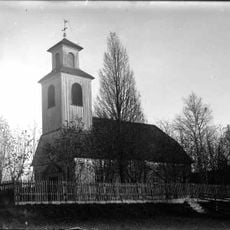
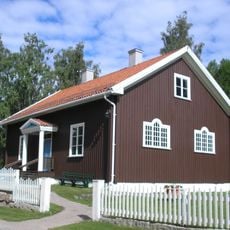
Fågelsjö Gammelgård, Historic farmstead and museum in Sveg, Sweden.
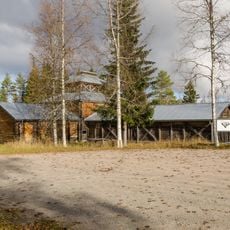
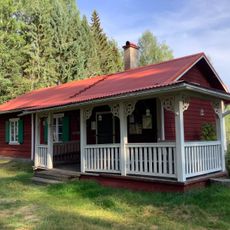
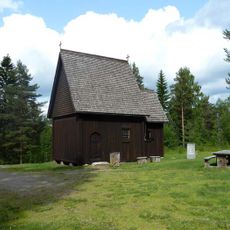
Fågelsjö Gammelgård is a historic farmstead in Sveg composed of wooden buildings arranged as a complete working complex with a main residence, agricultural barns, and specialized outbuildings. These structures display traditional Swedish rural architecture and were designed to support the practical needs of farm operations and family life.
The farm was founded on its present site in 1679 by Sigfrid Markusson, whose grandfather had emigrated from Savolax in Finland in the early 17th century. In the 18th and 19th centuries it grew into one of the wealthiest holdings in the area; a gun workshop built in 1785 added to its prosperity. Jonas Olsson (1832–1895), a skilled smith, financed its expansion, and in 1910 Kristina Jonsdotter and Mårten Persson moved out of the old main house into a new villa, leaving its contents behind. Kristina bequeathed the house to Los municipality on her death in 1943.
The name Bortom Åa means "beyond the river" and refers to the farm's position across the water from Fågelsjö village. The decorated main door was carved for a wedding in 1821 and bears the year and the bridal couple's names. The farm is run as a heritage and course centre with guided tours, a café and a craft shop.
The farm lies in Fågelsjö, in the Orsa Finnmark part of Los parish, now in Ljusdals kommun. Guided tours run in the summer half of the year, and there is a café and a craft shop. The 13 buildings stand apart around the yard rather than enclosing it, so allow time to walk between them.
The 1820s härbre, a raised storehouse, is locked by an unusually intricate mechanism: several keys and ten separate hand movements are needed to open it. The farm's own smithy, built in 1785, funded much of the estate's expansion, and rifles made there still hang on the parlour wall.
The community of curious travelers
AroundUs brings together thousands of curated places, local tips, and hidden gems, enriched daily by 93,744 contributors worldwide.