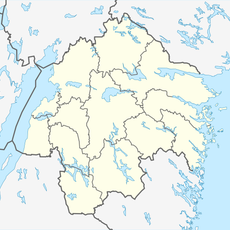
Fågelvik Manor, Manor house in Valdemarsvik Municipality, Sweden.
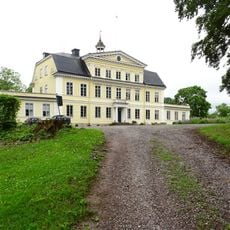
Fågelvik Manor is a two-story main building with two pairs of single-story wings, built in the 1770s probably to designs by Carl Hårleman revised by Jean Eric Rehn. It stands on an islet in an inlet of the Baltic Sea. The main building retains its original interior in several rooms, and the estate includes several outbuildings and annexes.
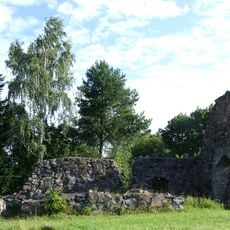
The estate is first mentioned in written sources in the late 14th century and belonged to Karl Ulfsson, Lord High Constable of Sweden. In 1429 it passed to King Charles VIII, and through his daughter's marriage to Erik Eriksson Gyllenstierna it stayed with the Gyllenstierna family until 1720, when it passed by marriage to Count Arvid Horn. The medieval castle, surrounded by moats about 1.5 km south of the present manor, was burned during the Dacke War (1542–43); the manor was then rebuilt on its current site on an islet.
The manor displays Swedish aristocratic architecture through its symmetrical design and flanking wings that still convey the elegance of the estate ensemble. The arrangement of the main building with its outbuildings reflects how the landed gentry organized their homes to combine display with everyday function.
The estate has been designated as a heritage site since September 1983 and can be viewed from the exterior. The location is accessible by walking paths that lead around the main buildings and outbuildings.
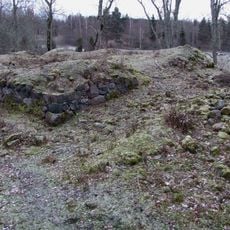
Approximately 2 kilometers south of the current manor, ruins of the original medieval castle remain visible, destroyed during military conflict in the mid-16th century. These archaeological remains offer insight into the site's earlier history before the existing structure was built.
The community of curious travelers
AroundUs brings together thousands of curated places, local tips, and hidden gems, enriched daily by 94,645 contributors worldwide.