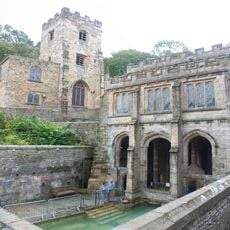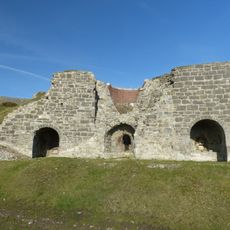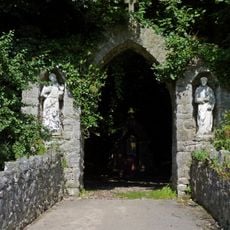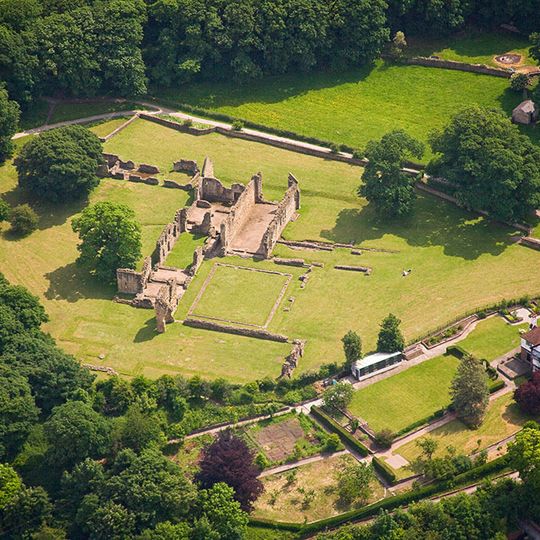
Basingwerk Abbey, Cistercian monastery ruins in Holywell, Wales.
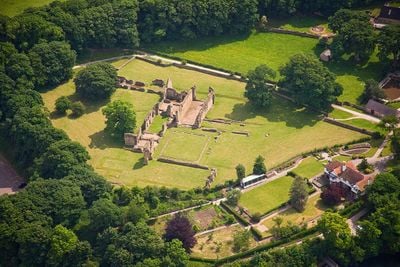
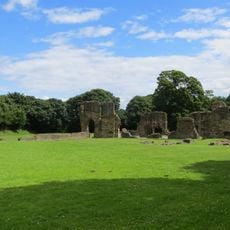
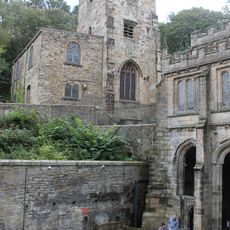
Basingwerk Abbey is a set of monastery ruins in Holywell, in northeast Wales, made up of standing and low stone walls from the 12th and 13th centuries, with identifiable spaces such as the chapter house, refectory, and lancet-style window openings. The surviving ground plan follows the layout of a Cistercian monastery, with the main living and working areas arranged around a central cloister.
The monastery was founded in 1131 and became a Cistercian house in 1147 after passing to that order. It operated for several centuries until the Reformation, when it was dissolved along with most religious houses in England and Wales.
The name of this place recalls the monastic community that once shaped every corner of the site for communal daily life. The chapter house, where monks gathered each morning to hear readings and settle shared matters, still stands out clearly among the surviving walls.
The site is flat and easy to walk around, with bicycle parking on site and street parking close by. Because the ruins are outdoors and the ground can be uneven in places, sturdy footwear is a good idea, especially after rain.
The abbey marks the starting point of the North Wales Pilgrim's Way, a historic walking route that leads all the way to Bardsey Island in the southwest. A water mill once stood on the site, powered by the Holywell stream, and traces of it can still be found when walking the grounds.
The community of curious travelers
AroundUs brings together thousands of curated places, local tips, and hidden gems, enriched daily by 91,905 contributors worldwide.