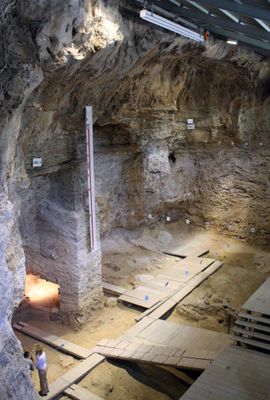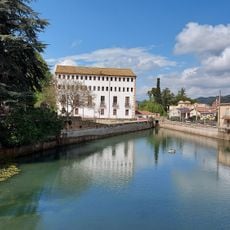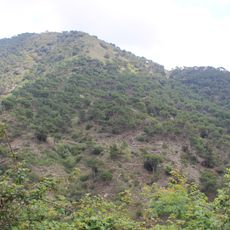
Abric Romaní de Capellades, Middle Paleolithic archaeological site in Capellades, Spain.
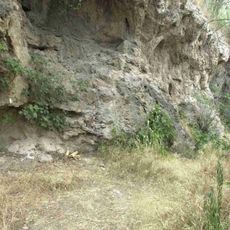
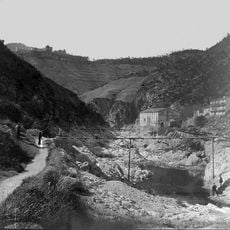
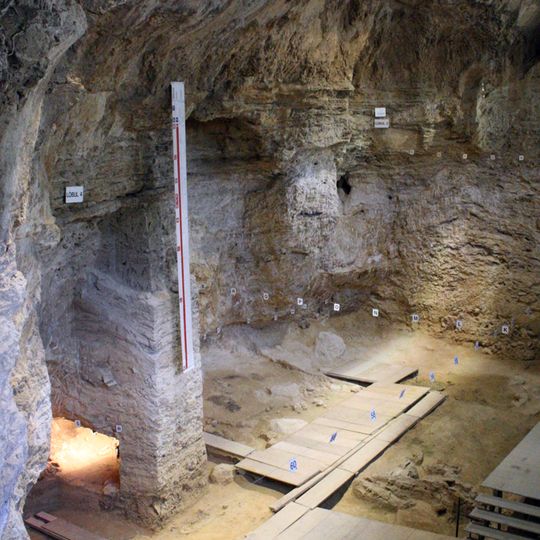
Abric Romaní de Capellades is an archaeological site beneath a limestone rock shelter, sitting about 350 meters (1,150 feet) above sea level near a river. Multiple layers of occupation and artifacts are stacked here, recording thousands of years of human presence and activity.
This site was discovered in 1909 and holds occupation evidence spanning from about 70,000 to 39,000 years ago. The long timespan shows that different groups returned to this location repeatedly across many millennia.
The excavations reveal how Neanderthals lived at this location, with many hearths showing where they cooked and gathered. Tools made from bone and stone tell us about their daily activities and survival skills from that ancient time.
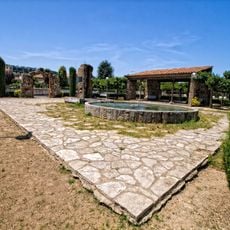
The site is accessible to visitors and is actively studied by research teams who document and share their findings. The location has fairly level ground and good visibility, making it straightforward to walk around and observe the excavation work.
What makes this place special is the natural limestone setting, which has preserved organic items like wooden tools in remarkable condition. Such wooden finds are extremely rare at other Neanderthal sites across Europe.
The community of curious travelers
AroundUs brings together thousands of curated places, local tips, and hidden gems, enriched daily by 90,856 contributors worldwide.