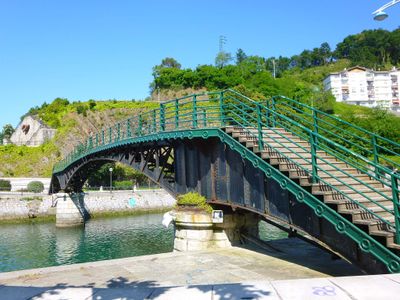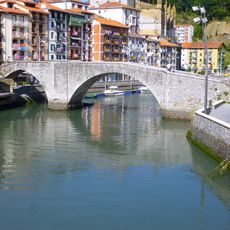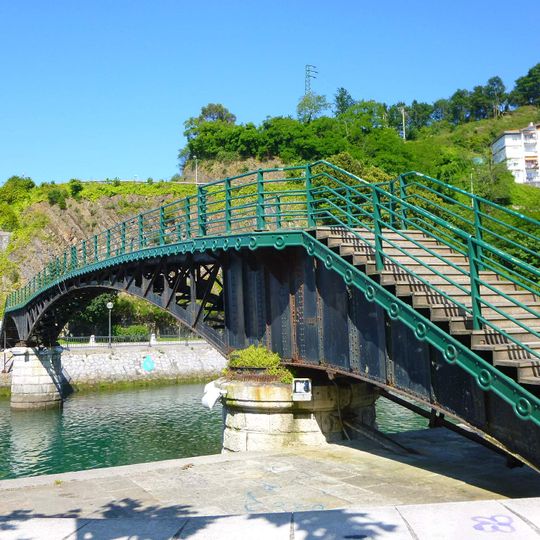
Rotating footbridge Alfonso XIII, Heritage footbridge in Ondarroa, Spain.
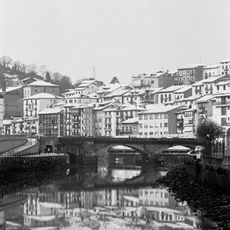
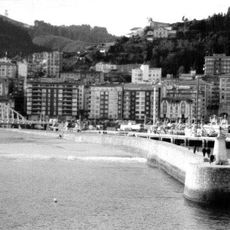
The rotating footbridge Alfonso XIII is a pedestrian crossing made of metal, stone, and concrete that spans the Artibai River in Ondarroa. The structure includes a rotating mechanism that allows boats and ships to pass beneath it when needed.
The bridge was designed by engineer José González de Langarica and opened in 1927 during the reign of Spanish King Alfonso XIII. It was built to meet the growing needs of a town with maritime activities.
The bridge holds meaning for locals as a symbol of their town's resourcefulness and connection to the sea. People see it as a representation of how the community balanced daily needs with industrial progress.
Crossing the bridge is straightforward for pedestrians and requires no special knowledge or skills. It is best to use the crossing when boat traffic is minimal, as the rotating mechanism may occasionally be in use.
The rotating mechanism still functions reliably after nearly a century, showcasing the durability of early 20th-century engineering. Visitors can observe how this mechanical solution operates without modern electronic systems.
The community of curious travelers
AroundUs brings together thousands of curated places, local tips, and hidden gems, enriched daily by 92,220 contributors worldwide.