Real Monasterio de San Joaquín y Santa Ana, Neoclassical Cistercian monastery in Valladolid, Spain
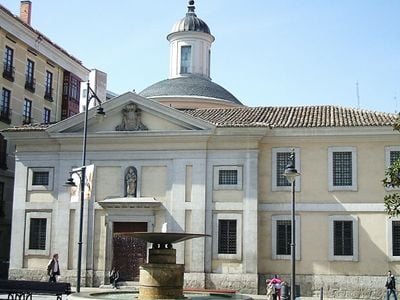
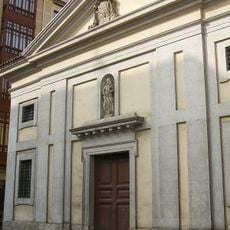
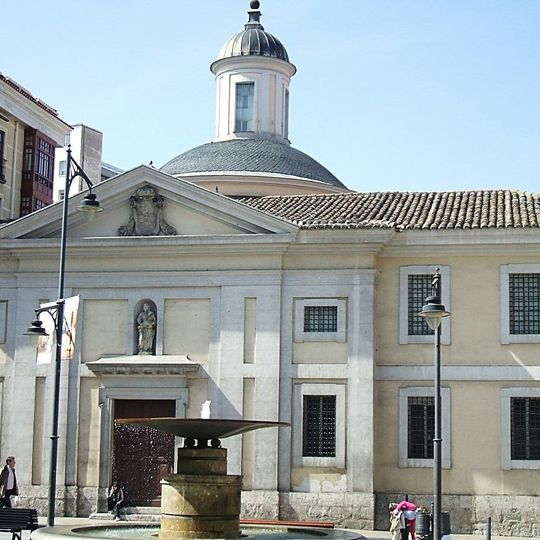
The Real Monasterio de San Joaquín y Santa Ana is a Neoclassical monastery built from 1780 to plans by Francesco Sabatini, with a pale grey stone facade, a triangular pediment bearing the royal arms and a statue of Saint Anne in a niche above the doorway. Inside, the church is elliptical, covered by an oval dome on Tuscan pilasters, with a square portico and a square main chapel on the long axis.
The primitive convent was founded in 1596 for Bernardine Recollect nuns, built by Francisco Praves. By 1777 it was ruinous, so the community asked Carlos III, its royal patron, for help; he had Francesco Sabatini draw the new plans. Works began in 1780, directed first by Francisco Balzaina and later by M. Mariátegui, and the building opened in 1787. It was declared a national historic-artistic monument on 23 March 1956.
The monastery is still home to a community of Cistercian nuns of the Order of Saint Bernard, and it is the seat of the Cofradía del Santo Entierro, the brotherhood that takes part in Valladolid's Holy Week processions. The church became a museum of sacred art in 1978, showing Baroque sculpture by Gregorio Fernández and Pedro de Mena.
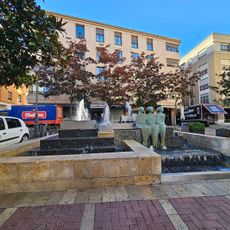
The sacred art museum opened in 1978 in the church, so the Goya canvases and the Baroque sculptures are seen on the same visit. The monastery stands on the Plaza de Santa Ana, facing the fountain basin in front of the facade. Look for the 16th-century statue of Saint Anne in its niche above the doorway.
The monastery holds paintings by Francisco Goya alongside Baroque sculptures by master artists like Gregorio Fernández and Pedro de Mena. This collection of major Spanish Baroque works draws art enthusiasts from across Europe.
The community of curious travelers
AroundUs brings together thousands of curated places, local tips, and hidden gems, enriched daily by 94,116 contributors worldwide.