La Covalta, human settlement in Albaida, La Vall d'Albaida, Valencia Province, Spain
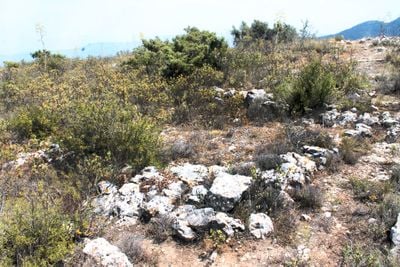
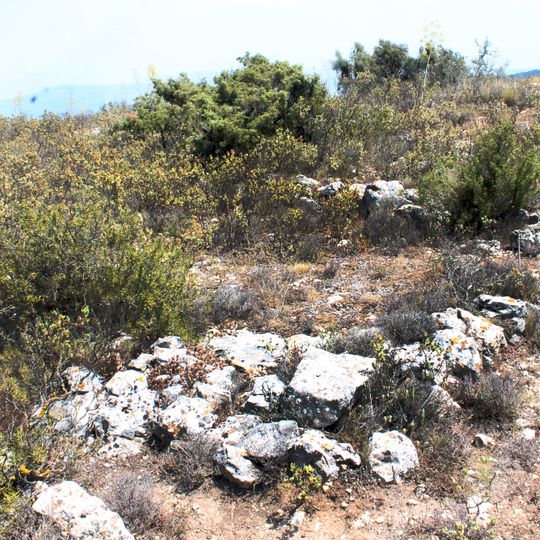
La Covalta is an archaeological site containing the remains of an Iberian oppidum on a hilltop in Albaida, Valencia province, at approximately 880 meters elevation. The ruins include a partially preserved defensive wall about 50 meters long and 3 meters wide, plus the foundations of stone and mud-brick houses with reed and clay roofs, alongside storage cisterns for rainwater.
The site was inhabited by Iberian people from the 6th century BCE until the 3rd century BCE, showing the development of this culture in the Valencia region. Scientific excavations began in the early 1900s under archaeologist Isidro Ballester, who first documented and studied the settlement.
The name La Covalta comes from a natural cave located below the settlement where underground water flows. Residents chose this hilltop to watch over their lands while staying connected to vital water sources and the valley below.
Access is via a forest track starting from the El Clau forest house, with the walk taking about 20 minutes and requiring moderate effort. Wear sturdy shoes and bring water, as the route is steep with sections of shade and open areas where sun exposure is stronger.
A rare bone pin carved with a bearded human head in Carthaginian style was discovered at the site, revealing surprisingly far-reaching connections across the Mediterranean. This artifact suggests residents participated in trade networks reaching distant Mediterranean civilizations.
The community of curious travelers
AroundUs brings together thousands of curated places, local tips, and hidden gems, enriched daily by 92,080 contributors worldwide.