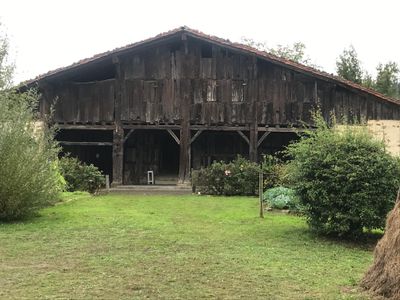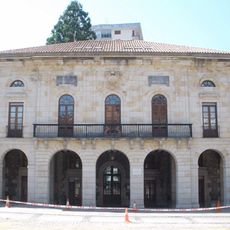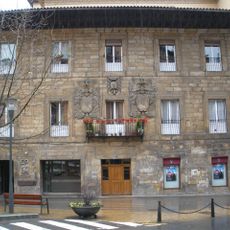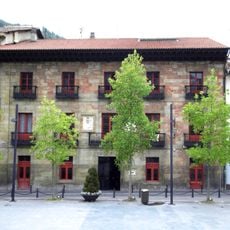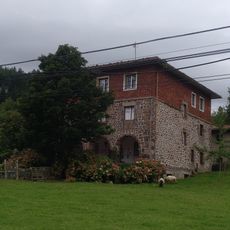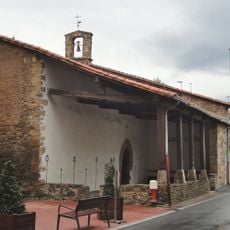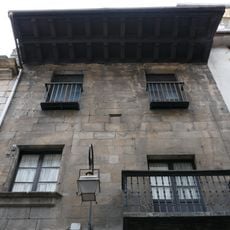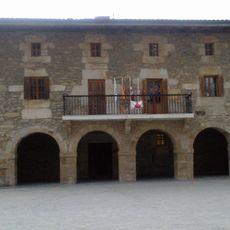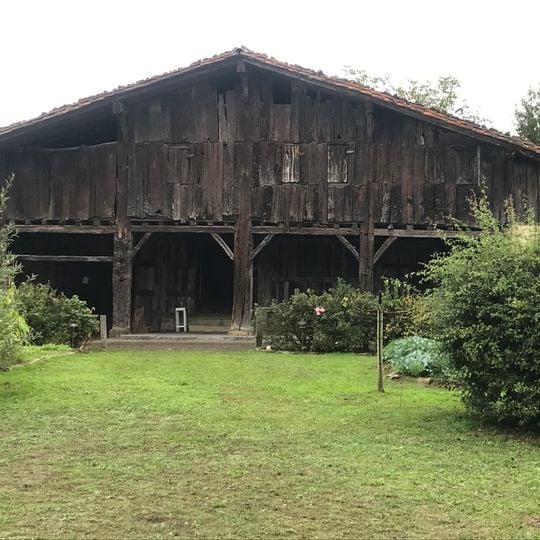
Caserío-Museo Igartubeiti, Historic Basque farmhouse museum in Ezkio-Itsaso, Spain.
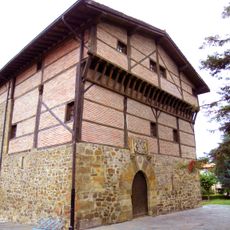
Caserío-Museo Igartubeiti is a square oak-framed farmhouse built around 1540 and enlarged in 1630, with its cider press (dolare) forming the structural heart of the building. The press, a single piece noted for its age and state of conservation, sits within the timber frame, and the house stands on a south-facing terrace on the slope of Mount Kizkitza at about 80 m above sea level.
Igartubeiti was built around 1540 by the Igartua family, whose documented references in Ezkio date back to 1383. It was enlarged in 1630 to adapt to new crops and techniques, especially maize, which replaced millet. The farmhouse remained inhabited until the end of the 20th century, and the Provincial Council of Gipuzkoa bought it in 1992 to convert it into an ethnographic museum, opened to the public in 2001 after restoration.
The farmhouse reveals how rural families organized their daily work and living spaces, with objects positioned as they were actually used in the rooms. Walking through shows the practical ways people divided their time between household tasks and farm labor.
Entry requires advance booking of a guided tour through the museum office, as visitors cannot explore independently. Wear comfortable shoes since tours involve walking through multiple floors and older interior spaces.
The cider press, or dolare, is the building's structural core: the oak frame of the house was raised around it in the mid-16th century. It survives intact because the family lived here until the 1990s, and the Mendiguren brothers, including translator Xabier Mendiguren, were born in the house.
The community of curious travelers
AroundUs brings together thousands of curated places, local tips, and hidden gems, enriched daily by 93,438 contributors worldwide.