Castell d'Ulldecona, Medieval castle in Serra Grossa mountains, Catalonia, Spain
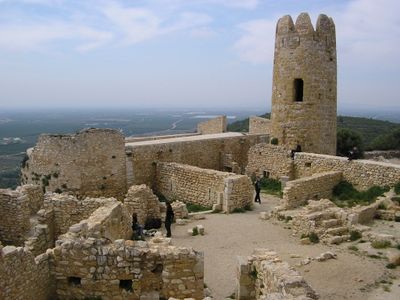
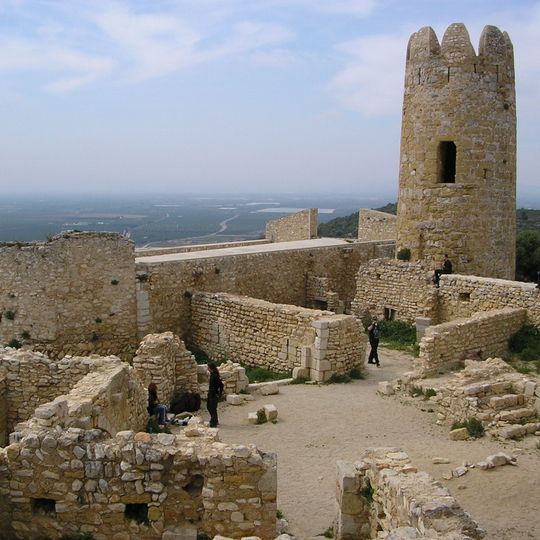
Castell d'Ulldecona is a medieval fortress in the Serra Grossa mountains in Catalonia with two towers, a church, and defensive walls built on a hilltop. The structures sit roughly 256 meters above the nearby Sénia River and display remains from different periods of fortification.
An Iberian settlement occupied the hill from the 4th to the 1st century BC; after a long abandonment, the site was reoccupied in the 9th century under Arab rule. In 1148 the Christian conquest reached the area and the castle passed to the Montcada family; in 1173 it was ceded to the Order of Saint John of Jerusalem, which built most of the surviving fortress. A 1273 charter allowed residents to move down to the Foia valley, and by 1555 the castle was largely ruined.
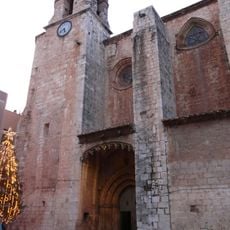
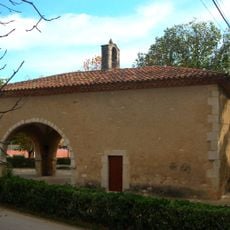
The castle's name comes from the Arabic Umm al-Dunya, later rendered as Ulldecona. The church inside the enclosure, dedicated to the Virgin of the Angels, was rebuilt in the 16th century on the site of an earlier chapel that still existed in 1400. Look for the lobed arched window on the east side of the square tower.
The castle stands on the Puig del Castell, southwest of the village beside the Ulldecona–la Sénia road; a 3 km local lane skirts the hill to the site. The perimeter wall survives only on the north, south and east sides, so the western approach is open ground. The terrain is uneven and the church floor has disappeared.
The circular watchtower's original entrance was on the first floor, reached by a movable ladder; the door still has its stone frame. Inside, both floors have false-vault ceilings linked by a small rectangular opening, and the terrace retains damaged merlons and narrow arrow slits.
The community of curious travelers
AroundUs brings together thousands of curated places, local tips, and hidden gems, enriched daily by 94,360 contributors worldwide.