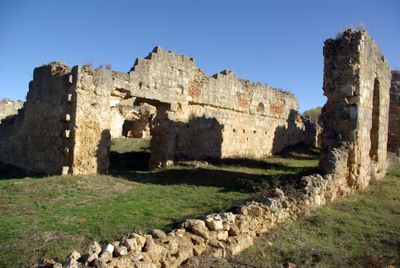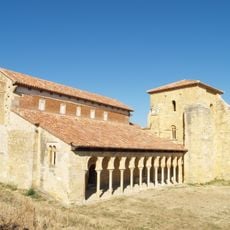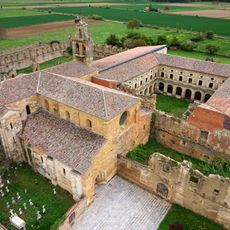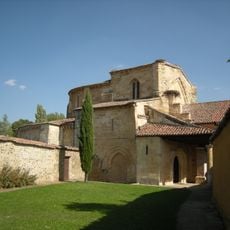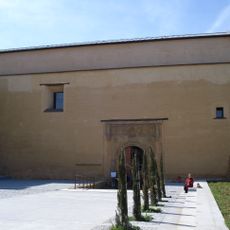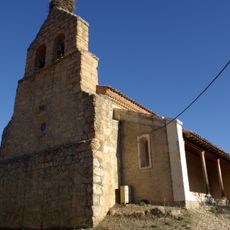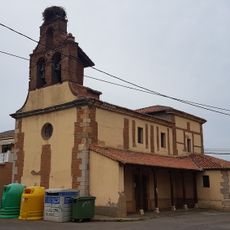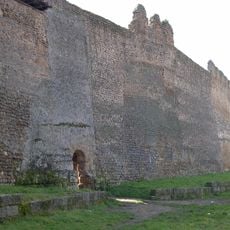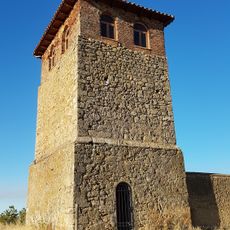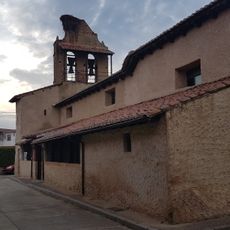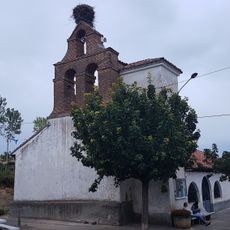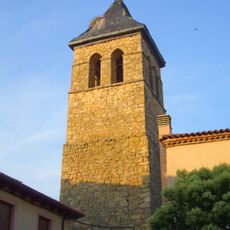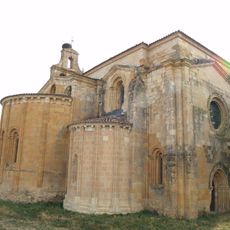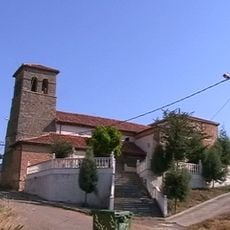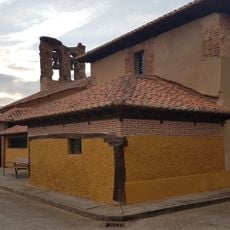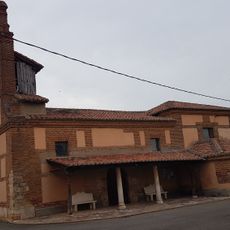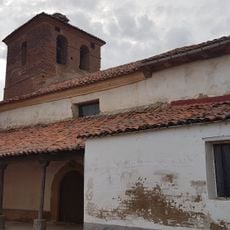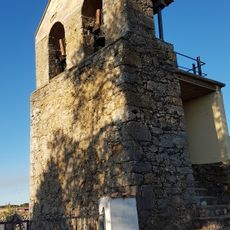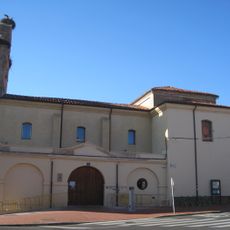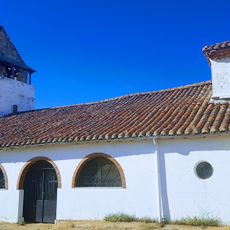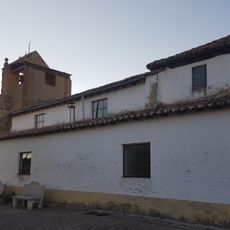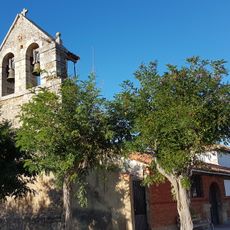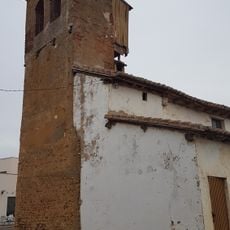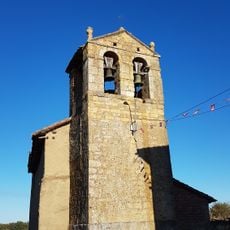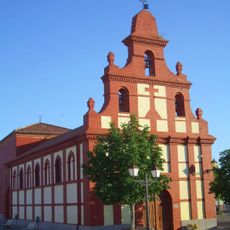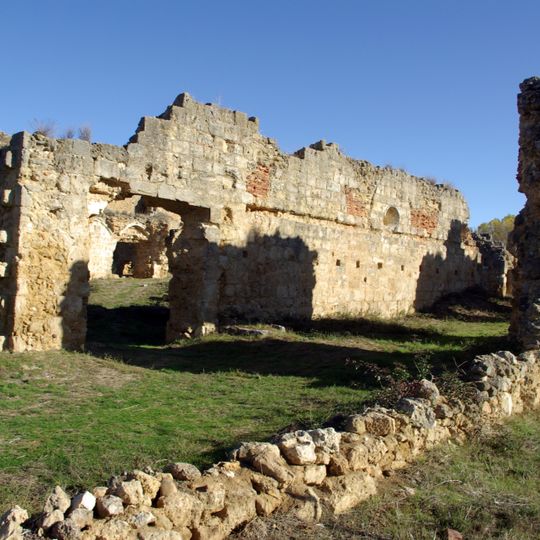
Monastery of San Pedro de Eslonza, Renaissance monastery ruins in Gradefes, Spain.
The Monastery of San Pedro de Eslonza is a complex of stone walls, archways, and foundations scattered across a wide area in the Eslonza valley between two rivers. The surviving structures display Renaissance architectural elements combined with remnants from earlier building campaigns.
King García I of León founded the monastery in 912, establishing it as the second most important religious center in the province after Sahagún. Over centuries, the structures were repeatedly modified and enlarged, reflecting changing architectural styles and needs.
The monastery's name comes from the Eslonza river, which separates the ruins from Santa Olaja de Eslonza. Its abbot also held the church of Santa Eugenia de Palazuelo de Boñar during the ordinary months of the liturgical year. Carved capitals from the monastery survive reused as holy water basins in Sandoval and Valdealcón, as a pulpit base in Mellanzos and as a guard stone in Mansilla de las Mulas.
The ruins stand across the Eslonza river from Santa Olaja de Eslonza, in the municipality of Gradefes, 22 km from León between the Esla and Porma rivers. The owners, the Álvarez-Estrada family, ceded the remains to the Gradefes town council, which has fenced the site and put up an explanatory sign; museum display of the remains is planned. Access is on foot over uneven ground.
Between 1944 and 1970, Bishop Luis Almarcha Hernández moved the monastery's Renaissance portals to the church of San Juan y San Pedro de Renueva in León, saving them from destruction. The Baroque main façade stayed behind; its niches are now empty, and only the statue of Saint Peter survives, set on the tower of the church of Villanueva del Condado.
The community of curious travelers
AroundUs brings together thousands of curated places, local tips, and hidden gems, enriched daily by 94,766 contributors worldwide.