Ciutadella ibèrica de Calafell, Iron Age Iberian fortified settlement in Calafell, Spain
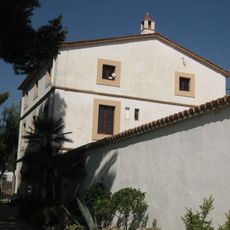
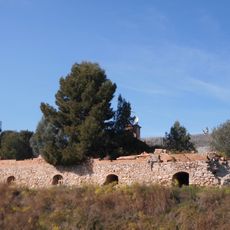
The Ciutadella ibèrica de Calafell is an archaeological site in Calafell, Spain, featuring reconstructed houses, defensive walls, and streets from the early Iron Age and Iberian period. The site allows visitors to walk through a rebuilt fortified settlement and observe its layout, buildings, and structures up close.
The fortified settlement was founded in the early 6th century BC by the Cossetani, an Iberian tribe, and likely served as a chieftain's seat. It underwent major reforms in the late 4th century BC, when its area was reduced and a new wall with towers was built. It was gradually abandoned from the late 3rd to the 2nd century BC, a process linked to the Second Punic War and the Roman consul Cato the Elder's suppression of Iberian revolts.
The Cossetani people who once lived here left behind traces that visitors can still observe in the rebuilt spaces, tools, and everyday objects on display. Walking through the narrow streets gives a direct sense of how a fortified Iberian community was organized around shared daily life.
The site can be visited at your own pace, with paths leading through the reconstructed areas and explanatory signs along the way. Since it is an outdoor site, comfortable shoes and sun protection are worth having on sunny days.
This was the first site on the Iberian Peninsula where ancient domestic buildings were fully reconstructed so that visitors could truly understand what daily life in an Iron Age settlement looked like. The approach was later adopted at other sites and continues to influence how archaeological reconstructions are carried out.
The community of curious travelers
AroundUs brings together thousands of curated places, local tips, and hidden gems, enriched daily by 95,039 contributors worldwide.