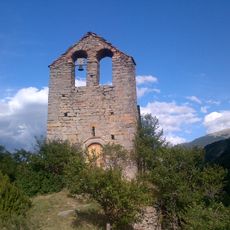
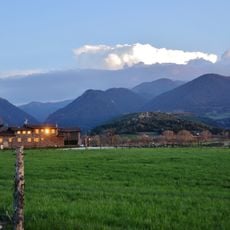
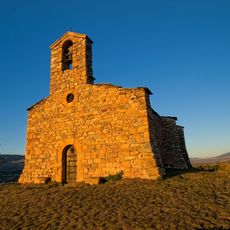
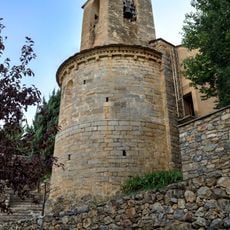
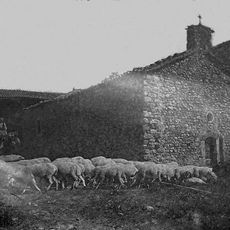
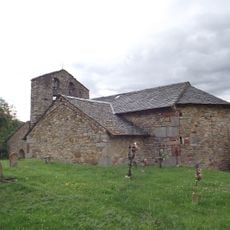
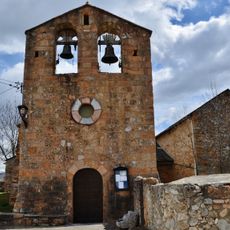
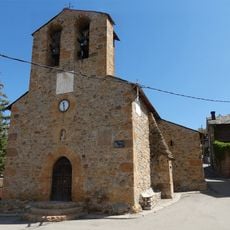
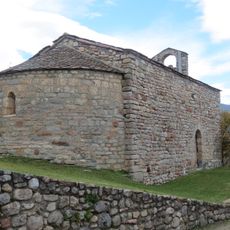
Sant Andreu de Baltarga, Romanesque church in Bellver de Cerdanya, Spain.
Sant Andreu de Baltarga is an 11th-century Romanesque church in the village of Baltarga, Bellver de Cerdanya. Its small, plain nave has a barrel vault and two transverse arches, with two side chapels added in the 18th century. The south door is a narrow round arch with a row of dentils, and the square two-storey bell tower opens to the left of the entrance.
Bishop Ingobert of Urgell consecrated the church on 30 October 891, with archdeacon Eufredari and other clergy present; Count Guifré I endowed it with vineyards and a field marking an empriu boundary. Ownership was disputed between the abbey of Cuixà and the counts of Cerdanya. The 11th-century Romanesque building was largely transformed in the 18th century, when two side chapels were added.
The church is dedicated to Saint Andrew, and its 891 consecration by Bishop Ingobert of Urgell was attended by the archdeacon Eufredari and other clergy. Count Guifré I endowed it with vineyards and a field marking the bounds of a communal pasture. Inside, look for the heptagonal limestone baptismal font, 1 m high and dating from the 13th century, now set to the left of the entrance.
The church stands in Baltarga, a village of Bellver de Cerdanya, and its restored apse abuts the threshing floor of the neighbouring farmhouse, so part of the structure is seen from the farmyard side. The south-facing doorway is narrow, unornamented and flanked by a row of dentils; the square two-storey bell tower is entered from inside, to the left of the nave.
Original Romanesque wall paintings from the church survive today but were moved to the Diocesan Museum of Urgell for safekeeping. Important pieces of decorated panels also reside in the National Art Museum of Catalonia.
The community of curious travelers
AroundUs brings together thousands of curated places, local tips, and hidden gems, enriched daily by 94,443 contributors worldwide.