Parc Arqueològic Mines de Gavà, Archaeological park and Neolithic mines in Gavà, Spain.
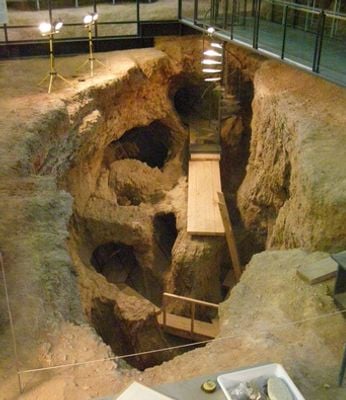
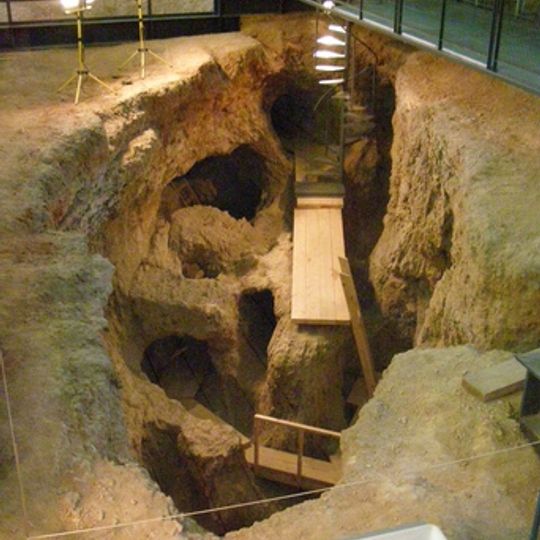
Parc Arqueològic Mines de Gavà protects a Neolithic mining complex in the Can Tintorer, Les Ferreres and Rocabruna sectors of Gavà, where more than a hundred mines have been found across 200 hectares. Galleries cut into Palaeozoic schist and limestone run on several levels and open into wider chambers reached from the surface through shafts or sloping passages. In the excavated pit, a plank walkway with low wooden railings crosses the hollow between tan and ochre earth walls pierced by dark cavities.
The mines were worked from the Postcardial Early Neolithic to the Middle Neolithic, roughly between 4200 and 3400 BC, according to radiocarbon dates from mine fill. They were reopened in the Iberian and Roman periods, between the 4th century BC and the 1st century AD, to obtain iron ore. The site was rediscovered in 1975 during urban works in the Can Tintorer neighbourhood and declared a Cultural Asset of National Interest in 1996.
The excavated areas show how Neolithic people valued variscite for jewelry and used it in their community life. You can see traces of their daily work and understand how important this green mineral was to them.
Visitors can explore underground sections with guides and visit exhibits that show the work of ancient miners. The park is easy to access, and it is wise to wear comfortable shoes and check beforehand which areas are open to visitors.
Variscite from these mines reached Neolithic burials far from Gavà: chemically confirmed Gavà stone appears at Cueva de Chaves and Cueva del Moro in Huesca, in 6th-millennium BC contexts older than the mines' own dated fills. The mines also yielded the Venus de Gavà and a trepanned skull, both displayed at the Museu de Gavà.
The community of curious travelers
AroundUs brings together thousands of curated places, local tips, and hidden gems, enriched daily by 93,391 contributors worldwide.