Monestir de Sant Feliu de Guíxols, Benedictine monastery in Sant Feliu de Guíxols, Spain
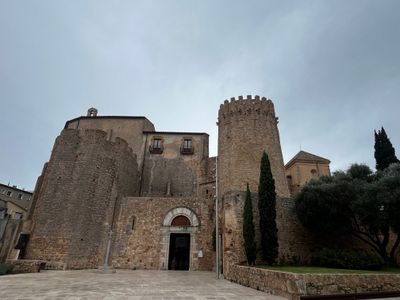
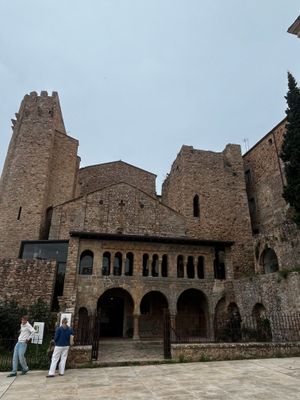
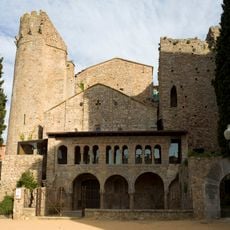
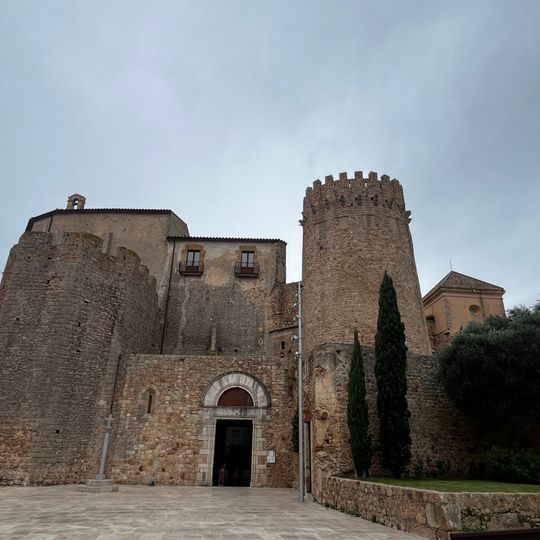
Monestir de Sant Feliu de Guíxols is a Benedictine complex centred on a church with a single nave, a transept and three polygonal apses. The western half of the nave is Romanesque with a slightly pointed barrel vault, while the transept and apses are 14th-century Gothic with ribbed vaults. The restored Romanesque frontispiece is preceded, about three metres away, by the Porta Ferrada, and flanked by the towers of Fum and Corn.
The monastery was founded in the early 10th century and received official recognition in 968 from Carolingian King Lothair. This confirmation established it as a major religious center under the leadership of Abbot Sunyer.
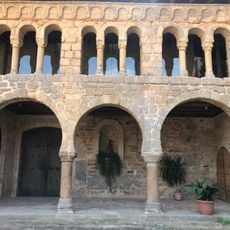
The name Porta Ferrada refers to the iron fittings of its doors, and the structure was uncovered in a 1931 restoration after being hidden by later buildings. It now serves as the atrium of the Romanesque church. Its horseshoe arches follow Mozarabic and Islamic models, and the capitals of the upper floor are Lombard.
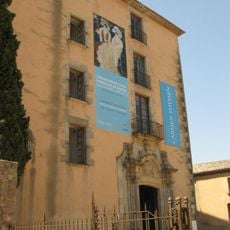
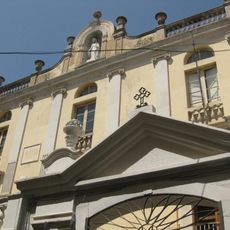
The monastic complex is entered through the baroque Arc de Sant Benet, the former main gateway, west of the church. The Museu d'Història de Sant Feliu de Guíxols occupies the first floor of the upper rooms. The Porta Ferrada stands about three metres in front of the church facade, so it is seen before entering.
The tower of Fum rises on the remains of a 5th-century building covered by a dome, and the tower of Corn stands on a course of large late-Roman or Visigothic ashlars. The Porta Ferrada was hidden by later buildings and only came to light in a 1931 restoration.
The community of curious travelers
AroundUs brings together thousands of curated places, local tips, and hidden gems, enriched daily by 94,165 contributors worldwide.