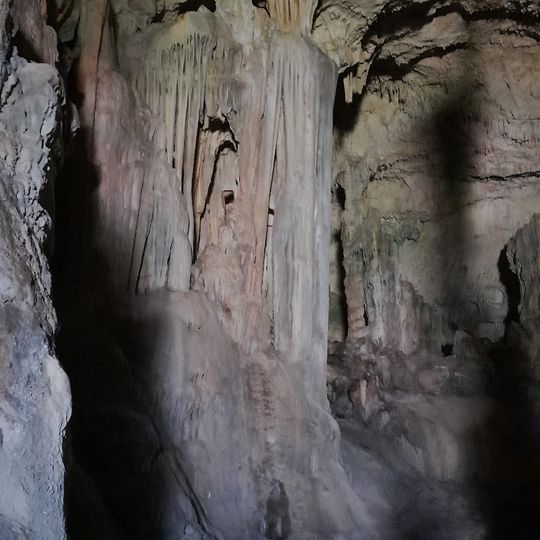
Cueva de las Maravillas, Archaeological cave in Gandia, Spain.
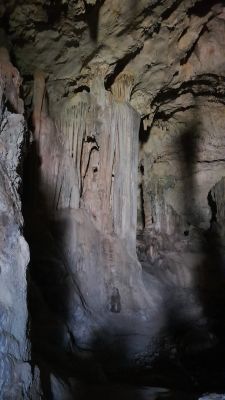
Cueva de las Maravillas is a cave in the municipality of Gandia, Valencia, holding an Upper Paleolithic deposit with Gravettian, Solutrean and Epigravettian industries. Fifteen parietal figures have been found on its walls: horses, aurochs, oxen, goats and deer. Its fauna includes bats and crabs, and the climate inside is mild and humid.
The cave was inhabited by humans during the Upper Paleolithic period, as evidenced by artifact layers from different cultural phases. These deposits show that the site was regularly visited and used over an extended timeframe.
Fifteen parietal representations have been found in the cave: horses, aurochs, oxen, goats and deer. The finds are kept at the Museu de Prehistòria de València, not on site, and the cave has long been closed off by a protective fence, so the figures are studied rather than visited.
The cave is currently not open to the public and remains protected by a security fence. Visitors can view the site from outside while archaeological work and evaluation processes continue.
The cave's fauna includes bats and crabs, and its climate is mild and humid. Of the 425 rock-art sites recorded in the Valencian Community across 94 municipalities, only five belong to the Upper Paleolithic, and two of them are in Gandia: this cave and the Cova del Parpalló.
The community of curious travelers
AroundUs brings together thousands of curated places, local tips, and hidden gems, enriched daily by 93,427 contributors worldwide.