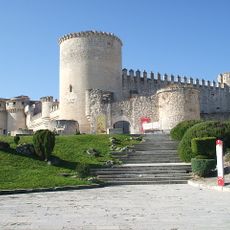
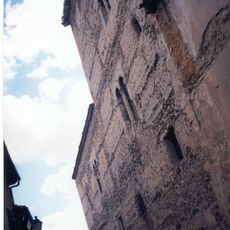
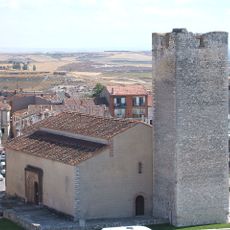
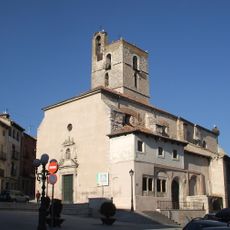
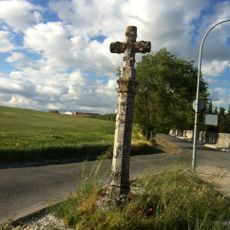
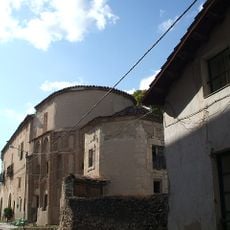
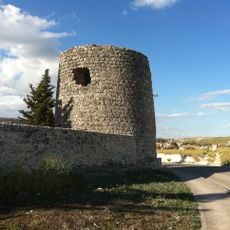
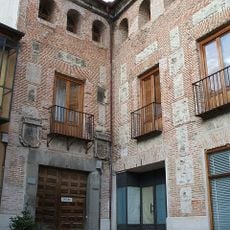
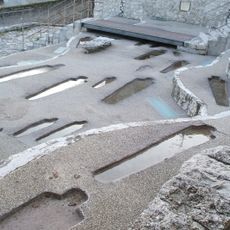
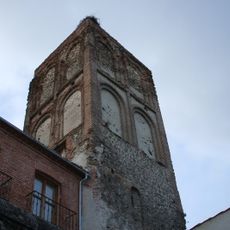
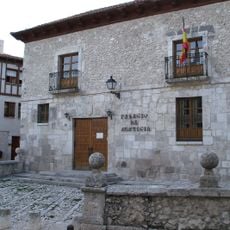
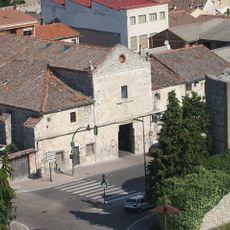
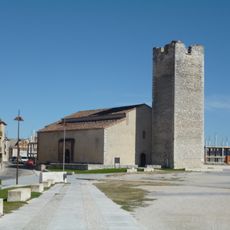
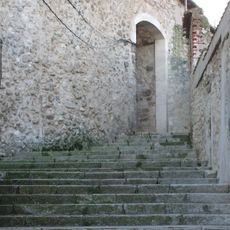
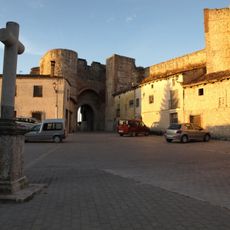
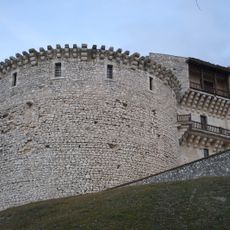
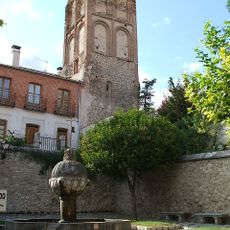
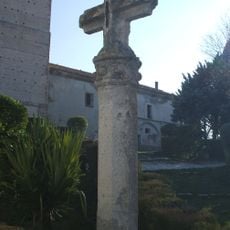
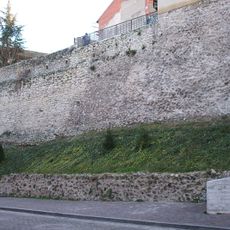
Cuéllar city walls, Romanesque defensive wall in Cuéllar, Spain.
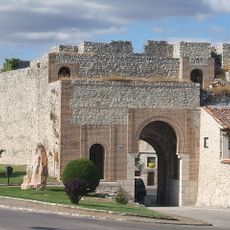
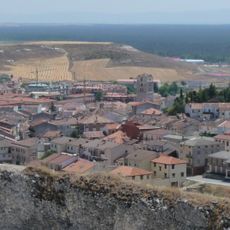
Cuéllar city walls are a Romanesque fortification enclosing the old town on a hill above the Duero. The complex has three enclosures—the city, the citadel and the counter wall—plus traces of a fourth, now lost. The walls are 1.5 m thick and average over 5 m high; about 1,400 of the original 2,000 m survive, with seven of eleven gates, including the Mudéjar arch of San Basilio.
The walls' oldest remains, in the castle, date from the 11th century, when Alfonso VI entrusted the repopulation of Cuéllar to Count Pedro Ansúrez around 1085. The first documented record is a 1264 charter of Alfonso X granting fines for repairs. In 1471 Beltrán de la Cueva enlarged the north wall with a lienzo and barbican, and in 1931 the walls were declared a national monument together with the castle.
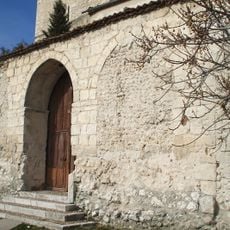
Seven gates survive out of the original eleven that once controlled passage through the city, including the San Basilio entrance with Mudéjar architectural details. These openings show how the medieval city separated different neighborhoods and regulated who could move between them.
The 2011 restoration, funded with 3.4 million euros from European funds through the Ministry of Housing, made some stretches of the wall walkable, so parts of the parapet can be followed on foot. The walls adapt to the hilltop, with the highest section fortified; the San Basilio arch is the reference point for entering the old town. Much of the circuit is seen from the surrounding streets.
The walls are not a single ring but three separate enclosures: the city, the citadel and the counter wall, plus traces of a fourth that has vanished. The 2011 restoration, funded with 3.4 million euros from European funds through the Ministry of Housing, made some stretches walkable.
The community of curious travelers
AroundUs brings together thousands of curated places, local tips, and hidden gems, enriched daily by 95,247 contributors worldwide.