Santuari de Puig-agut, Religious sanctuary in Manlleu, Spain.
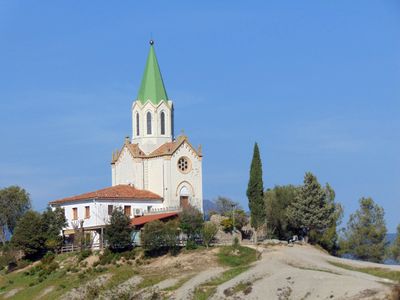
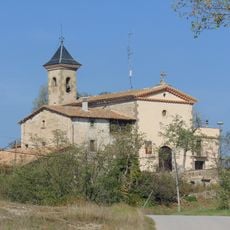
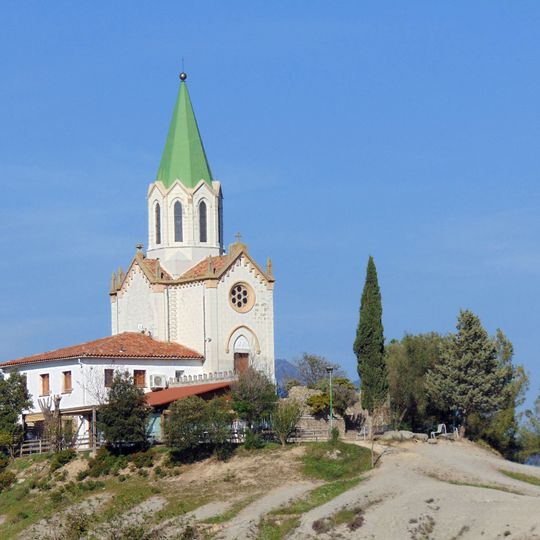
The Santuari de Puig-agut is a neo-Gothic sanctuary on a 696-metre hill, the highest point in Manlleu. Its Greek-cross plan has two chapels in the short arms, dedicated to Saint Joseph and the Virgin of Lourdes. Pointed arches support a prismatic dome with ogival windows and stained glass, and the south facade has a rose window, a rectangular portal and stepped blind arcades.
Ramon Madirolas i Codina, a farmer from Manlleu, promoted the sanctuary, and the architect August Font i Carreras designed it between 1883 and 1886 in a neo-Gothic style inspired by the French basilica of Tarbes. Bishop Josep Morgades i Gil blessed it on 18 February 1886. A note inside states it was the first expiatory temple dedicated to the Sacred Heart in Spain. After the Civil War, administrator Lluís Masoliver led its reconstruction and revived the bulletin El Far de Puig-agut.
This sanctuary serves as a place of devotion to the Sacred Heart of Jesus, with dedicated interior spaces for the Virgin of Lourdes and Saint Joseph. Visitors moving through these spaces experience how the building organizes religious prayer around different figures of faith.
The sanctuary stands on a hill of marl at 696 metres, the highest point in Manlleu's municipal area, where the parishes of Torelló, Manlleu and Sescorts meet. It is reached on foot; the climb is steady, so allow time and wear suitable shoes. The south-facing facade and the cross-shaped plan make orientation easy once at the top.
A note inside the church states it was the first expiatory temple dedicated to the Sacred Heart in Spain, and the hilltop marks where the parishes of Torelló, Manlleu and Sescorts meet. The founder, Ramon Madirolas i Codina, spread its message through his own bulletin, El Faro de Puig-agut, revived after the Civil War with cyclostyled sheets.
The community of curious travelers
AroundUs brings together thousands of curated places, local tips, and hidden gems, enriched daily by 94,794 contributors worldwide.