Sisapo, Archaeological site in Ciudad Real, Spain
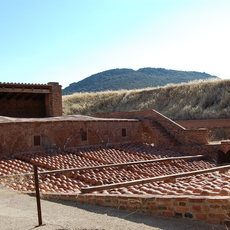
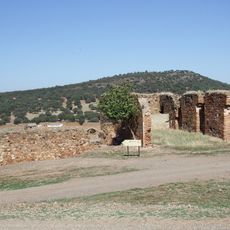
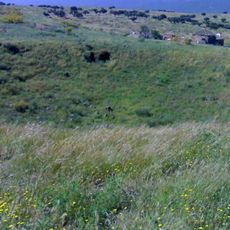
Sisapo is a Roman municipium archaeological site at La Bienvenida, in Almodóvar del Campo, within the Alcudia Valley. Its excavated remains include the Casa de las Columnas Rojas, a large house with mosaics and wall paintings covering some 400 m², a 1 km wall enclosing about 10 hectares with at least 19 possible bastions, and a circular depression known as Hoyo Santo where gladiator names have been found.
Founded around the late 8th or early 7th century BC, Sisapo was a Tartessian and Iberian centre before Rome took it over in the 1st–2nd centuries BC. Under Augustus it became a municipium and the administrative seat of the cinnabar mines worked by the Socii Sisaponensis. A Visigothic necropolis and 4th-century coins mark its later occupation, followed by gradual abandonment and plunder.
Pottery and household objects found here show how local people and Romans lived side by side in the same community. The artifacts reveal how both groups shaped daily life together through shared practices.
The site can be explored on foot with various sections of the ancient structures visible across the grounds. Wear comfortable shoes since the terrain is uneven and shade is limited in many areas.
Pliny the Elder records in his Naturalis Historia that the minium from the Sisapo region belonged to the Roman people and was sent to Rome sealed, unrefined, about 2,000 pounds a year, to be washed there. The identification with La Bienvenida was settled by an inscription reading (S)ISAPON(E) and, in 2001, by epigraphy mentioning the municipium of the Sisaponenses.
The community of curious travelers
AroundUs brings together thousands of curated places, local tips, and hidden gems, enriched daily by 94,670 contributors worldwide.