Laxe das Rodas, Prehistoric petroglyph site in Louro, Muros, Spain.
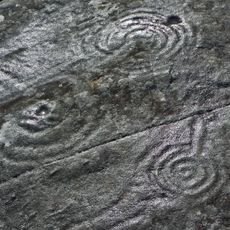
Laxe das Rodas is a rock-art station of nine figures carved on a granite boulder that barely rises from the ground at the foot of Outeiro de Eiroa, near Taxes in the Louro parish of Muros. The main group is a right-turning spiral and a smaller left-turning one, both with a radial groove, surrounded by 65 small cup marks called coviñas. Another group has three concentric circles around a cup mark, ringed by 40 smaller cups, with a line running from the centre out through the circles.
This site comes from the Bronze Age and reveals how people of that era used the landscape. The two main spirals rotate in opposite directions and may have related to time-keeping or seasonal concepts.
The site's name, Laxe das Rodas, means "slab of the wheels" in Galician, referring to the two spirals carved on the granite outcrop. The 65 small cup marks around them are called coviñas locally. Interpretations range from a work almanac to an offering table for good harvests, solar signs, or water and lunar fertility.
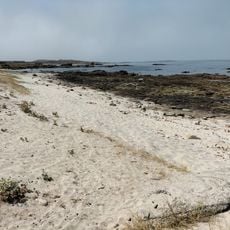
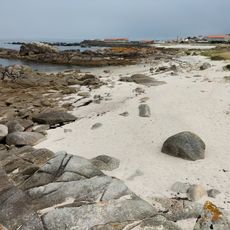
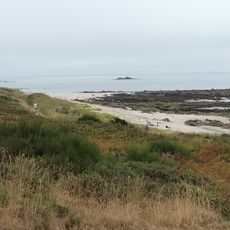
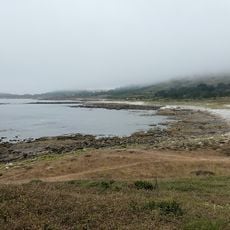
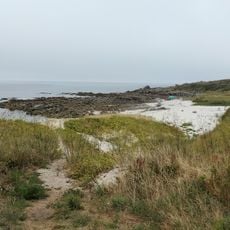
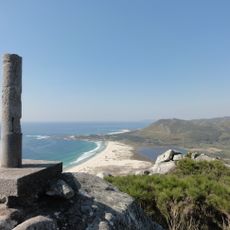
The site sits on open terrain and is only reachable on foot via local paths through the area. Visitors should wear sturdy shoes and be prepared that this remote location has no signage or facilities.
The main spiral turns clockwise and the smaller one counterclockwise, each cut by a radial groove. Around the pair lie 65 small cup marks, called coviñas in Galicia. A second group of three concentric circles has a line running from its central cup across all three rings to the outside.
The community of curious travelers
AroundUs brings together thousands of curated places, local tips, and hidden gems, enriched daily by 94,027 contributors worldwide.