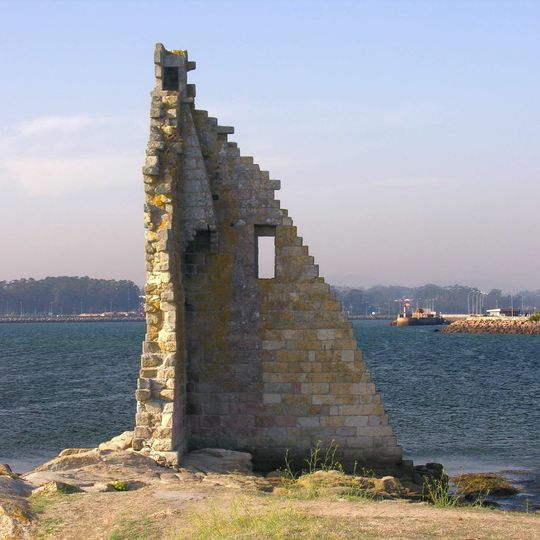
Torre de San Sadurniño, Ruined residential tower on Figueira islet, Cambados, Spain
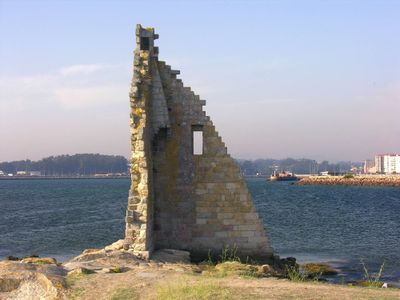
Torre de San Sadurniño is a ruined defensive structure in Cambados built from massive granite blocks in medieval style. The remains still show a chimney and other structural features that indicate its former role as a residential tower.
The tower was probably built in the late 15th or early 16th century, not in the 10th century as a watchtower against Viking raids; its style resembles the tower of Santa Mariña. It was a residential house-tower of the Soutomaior family, likely commissioned by María or Xoana, daughter and granddaughter of Sueiro Gomes de Soutomaior, after the family lost its main fortress at Lantañón following the Irmandiño revolts and the Castilian succession war. The lordship later passed to the counts of Castronovo and was sold by the fourth count to the first Marquis of Montesacro.
The tower was a residential house-tower of the Soutomaior family, not a military watchtower. Its name comes from the chapel of San Sadurniño and San Tomé, whose foundations were found by archaeologists; the saints also gave their name to the islet and the San Tomé do Mar district. The site was probably the oldest settlement core of Cambados, once called Vila Vella.
The site is reachable from Cambados center by following marked paths, with information panels explaining the tower's story. The ruin sits on a small islet that becomes accessible on foot at low tide, something visitors should keep in mind when planning.
The tower stands on the Illa de Figueira, a small irregularly triangular islet off San Tomé do Mar, and the site was probably the oldest settlement nucleus of Cambados, once called Vila Vella. Sueiro Gomes de Soutomaior, founder of the village, left a silver mark in his will to help the chapel of San Tomé do Mar make its silver chalices; excavations later located that chapel's foundations.
The community of curious travelers
AroundUs brings together thousands of curated places, local tips, and hidden gems, enriched daily by 94,557 contributors worldwide.