Castle of Guadalest, Medieval fortress in Guadalest, Spain
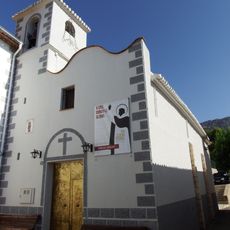
The Castle of Guadalest, also called Castell de l'Alcazaiba or Sant Josep, is one of two fortifications inside Guadalest's walled enclosure, alongside the Castell del Rei. It stands on a rock above the valley and the Guadalest reservoir; only some towers and stretches of wall remain. In the photograph, a small white chapel-like structure with a pyramidal roof and a cross at its peak sits atop a tall, fractured limestone crag, with arched openings on its visible sides and a low-arched white wall at the base.
The fortress was built by Muslim rulers in the 11th century and suffered damage from an earthquake in 1644 and later during the War of Spanish Succession in 1708. These events left visible marks on the structure as it stands today.
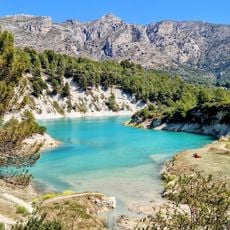
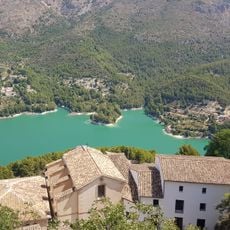
The castle's name, Alcazaiba, comes from the Arabic al-qasaba, referring to a fortified enclosure; it is also called Castell de Sant Josep. The site sits within Guadalest's walled precinct alongside the Castell del Rei, and visitors reach it by a tunnel cut through the rock. From the rock the Guadalest reservoir and valley are visible below.
The castle remains stand on a limestone crag above the reservoir, reached on foot through the walled enclosure of El Castell de Guadalest; the climb is steep and the path uneven. Only some towers and stretches of wall survive, so there is no interior to visit. The white chapel-like structure on the summit is seen from outside.
The castle of l'Alcazaiba, also called castle of Sant Josep, is one of two fortifications inside Guadalest's walled enclosure, together with the castle of the King. Of the first, only some towers and stretches of wall remain today, after the earthquakes of 1644 and 1748 and a partial demolition by explosion in 1708 during the War of the Spanish Succession.
The community of curious travelers
AroundUs brings together thousands of curated places, local tips, and hidden gems, enriched daily by 93,408 contributors worldwide.