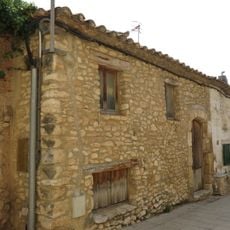
Castell de Calafell, Castle in Calafell, Spain
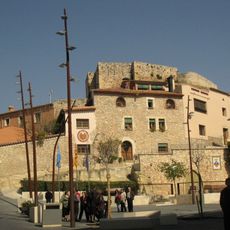
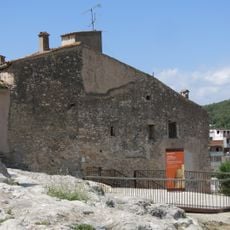
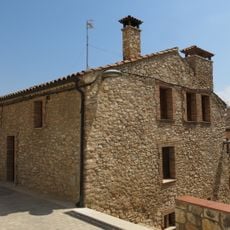
Castell de Calafell is a medieval fortress standing on elevated ground in the town center, built with stone and featuring Romanesque architectural elements throughout its structure. The site contains defensive passages, residential areas, and archaeological zones that reveal how the structure served different purposes across different time periods.
The fortress was founded in the 11th century as a border defense against regional conflicts of that era. It later transformed into a residential palace with Gothic elements and sustained damage from armed conflicts before being repaired and preserved.
The chapel of Santa Creu, part of the castle's eastern structure, was dedicated to the Holy Cross by 1189, when a testamentary legacy records the name. It housed a 12th-century Romanesque carving of the Virgin of the Cova, Calafell's patroness, destroyed by fire during the Civil War. The church served as the town parish and as cemetery chapel until 1935.
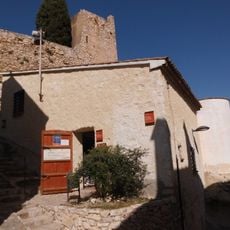
The castle stands on a small hill in the old part of the town, about 1.5 km from the coast, with the church at one end of the hilltop and the castle at the other. Access to the enclosure is by a staircase built in the 18th century. The walls follow the irregular, elongated shape of the terrain.
Beneath the church floor lies a necropolis of anthropomorphic tombs cut into the rock, dating from the 11th and 12th centuries. The chapel also kept a 12th-century Romanesque carving of the Virgin of the Cova, Calafell's patron, destroyed in the Civil War; the chapel served as the town parish and cemetery chapel until 1935.
The community of curious travelers
AroundUs brings together thousands of curated places, local tips, and hidden gems, enriched daily by 94,227 contributors worldwide.