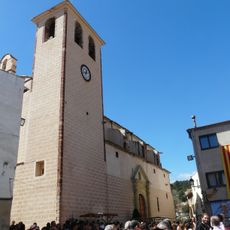
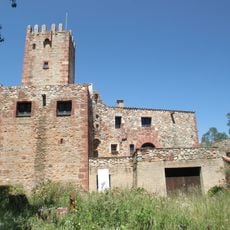
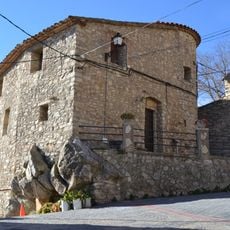
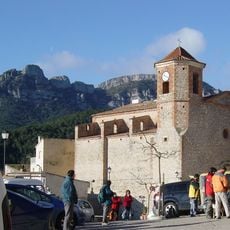
Mare de Déu de la Roca de Mont-roig, Hermitage church in Mont-roig del Camp, Spain.
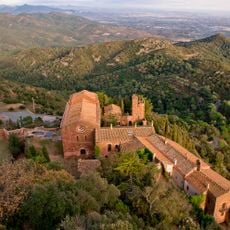
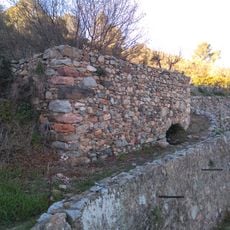
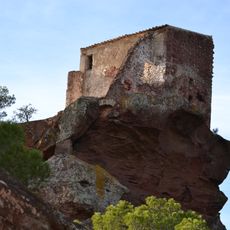
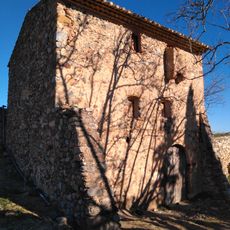
Mare de Déu de la Roca de Mont-roig is a sandstone hermitage church perched on red rocks atop La Roca mountain, built into the natural stone formations of the landscape. The structure rises directly from the rocky terrain, with the building and surrounding boulders forming a unified whole.
The structure was built in the 13th century, with documents confirming its existence by that time. Local stories suggest that religious activity at the site may have begun a century earlier.
On 8 September a popular romiatge (pilgrimage) is held here, and the Ball de Coques is danced; the dance is first documented in 1816. Older records from 1816, 1851 and 1877 also list La Moixiganga, Bastonets, Cercolets, Moros i Cristians, Ball de Gitanes and Xiquets de Valls. A local legend tells of a Moorish king who robbed the silver lamp and the Virgin's jewels and fell with his horse into the ravine.
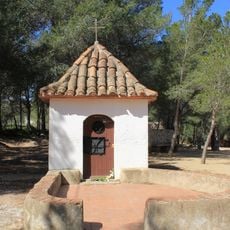
The hermitage stands at 294 m on an eroded rock west of Mont-roig del Camp, reached on foot; the old path from the village is the one Joan Miró took when he painted the Sant Ramon chapel in 1916. The site is exposed to strong wind. The chapel of Sant Ramon is reached by steps cut into the rock, past the so-called Fossar de les Monges.
Joan Miró painted Mont-roig, Sant Ramon in 1916, showing the Sant Ramon chapel from the last stretch of the old path from the village. The chapel above the hermitage was whitewashed to guide sailors, and its saint's image was found at sea; the first chapel was built around 1818.
The community of curious travelers
AroundUs brings together thousands of curated places, local tips, and hidden gems, enriched daily by 94,362 contributors worldwide.