Parc de la Vall d'Hebron, Urban park in Horta-Guinardó, Barcelona, Spain.
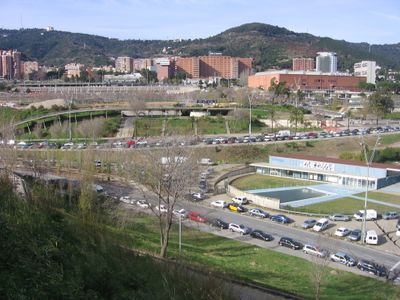
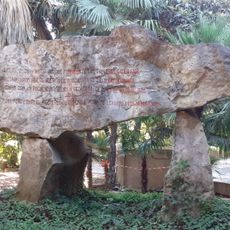
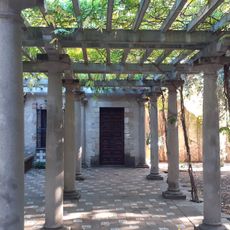
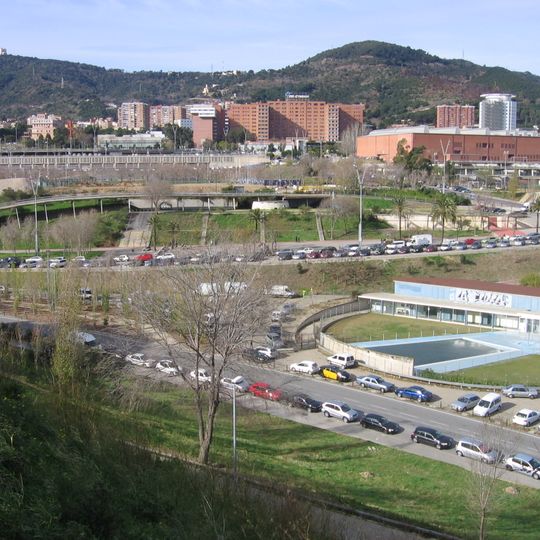
Parc de la Vall d'Hebron is a postmodern park created in 1992 by architect Eduard Bru, linking green spaces between Olympic sports facilities. It is organised as a series of terraces and squares at different levels, some shaded by pergolas, with rural-style planting such as reeds and ivy-covered slopes. Details include rubber paving that sinks underfoot like natural ground and patches of synthetic grass in unusual colours such as yellow.
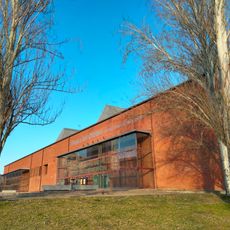
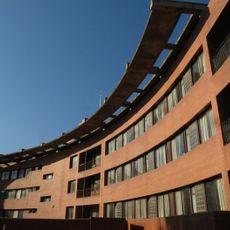
The park was laid out in 1992, designed by the architect Eduard Bru i Bistuer, when the Vall d'Hebron area served as one of the main venues of the Barcelona Olympic Games alongside the Olympic Village and Montjuïc. The Games left the site the Press Olympic Village by Carles Ferrater, the municipal tennis centre by Tonet Sunyer, the archery range by Carme Pinós and Enric Miralles, and the Vall d'Hebron pavilion by Jordi Garcés and Enric Sòria. The park was built to link the green spaces left between these facilities.
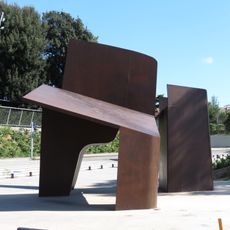
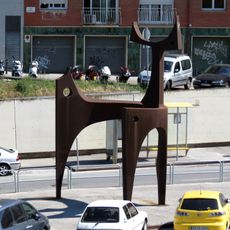
The park's name comes from the biblical Valley of Hebron, which also names the neighbourhood and the metro station. Its most visited feature is the replica of Josep Lluís Sert and Luis Lacasa's Spanish Republic Pavilion from the 1937 Paris International Exposition, where Picasso's Guernica was first shown. Nearby stand three large sculptures: Eudald Serra's six-metre iron Forma y espacio, Susana Solano's eight-metre steel Dime, dime, querido and Claes Oldenburg's twenty-metre Cerillas, a pop-art matchbox.
The park links green spots between the sports facilities built for the 1992 Games, so expect a walk across several levels rather than a single flat lawn. Some squares are shaded by pergolas; others hold reeds and ivy-covered slopes. Look for the rubber paving that sinks underfoot and patches of yellow synthetic turf.
Inside the park stands a replica of the Spanish Republic Pavilion built by Josep Lluís Sert and Luis Lacasa for the 1937 Paris International Exposition, where Picasso's Guernica was first shown. Nearby, Claes Oldenburg's 20-metre sculpture Cerillas depicts an oversized matchbox with matches scattered as if used.
The community of curious travelers
AroundUs brings together thousands of curated places, local tips, and hidden gems, enriched daily by 93,776 contributors worldwide.