Oppidum of Arrola, Archaeological site in Kortezubi, Spain.
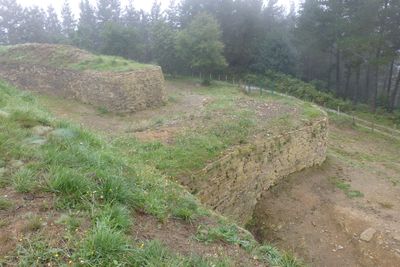
The Oppidum of Arrola is a fortified settlement on the summit of Mount Arrola featuring defensive walls, gates, and moats that form a complete defensive structure. These elements worked together to protect the residents and control access to the settlement.
This fortified settlement was built roughly 2,300 years ago during the Iron Age II and served as a defensive location for the local population. It remained an important protective stronghold in this region for many centuries.
The name Marueleza is read as "Maru eliza", the church of Maru, linking the hillfort to Mari, the main deity of Basque mythology. The site is also tied to traditional accounts of mysterious apparitions. Since 2014 the Arrolagune interpretation centre in Arratzu has presented the finds.
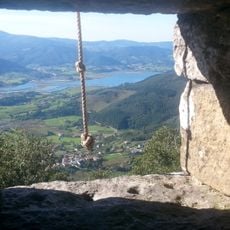
The site lies on the summit of Mount Arrola, at 537 m, between Navarniz, Arratzu and Mendata above the Urdaibai basin. Since 2000 the Bizkaia Provincial Council has run recovery work and organises guided visits. In 2014 the Arrolagune interpretation centre opened in Arratzu, where visits to the oppidum can be arranged.
The name Marueleza is often interpreted as "Maru's church" (Maru eliza), linking the site to Mari, the main deity of Basque mythology. The place has traditionally been associated with mysterious apparitions. About 800 metres southeast lies Gastiburu, a sanctuary of the same period whose purpose is unknown.
The community of curious travelers
AroundUs brings together thousands of curated places, local tips, and hidden gems, enriched daily by 94,872 contributors worldwide.