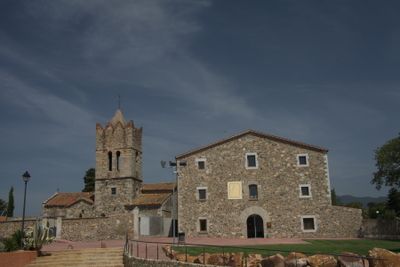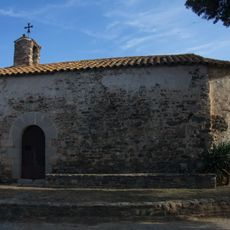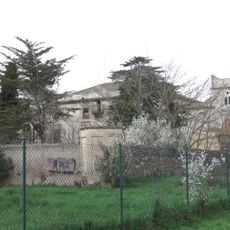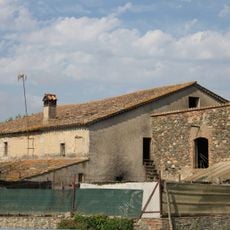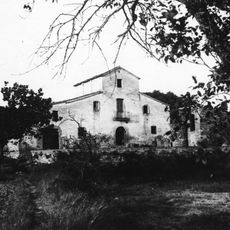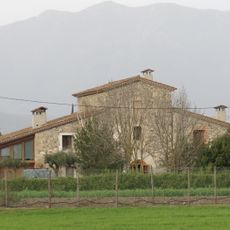
Sant Julià del Fou, Romanesque parish church in Sant Antoni de Vilamajor, Spain.
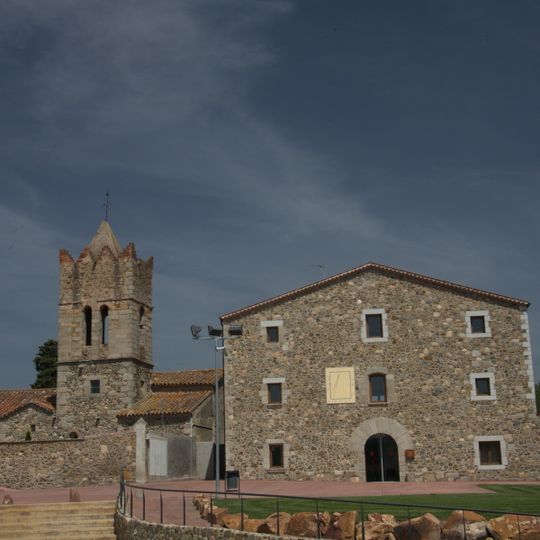
Sant Julià del Fou is a small single-nave Romanesque church enlarged in the 16th, 17th, 18th and 19th centuries. Its west portal, dated 1643, has a semicircular scallop-shaped head, moulded jambs and a small window above. The interior has a rib vault with a decorated keystone, and the walls are rubble masonry covered in whitewash.
The church received its consecration in 1142 from the bishops of Barcelona and Vic, formalizing its establishment as a religious center. This early foundation makes it an important testimony to the region's medieval ecclesiastical history.
The parish belonged to the Batllia de Vilamajor until 1822. In 1384 King Pere III the Ceremonious granted this bailiwick, including Sant Julià d'Alfou, the title of Carrer de Barcelona, so its residents shared the privileges and customs of Barcelona's citizens. The name Alfou appears in 941 as Alfozi.
The church stands within the urbanisation of Sant Julià d'Alfou, with the cemetery on its south side and the rectory to the north. The entrance portal opens to the west, so approach from that side to see the 1643 doorway and the small window above it. The building is small and single-naved, and the bell tower is reached from outside.
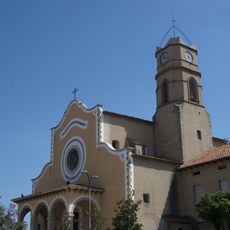
The west portal is dated 1643 and is crowned by a semicircular flat scallop-shaped head, with mouldings around the opening and a small window above it. The bell tower has three bodies separated by cornices, is topped with merlons and a square pyramid, and today holds only one bell.
The community of curious travelers
AroundUs brings together thousands of curated places, local tips, and hidden gems, enriched daily by 95,499 contributors worldwide.