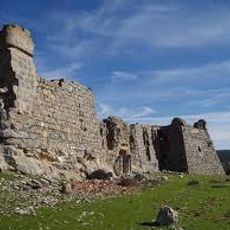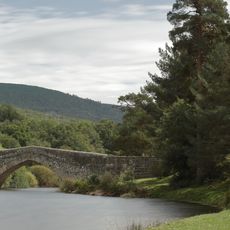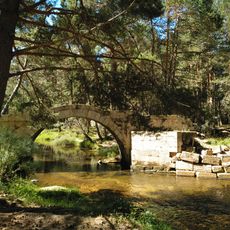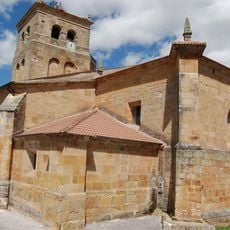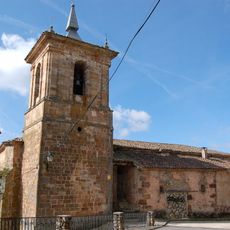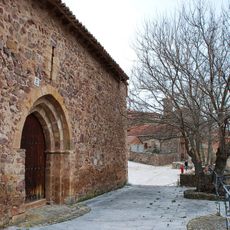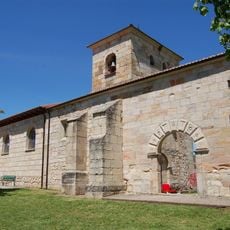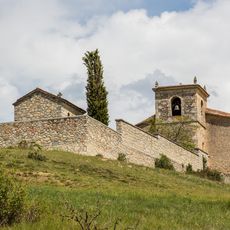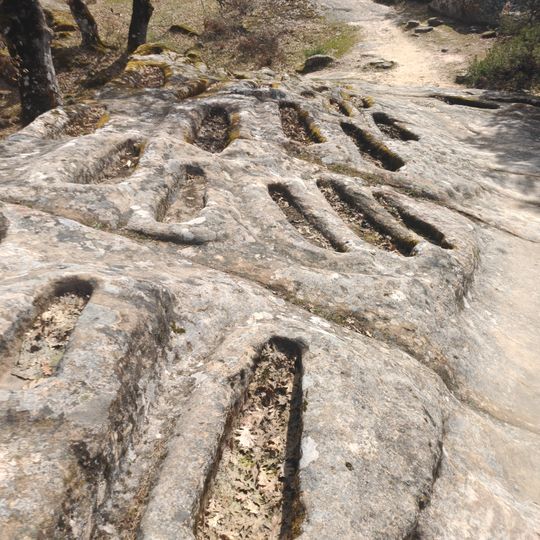
Yacimiento arqueológico de Cuyacabras, Medieval necropolis in Quintanar de la Sierra, Spain.
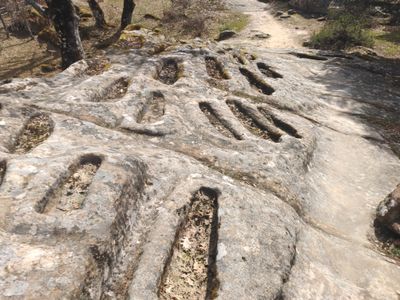
The Yacimiento arqueológico de Cuyacabras is a necropolis of about 65 × 35 m near Quintanar de la Sierra, with at least 183 documented graves cut into the rock around a church. Most are rock-cut tombs: 54% bathtub-shaped, 37% anthropomorphic and 7% lateral niches. The church survives only as outlines in the rock, reached by an eight-step stairway carved into the stone.
This burial ground was used from the 9th to the 13th century, spanning several centuries of medieval burial practice. Significant excavations conducted between 1969 and 1971 by Professor Alberto del Castillo uncovered and documented the site's full extent and chronology.
The name Cuyacabras may derive from the rocky terrain, and the site is linked in documentary sources to the vanished village of Villa Godomar. Infant burials cluster near the church, mostly in elliptical bathtub-shaped graves, while adults lie in both bathtub and anthropomorphic forms. Nearby stands the Ermitorio de San Andrés, whose altar stone carries a horseshoe arch with a cross, a trace of Mozarabic art.
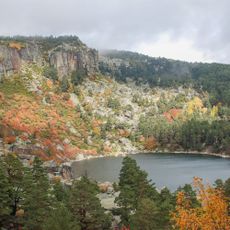
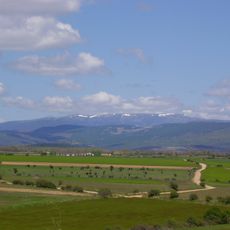
The site lies about 5 km east of Quintanar de la Sierra in the Sierra de la Demanda, southeast of Burgos. Access is via a dirt track through forested terrain, so sturdy shoes and time for walking are recommended.
The remains of the ancient church survive only as ground impressions, making the original structure difficult to trace today. Archaeological findings also reveal traces of settlement activity that point to a community engaged in farming and livestock raising.
The community of curious travelers
AroundUs brings together thousands of curated places, local tips, and hidden gems, enriched daily by 94,630 contributors worldwide.