Castillo de Fantova, Medieval fortress in Graus, Spain
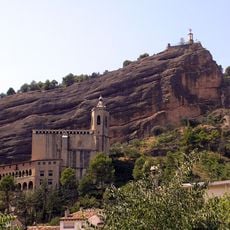
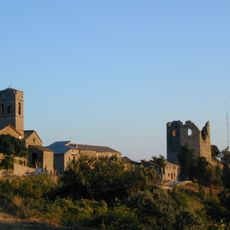
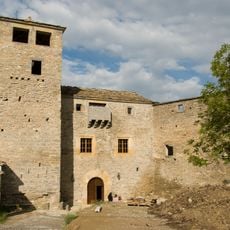
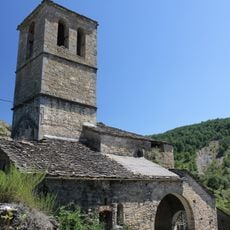
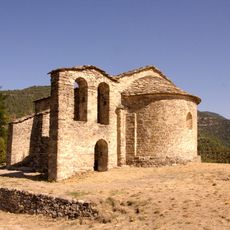
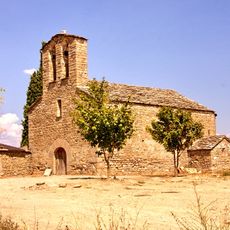
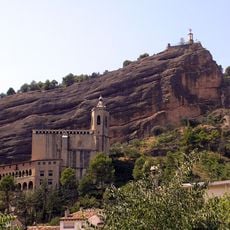
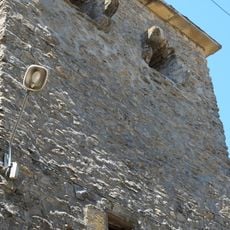
Castillo de Fantova stands on a limestone spur at the edge of a cliff, visible from several kilometres away. Its circular tower measures about 4.5 metres in diameter and 18 metres in height, with walls around 2 metres thick. The tower is built of rubble masonry faced with small ashlar stones, and its ground floor keeps a stone rib vault that turns the circular plan into a square. Beside it, the single-nave church of Santa Cecilia has a semicircular apse and a semicylindrical bell tower of the same stone, conceived as a second defensive tower.
In 960 Bishop Odesindo of Roda consecrated the church of Santa Cecilia at the castro of Fantova. The tower stood by 1015, when brothers Apo and Guifré, sons of Languarda, are recorded as witnesses. Fantova and Güel guarded the county of Ribagorza against the Muslim castles of Lascuarre, Laguarres and Castigaleu, taken by Sancho el Mayor in 1017. James I sold the castle to Berenguer de Eril in 1228; in 1322 James II reclaimed it for the crown.
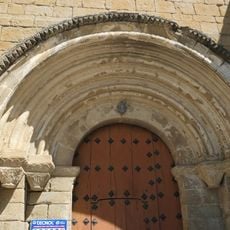
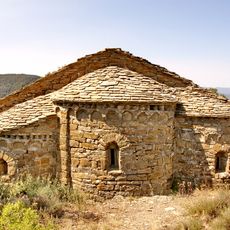
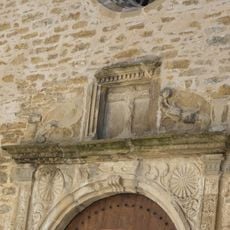
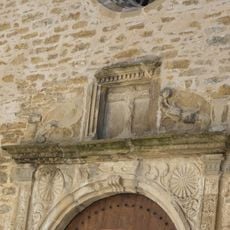
The church of Santa Cecilia, consecrated in 960 by Bishop Odesindo of Roda, has a single nave and a semicircular apse without decoration. Its semicylindrical bell tower, built of stone like the main tower, served as a second defensive tower. A carved cross above the door and the baptismal font are preserved.
Reaching the tower requires climbing stairs to an entrance positioned well above the ground. Visitors should wear sturdy footwear and be aware of weather conditions since the exposed location can be windy.
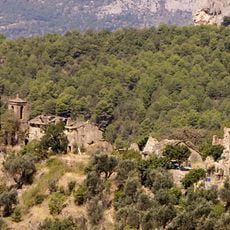
The tower top functions as a viewing platform today with sight lines across the surrounding valley. The location serves as a vantage point for observing abandoned settlements scattered throughout the region.
The community of curious travelers
AroundUs brings together thousands of curated places, local tips, and hidden gems, enriched daily by 94,096 contributors worldwide.