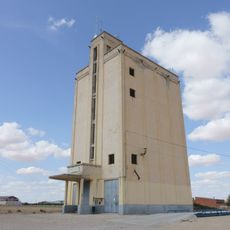
La Hita observatory, Astronomical observatory in La Puebla de Almoradiel, Spain.
La Hita Observatory is an astronomical facility positioned above La Puebla de Almoradiel, equipped with two main telescopes of different sizes and designs. One telescope features a 770mm mirror while the other is a 150mm refractor.
The observatory was founded by Faustino Organero and forms part of the La Hita Astronomical Complex, managed by the AstroHita Foundation. Its telescopes are used for studying dwarf planets with the Institute of Astrophysics of Andalusia, detecting asteroids with the University of Huelva, and recording lunar impacts within the MIDAS project. The TEDI and PHOENIX telescopes are integrated into MIDAS, which recorded the 11 September 2013 lunar impact flash.
The observatory is run by the AstroHita Foundation, founded by Faustino Organero, which organises public and school visits. Sessions were traditionally held at night, but in 2016 the team built instruments for daytime use, including a solar telescope available to schools and educational centres.
The location is situated away from the town center, making personal transportation advisable for reaching it; viewing sessions run throughout the year. Both daytime solar observations and nighttime viewing are offered depending on weather and season.
The facility participates in the MIDAS project, using specialized equipment to detect and analyze impacts of objects on the moon's surface. This research focus sets it apart as a dedicated lunar observation site.
The community of curious travelers
AroundUs brings together thousands of curated places, local tips, and hidden gems, enriched daily by 95,405 contributors worldwide.