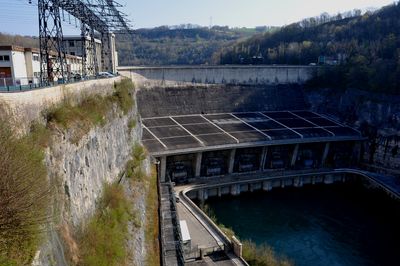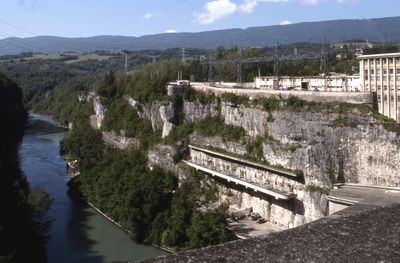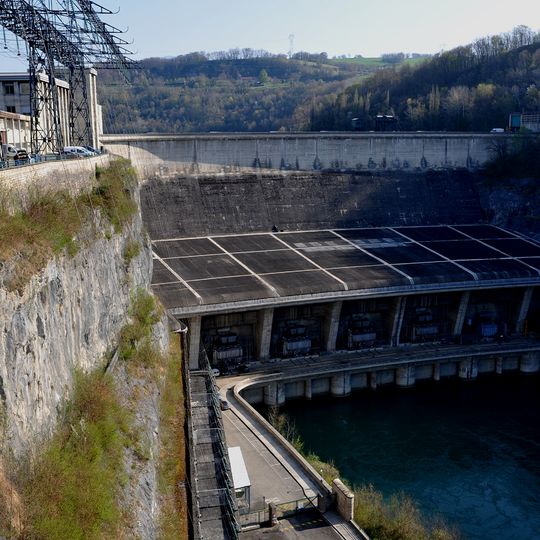
Génissiat Dam, Hydroelectric power station in Injoux-Génissiat, France.
The Génissiat Dam is a gravity dam on the Rhône River in France that generates electricity for the surrounding region. This structure stretches 165 meters in length and rises 104 meters above the ground.
Construction of this gravity dam began in 1937 under architects Albert Laprade and Léon Bazin as part of France's electrical development plan. It became one of the key infrastructure projects that shaped the nation's energy supply during the 20th century.
The structure received recognition as 20th century industrial heritage for its role in advancing France's electrical infrastructure and demonstrating modern engineering design.
Visitors should wear flat closed-toe shoes and bring identification, as there are age requirements for access to the site. Weekday visits tend to be less crowded than weekend periods.
Water flows through a long canal on the right bank before dropping vertically in a striking formation that locals call the ski jump. This feature is one of the most noticeable visual elements visitors encounter at the site.
The community of curious travelers
AroundUs brings together thousands of curated places, local tips, and hidden gems, enriched daily by 91,780 contributors worldwide.