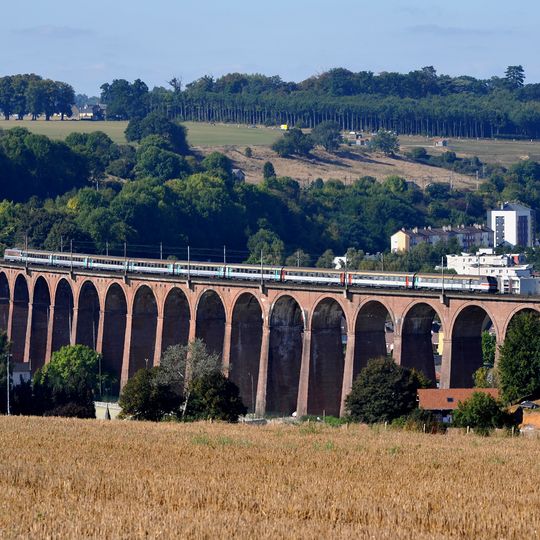
Barentin Viaduct, Railway bridge in Barentin, France
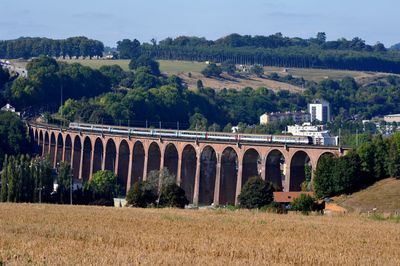
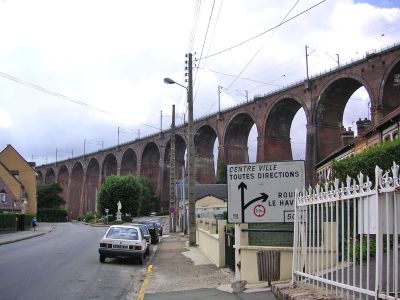
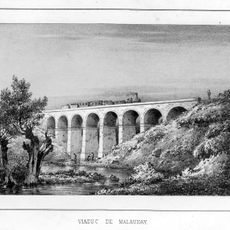
The Barentin Viaduct is a railway bridge made of red brick that stretches 480 meters across the Austreberthe River valley with 27 symmetrical arches. The structure stands 33 meters high and features the distinctive brick masonry arches typical of mid-nineteenth century engineering.
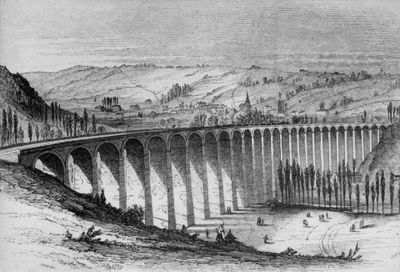
The bridge was originally designed in 1846 by British engineer Joseph Locke but collapsed shortly after opening, prompting a complete reconstruction in 1847 by contractor Thomas Brassey. The rebuild demonstrated advances in construction techniques and secured a vital rail link between Paris and the coastal city of Le Havre.
The red brick arches frame views of the Austreberthe River valley and show how rail infrastructure shaped the region's development. Local people recognize it as a symbol of the area's industrial past and its connection to national trade routes.
The viaduct is best viewed from the valley below or from nearby viewpoints along the surrounding roads. You can reach the site easily by car or local transport, with parking areas available close to the structure.
This was one of the first major railway viaducts built in France and represents the pioneering work of mid-nineteenth century engineers. Its rapid rebuild following the collapse showed how quickly construction knowledge improved during the early railway era.
The community of curious travelers
AroundUs brings together thousands of curated places, local tips, and hidden gems, enriched daily by 91,276 contributors worldwide.