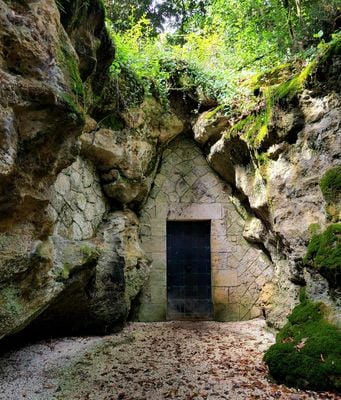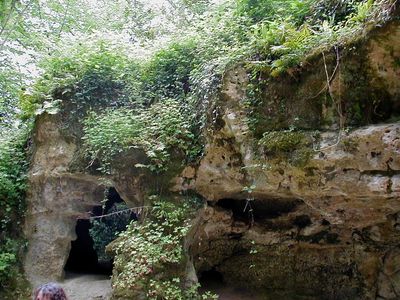
Pair-non-Pair, Prehistoric cave museum in Prignac-et-Marcamps, France
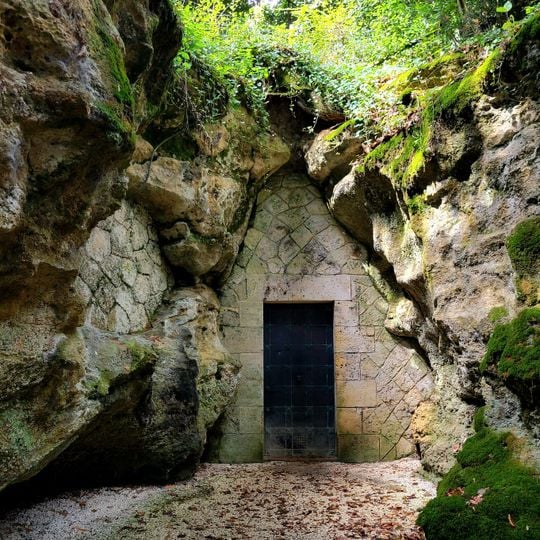
Pair-non-Pair is a cave containing prehistoric engravings located in southwestern France, extending roughly 20 meters in length through three distinct sections. The site displays animal carvings etched into the stone walls by ancient hands thousands of years ago.
The cave was discovered in 1881 by François Daleau and contains engravings from 30,000 to 25,000 years ago during the Aurignacian period. Archaeological research has shown that multiple human cultures inhabited the area across 60,000 years of occupation.
The walls display animal engravings showing horses, ibexes, deer, cattle, and mammoths that reveal how early people expressed their relationship with the creatures around them. These carvings offer a direct view into the artistic choices of our ancient ancestors.
Visits require advance booking with groups limited to 18 people to protect the delicate site. The cave maintains cool temperatures year-round, so bringing a light jacket is wise regardless of the season outside.
The engravings represent multiple periods of human activity rather than a single moment in time, with evidence of at least four distinct cultural groups working at the site across thousands of years. This layering makes the cave a rare record of how people returned to the same place again and again.
The community of curious travelers
AroundUs brings together thousands of curated places, local tips, and hidden gems, enriched daily by 91,267 contributors worldwide.