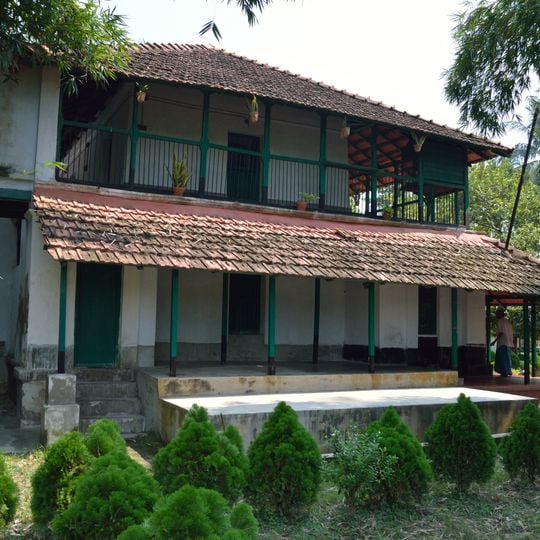
Sarat Chandra Kuthi, Heritage museum in Samta, India
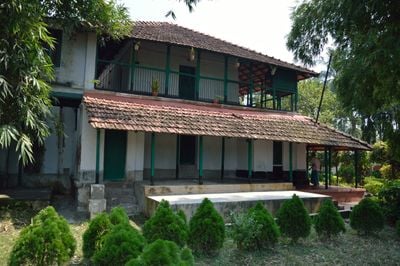
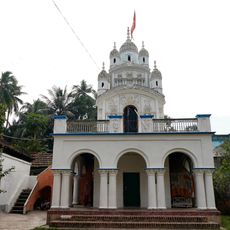
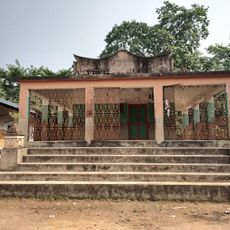
Sarat Chandra Kuthi is a two-storey house in Samta, Howrah district, built in 1923 by local worker Gopal Das for ₹17,000. Its pale weathered facade has a projecting porch with a sloping terracotta-tiled roof on green pillars, a dark green door at the left, and above it an open balcony with a green railing, green pillars and its own tiled roof. A low concrete platform with steps stands in front.
Sarat Chandra Chattopadhyay bought the Samta plot in 1919 for ₹1,100 and had the house built in 1923 by local worker Gopal Das for ₹17,000, moving in by February that year. He lived there for twelve years before moving to Calcutta. The 1978 West Bengal floods damaged the house, including its mud-walled kitchen; the Zilla Parishad repaired it, and in 2001 it was declared a heritage-historical site under the West Bengal Heritage Commission Act (IX).
The house preserves personal belongings and furniture that reveal how an important Bengali writer of the early 20th century lived and worked. The rooms offer a window into the literary world and daily habits of that era.
The house is located near Deulti railway station on the Howrah-Kolaghat line, from which a short auto-rickshaw ride leads to the entrance. Visitors should expect rural conditions and allow adequate time for a thorough walk through all the rooms.
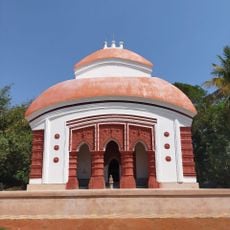
The novelist's brother, Swami Vedananda, a monk at Belur Math, also lived here, and both brothers' samadhis stand in the garden. Bamboo and guava trees planted by Sarat Chandra still grow around the house.
The community of curious travelers
AroundUs brings together thousands of curated places, local tips, and hidden gems, enriched daily by 93,622 contributors worldwide.