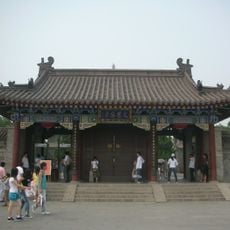
Giant Wild Goose Pagoda, Buddhist pagoda in Yanta District, Xi'an, China
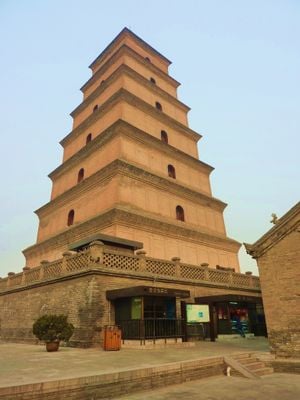
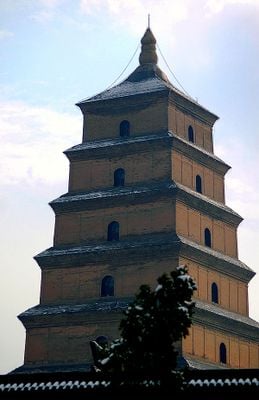
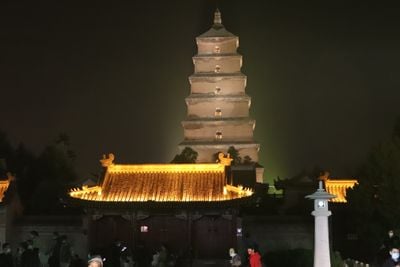
The Giant Wild Goose Pagoda is a seven-storey square brick pagoda in the northern part of Daci'en Temple, rising 64.1 metres including its 4.2-metre base. Each storey is capped by a shallow projecting ledge and has an arched opening on each face; the lowest section has a larger arched recess. The interior holds 248 steps, and the first-floor door lintels are carved with Buddha figures.
Construction began in 652 during the Tang Dynasty when the monk Xuanzang returned from India with Buddhist texts after years of travel. The building became the main center where these sacred writings were translated and preserved for generations.
The name comes from the legend of a wild goose buried beneath a stupa, which Xuanzang recorded after hearing it in India. Tang examination candidates inscribed their names at the temple, giving rise to the phrase "inscription at the Wild Goose Pagoda" for success in the imperial exams.
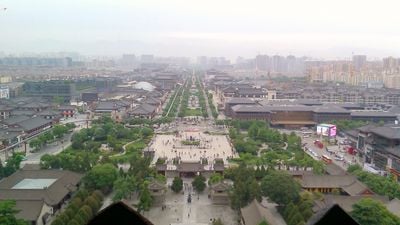
The pagoda stands in the northern part of the Daci'en Temple grounds, with the climb to the top made by 248 internal steps. The tower leans about one meter west of vertical, a tilt measured in 1996 and partly corrected since. The Dayanta station on Xi'an Metro Line 3 serves the site, with entrances at the northeast corner of the north plaza.
The pagoda leans about one metre west, a tilt measured at 1.0105 metres in 1996 after decades of groundwater extraction; sealing over 400 wells nearby since then has slowly reversed it. The Tang custom of successful examination candidates inscribing their names at the temple gave Chinese its phrase for passing the imperial exams, "inscription at the Wild Goose Pagoda."
The community of curious travelers
AroundUs brings together thousands of curated places, local tips, and hidden gems, enriched daily by 93,325 contributors worldwide.