Museum Autovision, Automobile museum in Altlußheim, Germany
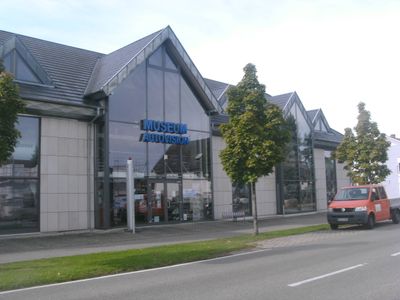
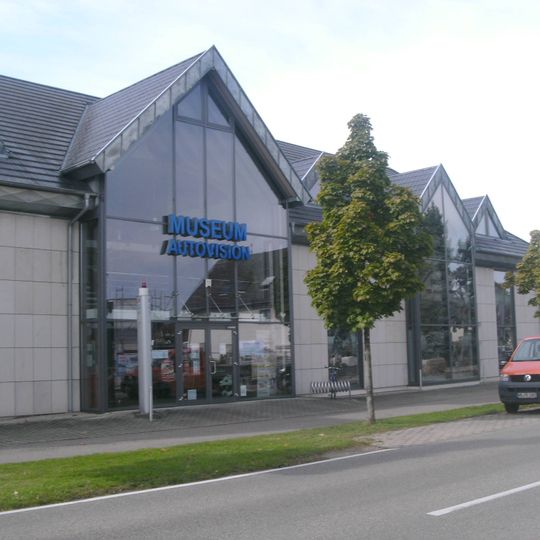
Museum Autovision in Altlußheim occupies a building with pale grey panels and a dark tiled roof whose central gable is fully glazed, with "MUSEUM AUTOVISION" in blue letters above the entrance. Inside, the collection covers 125 years of individual mobility, from a replica of the Drais running machine to the 1899 La Jamais Contente, alongside the largest private NSU collection and the world's largest Wankel engine display.
Horst Schultz founded the museum in 2002, after selling his company ELBA Electric GmbH for 52 million DM. He invested millions in a building erected in Altlußheim in 2001 and in vehicle rarities from around the world. In 2010 the Museum Autovision Horst and Brigitte Schultz foundation was officially recognised by the Karlsruhe regional council.
The museum shows how cars changed people's daily lives and made travel possible for ordinary families rather than just the wealthy. You can see this reflected in the collection's progression from early horseless carriages to family vehicles that shaped modern society.
The museum stands in Altlußheim, with the entrance marked by blue capital letters reading "MUSEUM AUTOVISION" on the glass above the doors. The building has a dark grey tiled pitched roof with several gables and pale grey panels on its lower walls. A solar-supported charging station is maintained for owners of electric cars.
The museum holds the world's largest Wankel engine exhibition: more than 80 rotary engines plus a dozen Wankel cars and three Wankel motorcycles. Among them is the cut-away NSU Ro 80 model that NSU displayed at the IAA motor show. The collection also includes a reconstruction of the 1882 Ayrton & Perry electric tricycle, built by Horst Schultz's team over about 1,000 working hours.
The community of curious travelers
AroundUs brings together thousands of curated places, local tips, and hidden gems, enriched daily by 94,531 contributors worldwide.