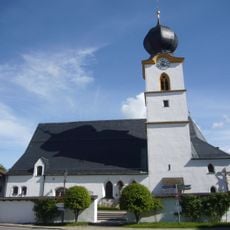
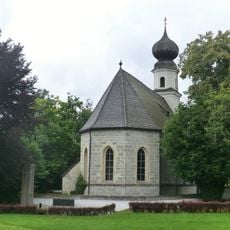
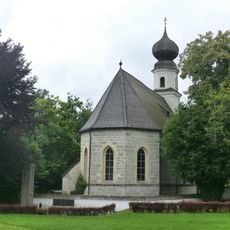
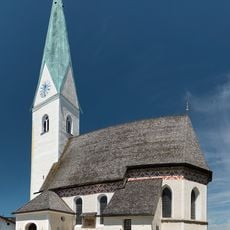
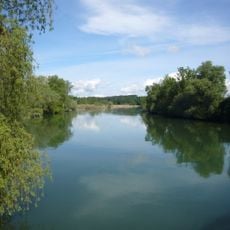
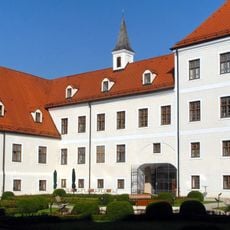
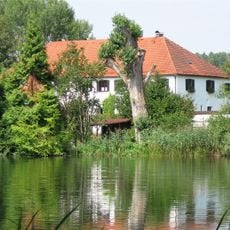
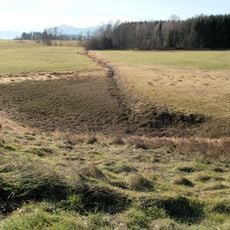
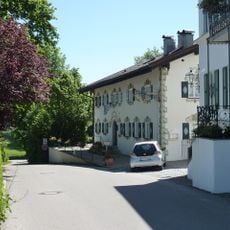
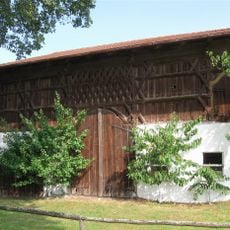
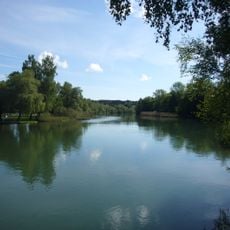
Bedaium, Roman archaeological site in Seebruck, Germany.
Bedaium is the ancient name of Seebruck, where the Roman road from Iuvavum to Augusta Vindelicum crossed the Alz at its outlet from the Chiemsee. The settlement began around AD 1 on the left bank with wooden buildings, and a second core arose on the right bank around AD 100. In its 2nd–3rd century heyday it stretched over a kilometre as a narrow roadside village; a small fort with 26-metre sides was added around AD 300.
Bedaium arose on the east-west road between Iuvavum (Salzburg) and Augusta Vindelicum (Augsburg), at the point where the Alz leaves the Chiemsee. Dendrochronological dating of a timber structure excavated in 1986/87 suggests a settlement existed by around AD 1; a second nucleus on the opposite bank appeared around AD 100. The settlement was repeatedly hit by Germanic incursions from about AD 230, and around AD 300 a small fort with 26-metre sides was built. The site was apparently abandoned after AD 400.
The site documents the integration of Celtic and Roman religious practices through the temple dedicated to Bedaius, a local deity adopted by Romans.
The excavated area lies in Seebruck at the Alz outflow from the Chiemsee, on both banks of the river. The vicus stretched over a kilometre along the road, with the left-bank core roughly 100 by 400 metres and the right-bank core about 100 by 100 metres. The small fort built around 300 AD was a square 26 metres on a side; the necropolis with 250 urn graves lies about 400 metres east of the settlement.
The small fort built around 300 AD measured only 26 metres on each side, yet it became the settlement's final refuge. After about 350 AD the civilian population withdrew inside its walls, and the site was abandoned after 400. No evidence of continuity into the Middle Ages has been found.
The community of curious travelers
AroundUs brings together thousands of curated places, local tips, and hidden gems, enriched daily by 94,894 contributors worldwide.