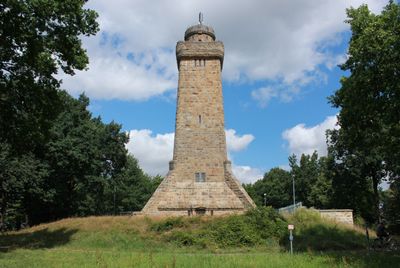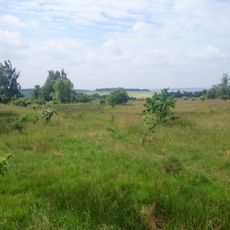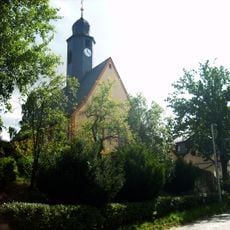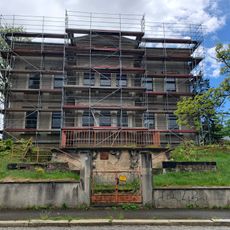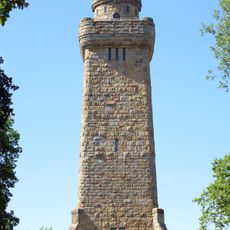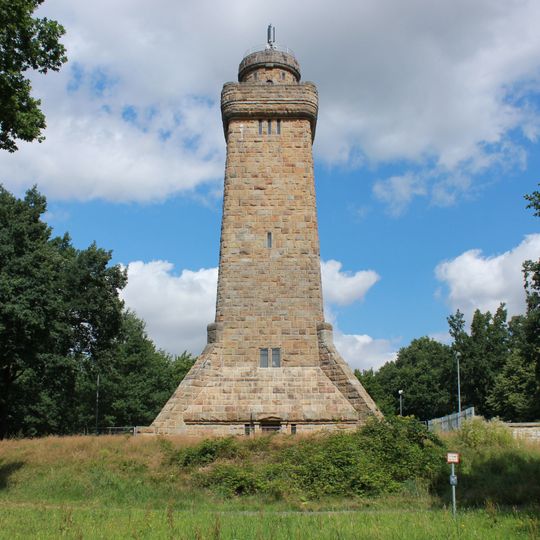
Bismarck Tower, Heritage monument in Glauchau, Germany.
Bismarck Tower is a sandstone structure in Glauchau that rises 45 meters high and displays architectural elements reflecting German engineering standards from the late 19th century. The construction combines durable materials with functional forms typical of the era's design approach.
Mayor Ernst Paul Brink and merchant Max Bäßler first proposed the tower on 28 November 1894. After Bismarck's death in 1898, Brink renewed the effort in July 1899, and in summer 1906 builder Reinhold Ulrich planned a 40-metre tower. The city approved revised 45-metre plans on 29 March 1908; construction cost 105,000 Mark and the tower was inaugurated on 4 September 1910. Renamed Friedensturm in 1950, it regained its name on 19 September 1990.
The tower emerged during an era when German communities expressed national identity through public monuments funded entirely by citizen donations. Such structures still shape the local landscape and reveal how people worked together to inscribe their values in stone.
The tower stands on the Bismarckhöhe (317.3 m) southeast of the old town, reached via Lichtensteiner Straße. The viewing platform lies 39 m up, after 197 steps, with a further 28-step spiral staircase into the six-metre column rotunda. The tower reopened in spring 2018 after repairs; opening times are posted on the city of Glauchau's website, and the Schönburger Land tourist association regularly offers visits.
Many historic postcards show a Bismarck relief drawn above the entrance, but it was never actually mounted on the tower. The tower's second floor held a water tank of 180 cubic metres, 9 metres high and 5.10 metres across, that supplied the upper town until the end of 2005.
The community of curious travelers
AroundUs brings together thousands of curated places, local tips, and hidden gems, enriched daily by 93,651 contributors worldwide.