Oldendorfer Totenstatt, Megalithic burial ground in Oldendorf, Germany
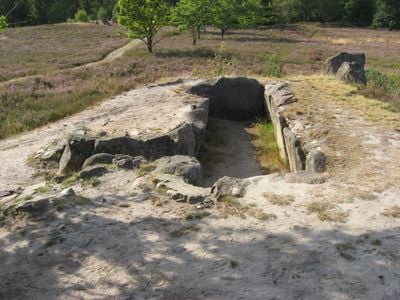
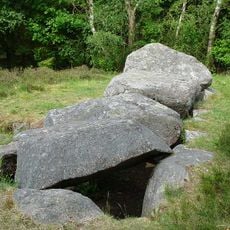
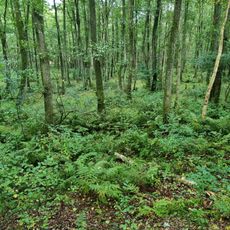
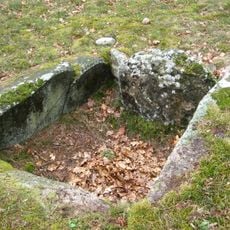
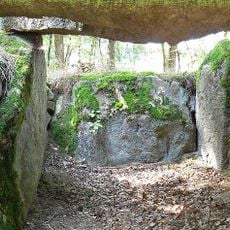
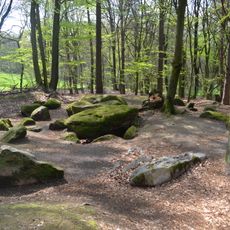
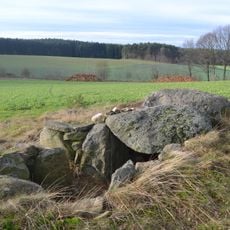
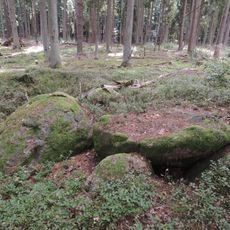
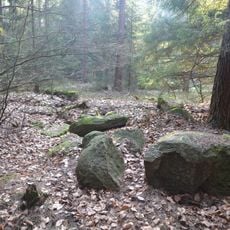
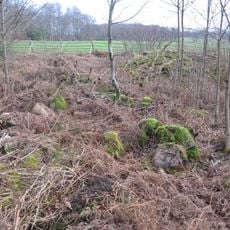
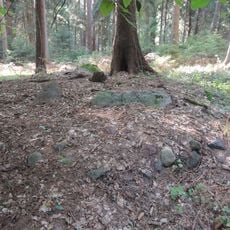
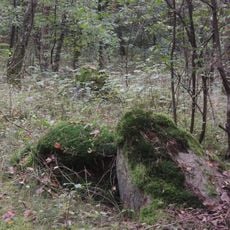
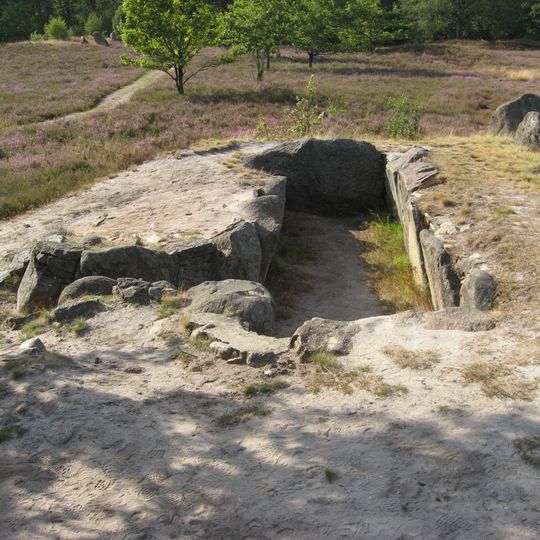
Oldendorfer Totenstatt is a prehistoric burial ground on open heathland near Oldendorf, made up of six earthen mounds each covering a stone burial chamber. The mounds vary in size and shape, and the chambers beneath them were built using large upright stones capped with flat covering stones.
The oldest chambers at the site were built around 5700 years ago by early farming communities who used large stones to mark their dead. Later mounds on the same ground show that people returned to add new burials over many centuries.
The name "Totenstatt" means "place of the dead" in German, which gives an immediate sense of how people understood this site. Visitors today can walk among the mounds and see how carefully the stones were placed within each chamber.
The site is freely open at all times, with no fences or entry restrictions, so you can explore at your own pace. Information boards placed around the grounds explain each mound and help you find your way between them.
One of the chambers at the site is divided into several internal sections, which is unusual for this region and required far more stones to build than a standard grave. This type of segmented chamber is rare in northern German megalithic architecture.
The community of curious travelers
AroundUs brings together thousands of curated places, local tips, and hidden gems, enriched daily by 91,285 contributors worldwide.