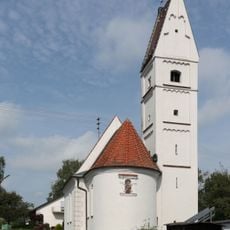
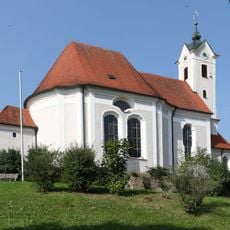
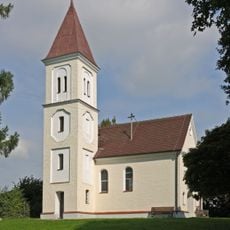
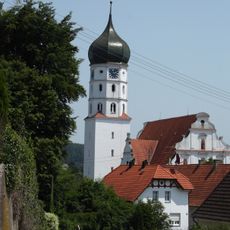
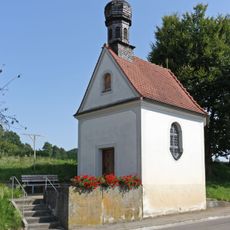
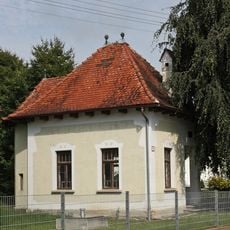
Wettenhausen Abbey, Augustinian abbey and Dominican convent in Kammeltal, Bavaria, Germany
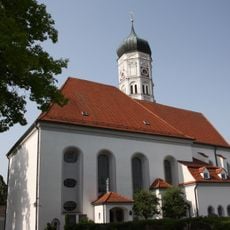
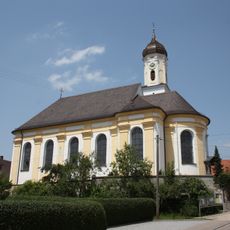
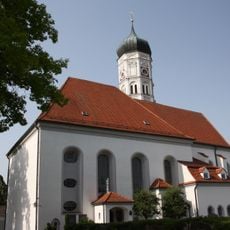
Wettenhausen Abbey is a monastery complex in Kammeltal, Bavaria, made up of a church, convent buildings, and school facilities arranged around a central courtyard. The exterior presents a mix of Romanesque foundations and a Baroque redesign that gives the whole site its current appearance.
Wettenhausen Abbey was founded in 1130, when Countess Gertrud of Roggenstein and her sons Wernher and Konrad gave their estate to the Augustinian Canons; a charter issued by Bishop Hermann of Vohburg records the donation. A house chronicle instead names 982, and the earlier foundation may have stood at nearby Ettenbeuren before the community moved to Wettenhausen. The provostry became an Imperial abbey in 1566 and was dissolved in 1803 with 25 canons and about 5,400 subjects; the Dominican Sisters of St Ursula took over the buildings in 1864.
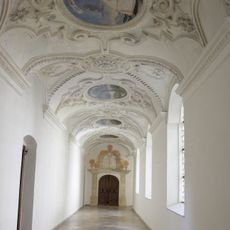
The abbey church serves as an active parish church open to visitors, and its interior shows the decorative style typical of South German Baroque craftsmanship. Dominican Sisters still run a school on the grounds, so the sounds of daily school life mix with those of a working religious community.
The site is in active use, so it is worth checking in advance which parts are open to the public on any given day. The abbey church is generally the most accessible area and can usually be visited during service hours without prior arrangement.
The Baroque redesign of the complex was led by Michael Thumb, a master builder from the Vorarlberg school, in the late 17th century, making it one of the few surviving examples of that school's work in the region. The Vorarlberg school was known for a particular approach to wall construction and light that you can still read in the church today.
The community of curious travelers
AroundUs brings together thousands of curated places, local tips, and hidden gems, enriched daily by 94,633 contributors worldwide.